
It happens in almost every creative production. You are midway through reviewing an animatic or a 3D character model, and inspiration strikes. You realize that a new character accessory is absolutely necessary, or you decide that a promotional asset needs an alternate aspect ratio for a newly launched campaign.
If you are a client mid-project, wanting to adjust your deliverables can feel incredibly stressful. You might worry that proposing an adjustment will halt production, break your budget, or strain your relationship with the creative team.
In a professional studio environment, the evolution of ideas is not viewed as an obstacle. It is an expected part of the collaborative journey. Here is a transparent look at how professional studios manage mid-project adjustments smoothly, keeping your project safe and your creative vision intact.
The Mid-Project Creative Shift: Why Ideas Evolve
Animation services and game art production are iterative crafts. As rough sketches transform into high-fidelity 3D assets, it is completely natural for your needs to clarify.
What felt sufficient on a flat storyboard might require extra polish once you see the character acting in a rendered space. Proposing a change mid-production does not mean your initial plan was flawed. It simply means you are actively refining your brand assets to achieve the absolute best result.
How Studios Buffer Your Mid-Project Ideas
Reliable studios do not expect you to have a changeable blueprint from day one. Instead, they build structural safety nets directly into their pipelines to absorb your creative ideas without immediate, budget-breaking surcharges.
1. The 20 Percent Scope Buffer
To give you complete peace of mind, elite studios establish a generous cushion for mid-project updates. For example, some studios allocate up to 20 percent of the initial project scope for revisions, modifications, and new requests at no additional cost. This means you can propose changes and request adjustments freely throughout the production cycle, knowing they can be incorporated seamlessly without triggering surprise invoices.
2. Milestone Sign-offs Keep Production Stable
While flexibility is vital, structure is what keeps your launch on track. Studios manage scope adjustments by anchoring them to distinct production milestones. Signing off on a phase, such as character design or storyboarding, allows the technical team to move forward into high-overhead tasks like rigging or rendering with absolute confidence. If you need to make changes to a previously approved milestone, the studio’s project coordinators will work with you to evaluate the technical impact and map out a safe path forward.
3. Dedicated Project Coordination as a Communication Buffer
Expanded on the coordinator’s operational role as a personal shield and singular bridge. It details how they translate a client’s raw, fluid visual ideas into precise technical criteria (such as anatomical updates, modeling adjustments, or specific rendering parameters) to eliminate communication friction, protect the animation team from mixed signals, and make the review loop feel completely collaborative and stress-free.
4. Flexible Asset and Deliverable Swaps
Detailed the mechanics of swapping assets of equivalent complexity. For example, if a client realizes mid-production that a planned background environment detail is no longer needed, they can reallocate those dedicated hours toward high-value needs like alternate social media crops, extra rendering angles, or layout variations, helping keep their overarching budget completely flat.
5. Parallel Pipeline Structuring
Explained the sophisticated division of studio labor. Instead of a linear workflow where the entire line freezes during an asset modification, the studio splits into independent, concurrent tracks. While specialists modify the model or rigging setup, other departments (such as environment construction, lighting design, and camera pre-visualization) continue working at full speed to safeguard the client’s critical campaign launch date.
Real-World Case Studies: Creative Shifts in Action
To see how these principles play out in practice, it helps to look at how real brand managers, founders, and creative directors navigated their own evolving visions.
Patient Collaboration on Highly Personal Assets
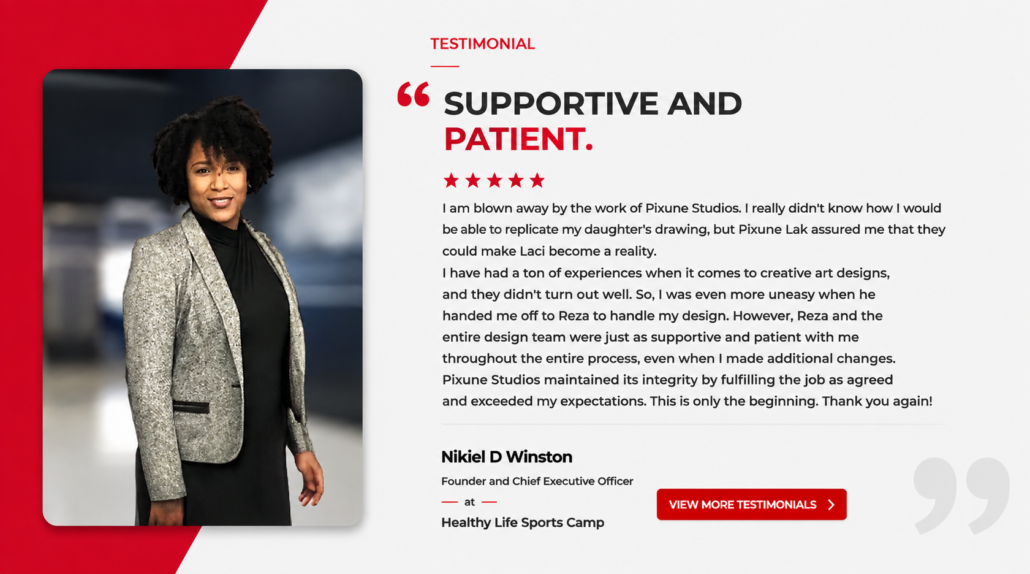
When the founder of a youth sports camp wanted to bring a character to life based on a hand-drawn sketch by her daughter, she felt understandably protective. Having previously experienced several unsuccessful creative partnerships that fell short of her vision, she was uneasy about handing the design over to an outside team.
However, instead of encountering rigid limits, she was met with deep empathy. Pixune studio’s lead coordinator and design team offered continuous guidance and encouragement. When she requested additional changes late in the process, the team adapted with patience, ensuring the final character surpassed her hopes while preserving the personal spark of the original drawing.
Going Beyond the Contract to Guarantee Excellence
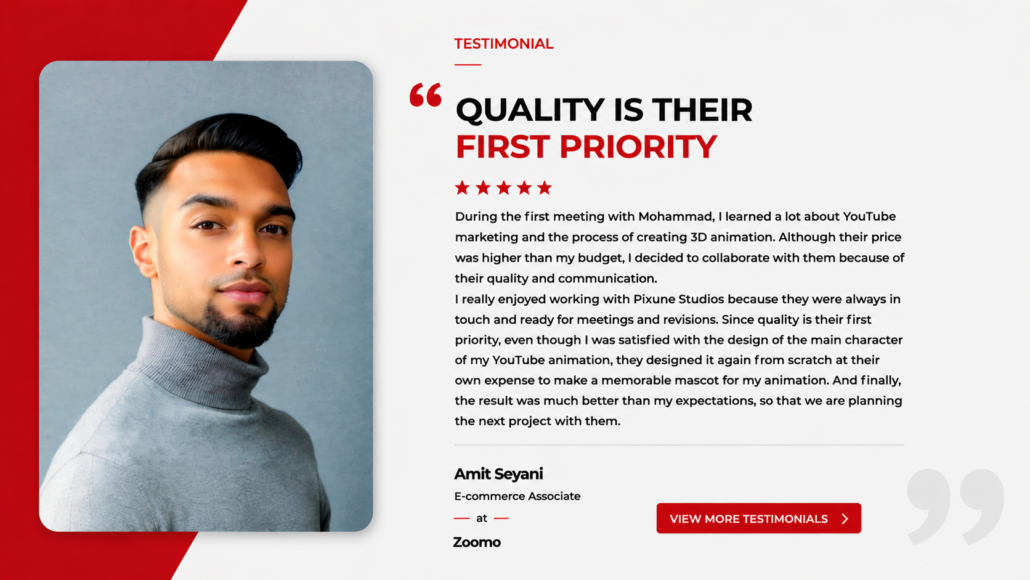
For an e-commerce brand developing its primary character mascot for YouTube, the fear of hidden fees was a major initial hurdle. The studio’s pricing was higher than their target budget, but they chose to proceed based on the promise of quality and open communication.
Their trust was rewarded when the production team proved that creative perfection comes before profit margins. Even though the client had already approved the initial character design, Pixune studio’s artists chose to completely redesign the mascot from scratch at their own expense, purely because they felt it could be made more memorable. By taking on the extra labor voluntarily, they built a foundation of long-term trust that went far beyond a standard transactional contract.
Systematically Addressing Feedback Within Budget
A creative director at a high-end production agency notes that the biggest risk in outsourcing 2D animation services is feedback dilution, where critical client notes are ignored or misunderstood, leading to endless revision loops.
By partnering with a 3D animation studio that treats feedback as a structured roadmap, she found that every single detail and change was meticulously addressed. The project was completed strictly on time and within budget, demonstrating that a highly organized workflow naturally absorbs a client’s guidance without triggering surprise charges or compromising the animation’s impeccable quality.

Step-by-Step: How to Propose a Deliverable Change
If you are currently in the middle of a project and realize you need to add or adjust a deliverable, following a structured path ensures a smooth update.
Read More: How to Partner with an Animation Studio
Reach Out to Your Dedicated Coordinator
Do not hesitate to speak up. Share your ideas with your primary contact or project coordinator as soon as they arise. A supportive studio maintains open communication channels, with rapid response times of about 1 hour during working hours, making it incredibly easy to schedule a quick sync.
Assess the Technical Pipeline Impact
Your coordinator will review the requested adjustment with the technical lead. They will determine where the change sits in the production pipeline. If it falls within the pre-production or asset design phases, it can often be accommodated immediately under your built-in revision buffer. If it involves a downstream phase like rendering, they will outline the exact adjustments needed.
Finalize the Updated Agreement
If the change fits within your built-in scope buffer, the team will integrate it immediately and update your milestone review schedule. If the request represents a significant expansion of deliverables, such as adding a completely new character model or an extra 30 seconds of rendered animation, the studio will provide a transparent, flat-rate addendum. This keeps your main budget safe and ensures there are zero financial surprises at delivery.
Flexibility Meets Structured Planning
A successful animation project is not a rigid transaction. It is a living, evolving partnership. By choosing a studio that combines technical discipline with genuine empathy and generous revision policies, you can navigate mid-project shifts with absolute confidence. You do not have to choose between protecting your budget and perfecting your vision, because a structured partner builds the flexibility you need directly into their pipeline.