

If you are a first-time founder or marketer, your brand is your baby. Up until now, you have likely kept a tight grip on every single piece of creative output. But as you scale, you hit a wall: you need high-end 2D or 3D animation, and you do not have the technical skills, the software, or the overhead to build it yourself.
The thought of outsourcing is terrifying. What if they don’t get my vision? What if they take my budget and run? What if I completely lose control of the creative process?
Take a deep breath. Outsourcing your creative work does not mean giving up control; it means amplifying your capacity. Here is what you need to know to navigate your first studio partnership with absolute confidence, built on real-world experiences from leaders who have been in your shoes.
The Hidden Costs of "Doing It In-House" First
When budgets are tight and anxiety is high, the default reaction is often: “Let’s just hire a couple of freelancers and manage them ourselves.” It feels safer because you can look at their screens. But this is a classic trap that often ends in fragmented results.
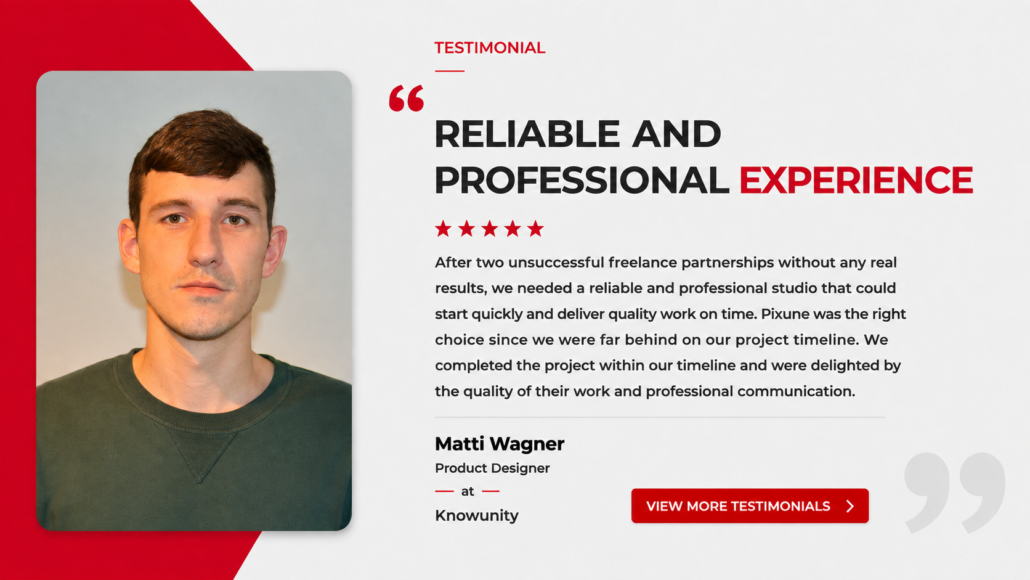
Based on what Matti Wagner (Product Designer at Knowunity) has told us, trying to patch together creative work this way can lead to “unsuccessful freelance partnerships without any real results”. When you rely on individual freelancers, you run the risk of falling far behind on your project timeline and burning critical launch momentum before you realize you need a professional team.
The hidden cost of “doing it in-house” is that animation is not a single job; it is a complex, multi-stage production pipeline. To create high-quality 2D or 3D animation services, you need specialized expertise at every step:
- Pre-Production: Storyboarding & Animatic development
- Assets & Setup: Character Design, 3D Character Modeling, 3D Rigging, 3D Sculpting, and 3D Texturing
- Production & Polish: Character Animation, 3D Retopology, and 3D Rendering
If you hire generalists, you become the pipeline manager. You have to handle technical hand-offs, resolve formatting incompatibilities, and manage friction. By contrast, a full-service studio already has a unified, battle-tested pipeline. When you hire a professional animation studio, you are buying an entire self-managing ecosystem that keeps your project safe.
How Much Creative Control You Actually Keep
A common myth is that outsourcing means handing over a brief and praying that whatever comes back looks vaguely like what you imagined. In a professional studio partnership, the reality is exactly the opposite: you retain final creative authority, backed by expert execution.
A great studio acts as an extension of your team, translating your raw ideas into polished reality.
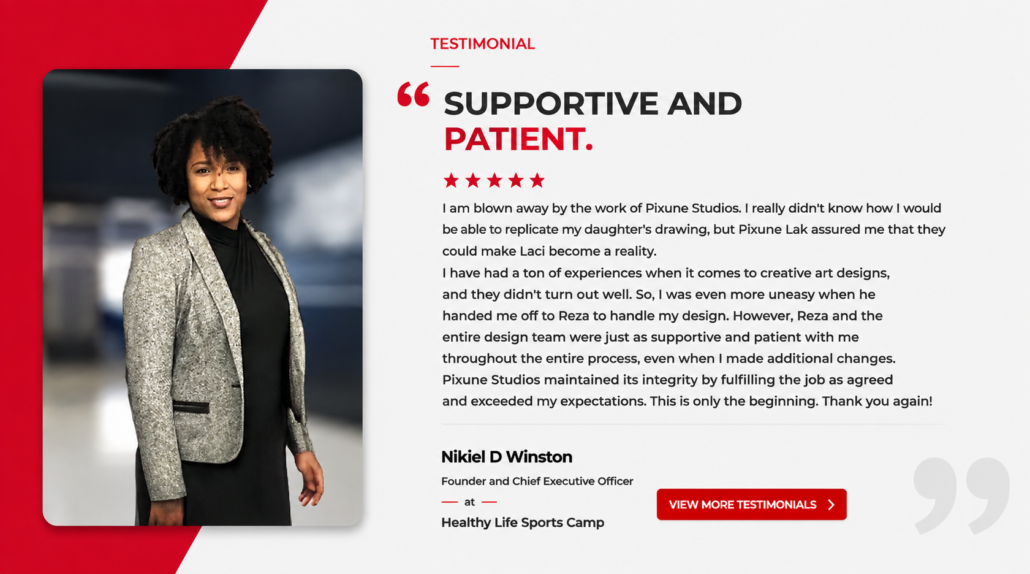
- Replicating Rough Ideas: Based on what Nikiel D. Winston (Founder and CEO of Healthy Life Sports Camp) has told us, you do not need perfect technical specs or a clean asset sheet to begin. Winston had a ton of bad past experiences with creative designs and felt highly uneasy when handed off to a designer. However, she shared that the team was incredibly patient and supportive throughout the process, successfully turning her daughter’s raw sketch (“Laci”) into a beautiful reality.
- Worry-Free Revision Allocations: Many elite studios allocate a buffer (up to 20% of the initial scope) for revisions, modifications, and new requests at no additional cost. This allows you to give feedback freely throughout the process without fear of surprise, budget-breaking charges.
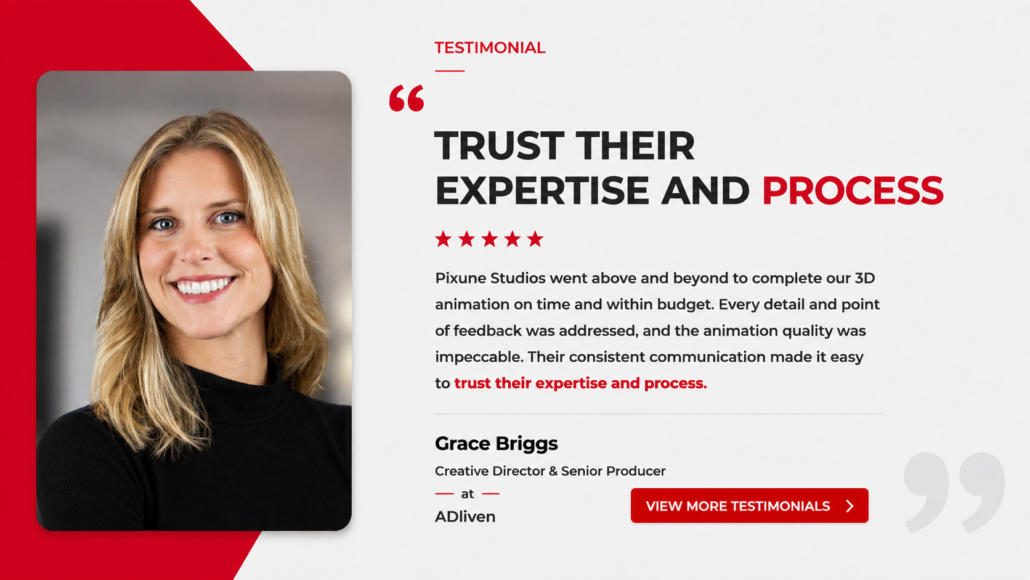
- Meticulous Feedback Integration: Based on what Grace Briggs (Creative Director & Senior Producer at ADliven) has told us, a professional partner will ensure that “every detail and point of feedback is addressed” so that the final animation quality is absolutely impeccable, making it incredibly easy to trust their expertise and process.
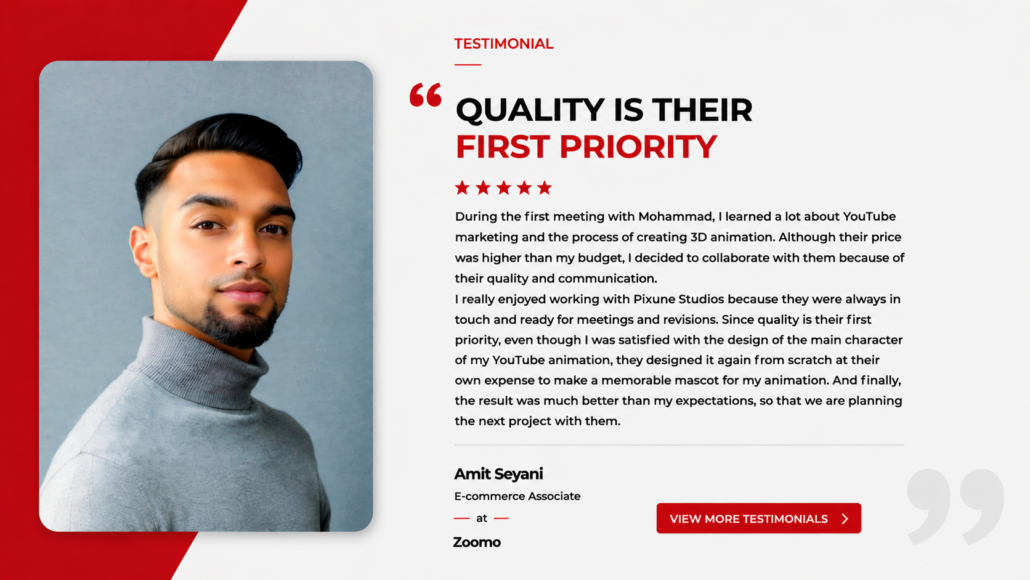
- Over-and-Above Commitment: Based on what Amit Seyani (E-commerce Associate at Zoomo) has told us, a studio that prioritizes quality above all else will go to extreme lengths to protect your vision. Seyani shared that even though he was already satisfied with the initial design of his main character, the studio designed it again from scratch at their own expense just to make sure it was a truly memorable mascot.
Timeline Reality Check
First-time outsourcers often make one of two mistakes: they either underestimate how long animation takes, or they wait until they are in a crisis before reaching out for help.
To make sure your launch goes off without a hitch, keep these timeline realities in mind:
1. Trust the Pipeline: Moving too fast leads to sloppy work. A structured, stage-by-stage review (from storyboards to final renders) actually saves time by catching alignment issues before expensive rendering begins.
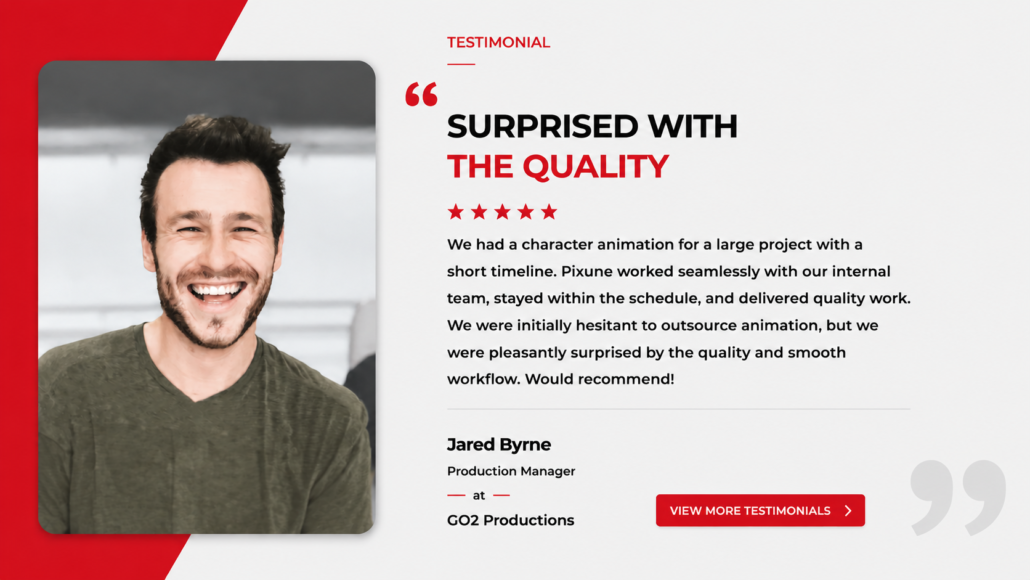
2. Integrate Early to Avoid Stress: Based on what Jared Byrne (Production Manager at GO2 Productions) has told us, first-time outsourcers are often initially hesitant to outsource animation for large projects with tight timelines. However, Byrne shared that bringing in a studio that integrates seamlessly with your internal team ensures that everyone stays within schedule and produces a smooth, surprisingly high-quality workflow.
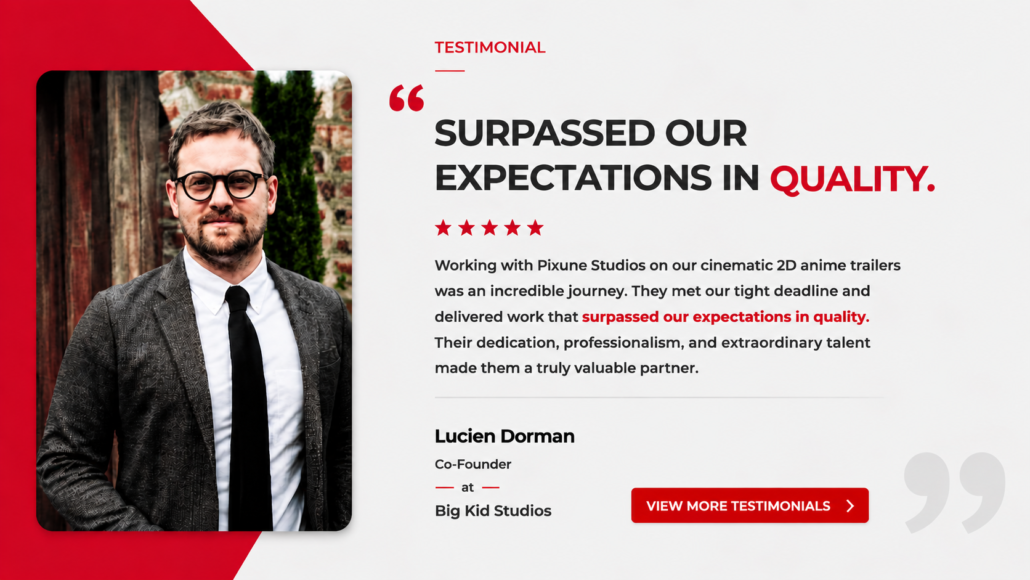
3. Rely on Proven Milestone Management: Based on what Lucien Dorman (Co-Founder at Big Kid Studios) has told us, working with an experienced 2D animation agency on highly demanding assets, like cinematic 2D anime trailers, is a safe journey because a professional team has the capacity to meet strict deadlines while delivering work that “surpasses expectations in quality”.
Red Flags vs Green Flags in Studio Communication
When you are anxious about losing control, communication is your lifeline. You can tell a lot about how a studio will treat your project by looking at how they communicate before the contract is even signed.
🚩 Red Flags:
- The “Black Box” Effect: If a studio is vague about their production steps, hesitates to explain how they will work with your internal team, or cannot explain how they handle feedback, run.
- Radio Silence: If it takes days to get a response to a simple pricing or scope inquiry, imagine how slow they will be when you have an urgent launch deadline.
- Rigid Hostility: Studios that react defensively to early questions or charge you for every single minor adjustment are going to make your outsourcing experience stressful and expensive.
🟢 Green Flags:
- Rapid, Consistent Responses: Look for partners that commit to lightning-fast response times, such as responding to all inquiries within about 1 hour during working hours, and are always easily reachable for meetings and revisions.
- Structured, Warm Hand-offs: As Nikiel D. Winston experienced, the hand-off from sales to the actual design team should feel patient and supportive, rather than abrupt or cold.
- Absolute Transparency: Green-flag studios are eager to satisfy your requirements and are completely open about their workflow, making it incredibly easy to trust their expertise and process.