
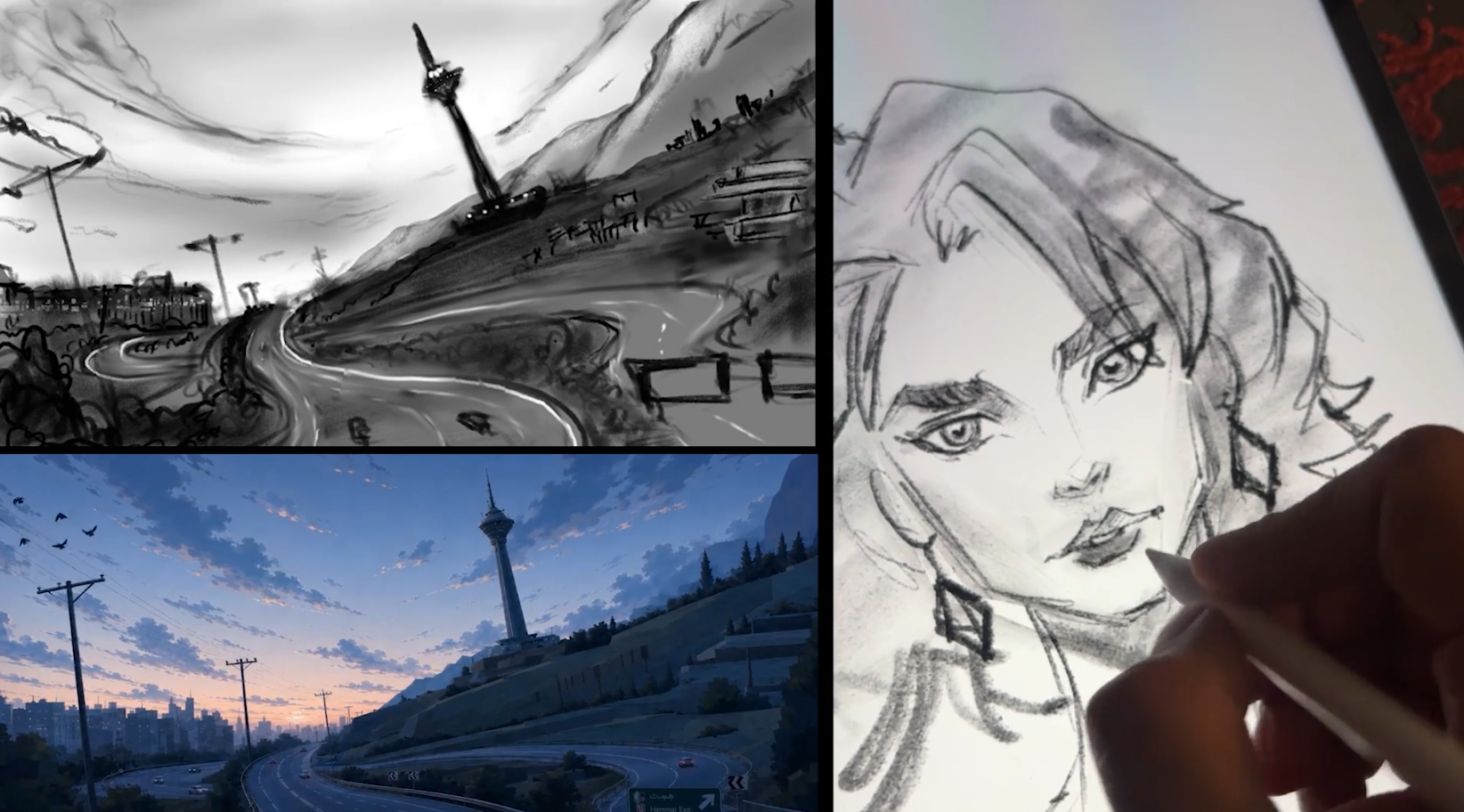
If you are a budget-conscious producer or creative lead, you are likely looking at the rapid rise of AI-assisted animation services with a mixture of curiosity and caution. On one hand, the promise of faster delivery times and lower budgets is incredibly attractive. On the other hand, you might be deeply worried about losing the “soul,” creative depth, and polished quality of your work.
Can an algorithm replicate the charm of hand-crafted storytelling? How do you ensure your project doesn’t end up looking like generic, uncanny machine-output?
To help you navigate this emerging landscape, here is an honest breakdown of what AI-assisted animation actually means for your production pipeline, how to protect your creative vision, and how to ask the right questions before signing a contract.
Where AI Actually Speeds Things Up (and Where It Doesn't)
In a professional animation studio environment, AI is not a “magic button” that replaces artists. Instead, it is treated as an advanced productivity tool integrated into a highly structured, multi-stage pipeline. Knowing where AI excels and where human hands must take the lead is the key to setting realistic expectations.
Read More: How to Partner with an Animation Studio
Where AI Speeds Things Up:
- Rapid Style Exploration & Concept Art: In the initial pre-production phase, AI tools can help artists rapidly generate mood boards, color scripts, and style concepts.
- Asset Iteration & Texturing Assist: AI can assist in generating reference variations for 3D texturing or detailing background elements, allowing the core team to focus on major character assets.
- 2D Frame-by-Frame Assistance: In traditional 2D animation services workflows, AI can help accelerate the tedious process of in-betweening (generating intermediate frames), freeing up master animators to focus on keyframes.
Where AI Fails (Human Hands Required):
- Character Modeling & Sculpting: Creating production-ready 3D character models requires exact proportions, 3D sculpting, and meticulous 3D retopology to ensure the model can bend and move properly. AI cannot generate clean, optimized topology.
- 3D Rigging: Putting an digital “skeleton” inside a character mascot requires complex technical setup (rigging). This is a highly technical discipline that remains entirely manual to prevent bizarre joints and clipping during movement.
- Subtle Character Acting: Great 3D animation services rely on emotional nuance, pacing, and comedic timing. Human character animators are required to bring genuine acting and expressions to life.
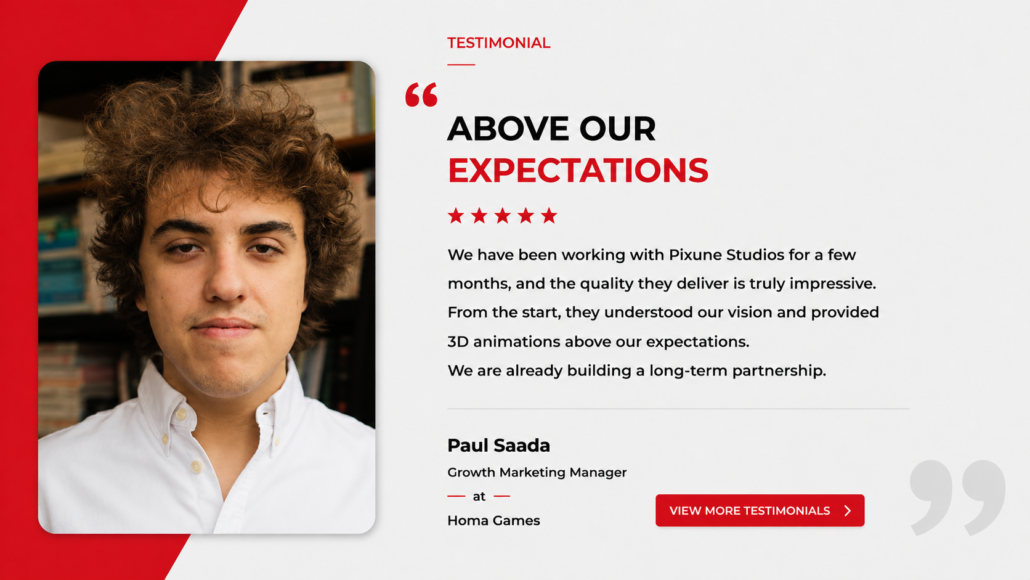
Based on what Paul Saada (Growth Marketing Manager at Homa Games) has told us about successful creative partnerships, the ultimate measure of quality is working with a team that deeply “understood our vision” to deliver animations that exceed expectations. AI can generate frames based on data, but it cannot “understand” your brand’s unique narrative vision without professional human direction.
Quality Trade-offs You Should Ask About
If a studio offers AI-assisted animation, they must be transparent about the quality trade-offs. The “soul” of an animation lies in its character depth and realism, areas where purely automated tools famously struggle.
Before committing, make sure to ask prospective studios about:
- Consistency Control: AI generators are notorious for “flickering” or changing details from frame to frame. Ask the studio how their pipeline guarantees visual consistency across a 2-minute or 3-minute video.
- Revision Integrity: If you request a minor change to a character’s expression or hand gesture, can they isolate that change, or does the entire scene have to be re-generated?
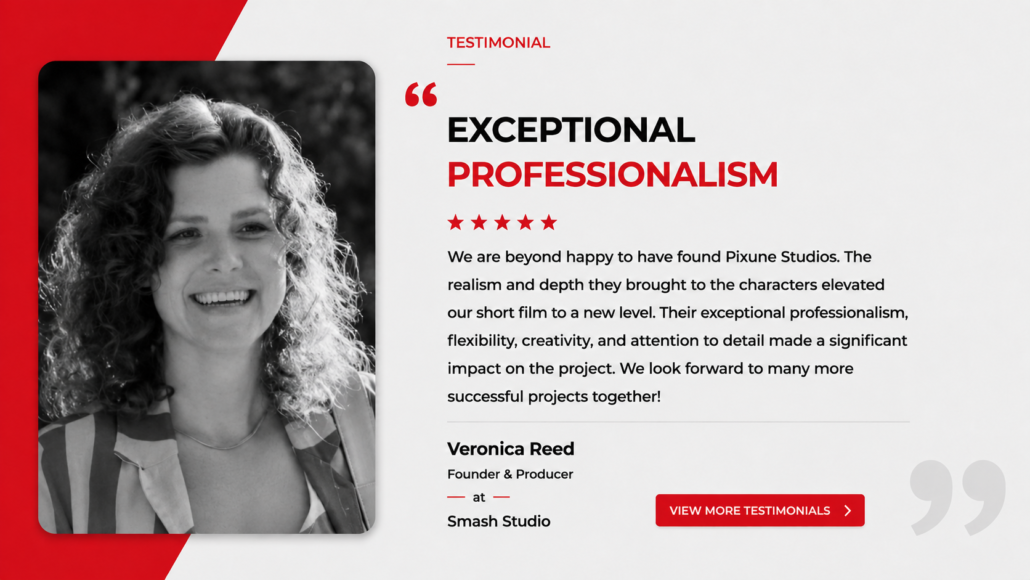
Based on what Veronica Reed (Founder & Producer at Smash Studio) has shared from her own high-end production experience, it is the “realism and depth” brought to the characters that elevates an animated film to a new level. If you rely on automated shortcuts without manual artistic polish, you risk losing the very details that make your audience connect emotionally with the characters.
Furthermore, based on what Nikiel D. Winston (Founder & CEO at Healthy Life Sports Camp) told us, replicating a highly specific, beloved asset, like a hand-drawn sketch, demands a supportive, patient design team who will meticulously work to make that character a professional reality. Pure AI models often struggle to replicate exact reference designs without heavy, human-driven 3D modeling and texturing.

How to Tell Genuine AI Integration from Marketing Buzzwords
Many providers use “AI-powered” as a marketing buzzword to mask low-quality templates or under-the-table outsourcing. A reputable studio will be fully transparent about their technology and treat AI as a collaborative tool inside a proven production pipeline.
Here is how to spot the difference:
- The Buzzword Seller: Promises that AI will generate a complete, high-quality 3D commercial or game trailer in 24 hours with no human effort. They are often vague about their pipeline steps (such as rigging or texturing) and hostile to manual revisions.
- The Genuine Integrator: Explains exactly which stages of their pipeline use AI-assisted tools (e.g., style exploration) and which stages are handled manually by specialists (e.g., character rigging and rendering). They welcome your feedback because their pipeline is built to integrate manual adjustments smoothly.
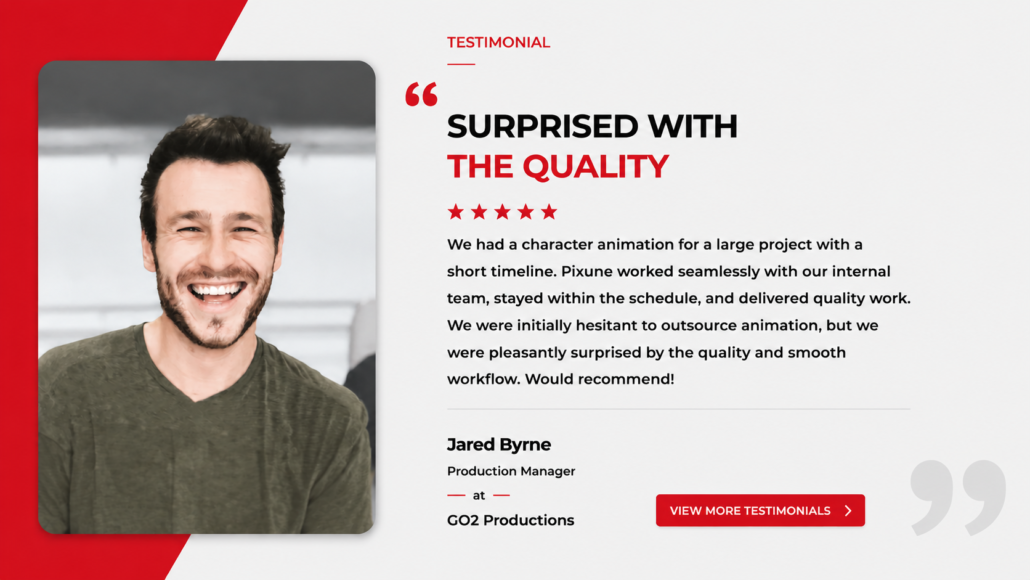
Based on what Jared Byrne (Production Manager at GO2 Productions) has told us, even when you are hesitant to outsource animation for a large project with a tight timeline, a successful project relies on a studio that works “seamlessly with our internal team,” stays on schedule, and provides a transparent, smooth workflow. Authentic integration means the studio uses technology to make your life easier and your project safer, not to lock your creative vision inside an unchangeable “black box.”
Pricing: Is AI-Assisted Actually Cheaper?
It is easy to assume that because a studio uses AI, their prices should plummet. However, high-quality, professional animation still requires extensive human expertise, specialized hardware, and manual polishing.
While AI can reduce the labor hours required for background design or initial style mockups, the overall cost of a premium 2D or 3D production reflects the skilled artists driving those tools.
When evaluating proposals, look closely at how the studio structures its pricing and revisions:
- Worry-Free Revisions: A reliable studio should still offer structured, risk-free revision allocations (often up to 20% of the initial scope) to accommodate changes without surprise fees.
- The Cost of “Rebuilding”: If an AI-assisted asset fails to meet your brand standards, will the studio step in to fix it manually?
Based on what Amit Seyani (E-commerce Associate at Zoomo) has shared, choosing a partner where “quality is their first priority” is always worth the investment. Amit noted that even when a project’s price is higher than the initial budget, a truly dedicated studio will go as far as rebuilding a character from scratch at their own expense to ensure you get a memorable, successful brand mascot.
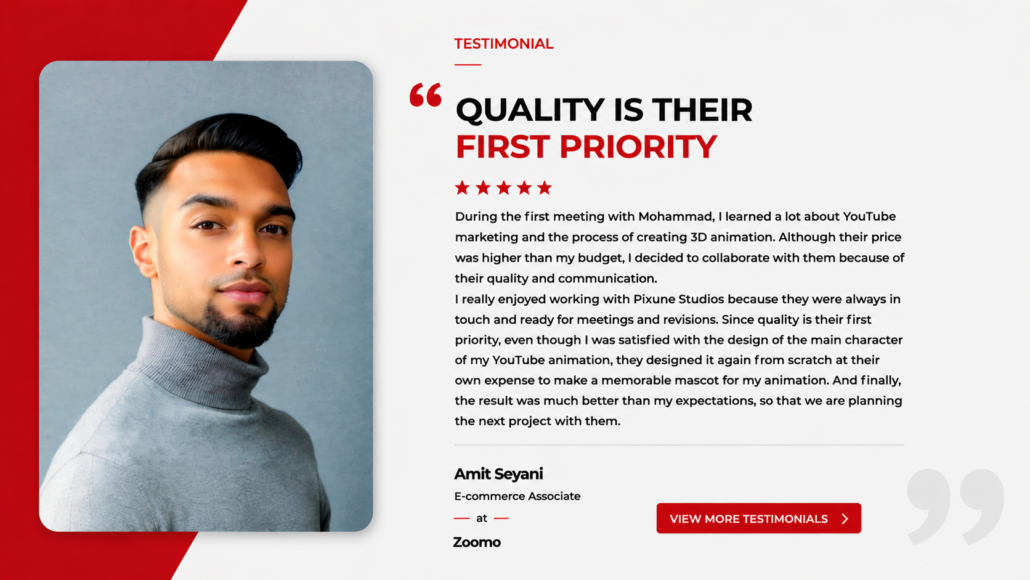
Additionally, based on what Robert Apostolatos (Manager at Eveta Music Entertainment LLC) told us, if you are working within tight budget constraints, an experienced studio can find creative pipeline solutions to deliver excellent quality without resorting to lazy, automated shortcuts that strip the artistic value from your video.
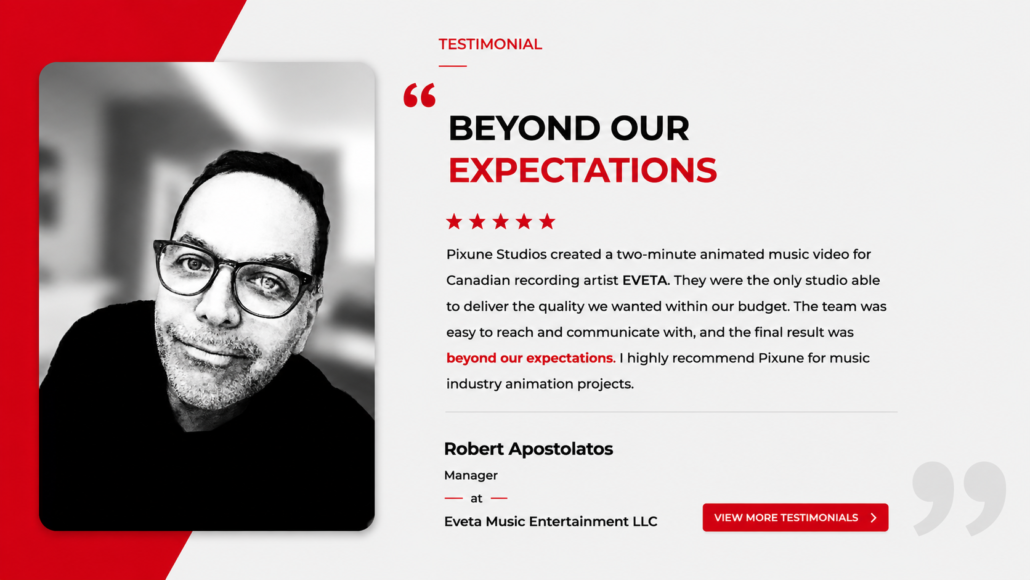
By understanding where AI adds speed and where human artists add the soul, you can make an informed, budget-conscious choice that keeps your project on schedule, within budget, and beautifully realized.