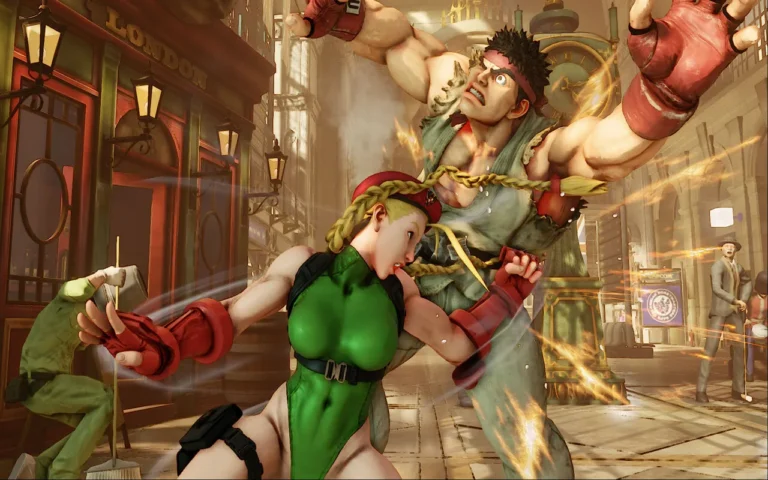

Ask ten studios what it costs to make a 3D game and you’ll get ten different answers ranging from $30,000 to $300 million. That isn’t evasiveness; it’s the honest reflection of an industry where a single design decision, such as whether your characters are stylized or photorealistic, can multiply the budget by ten. The real question isn’t “what does a 3D game cost,” but “what does my 3D game cost,” and answering that requires understanding the handful of variables that actually move the number.
This breakdown does two things. First, it maps the cost to make a 3D game across the three budget tiers that define the 2026 market. Then it shows you the cost drivers underneath those tiers, so you can estimate your own project instead of guessing from someone else’s price tag.
The One Formula That Explains Every 3D Game Budget
Before the numbers, the logic. Almost every cost to make a 3D game reduces to four multipliers stacked on top of each other:
Asset volume × Asset fidelity × Team rate × Production time — plus a marketing multiplier on top.
A 3D game is expensive precisely because each of those factors is larger than its 2D equivalent. Every object exists in three dimensions, so it needs modeling, UV unwrapping, texturing, rigging, and animation rather than a single drawn sprite. Lighting is computed through volumetric space. Physics simulates real forces. None of these are line items you can skip, and each one scales with how many assets you have and how realistic they need to look. Keep this formula in mind as we move through the breakdown, because every cost-saving strategy later in this guide is simply a way of shrinking one of those four multipliers.
Average Cost of 3D Game Development
The cost to make a 3D game is governed by three questions: How big is it (scope)? How real does it look (fidelity)? And who’s building it (team)? A tightly scoped 3D puzzle game made by four people in Unity and an open-world RPG built by 300 people on Unreal Engine 5 are not the same product priced differently; they are different industries.
At the entry level, simple 3D games run between $4,000 and $30,000 for basic modeling, light animation, and straightforward mechanics. Add custom rigs, hand-built environments, physics-driven gameplay, or multiplayer, and the figure jumps into six and seven figures fast. Complex 3D titles with large teams and multi-year cycles can exceed $10 million, while the largest productions clear $100 million before marketing.
Here’s how the tiers actually compare in 2026:
| Tier | Typical Budget | Team Size | Timeline | Engine Approach | Example |
| Indie | $10K – $500K | 1–20 | Under 2 years | Godot / Unity free or Pro | Clair Obscur: Expedition 33 (under $10M) |
| AA | $1M – $20M | 20–100 | 18–36 months | Unity / Unreal | Mid-scope console & mobile titles |
| AAA | $50M – $300M+ | 200–800 | 4+ years | Unreal / proprietary | Marvel’s Spider-Man 2 (~$315M) |
The single most important thing this table doesn’t show is that budget and quality do not scale together. A disciplined $50,000 game can outperform a chaotic $200 million one. What separates them isn’t spend; it’s how tightly scope is matched to resources.
Indie vs AA vs AAA Budgets
Indie ($10K–$500K). Indie 3D development treats constraint as a creative tool. Small teams use free or low-cost engines, lean on asset stores for non-critical pieces, and double up on roles. A polished indie 3D title with original art and audio typically lands at $50,000–$200,000. The genre’s recent breakout, Clair Obscur: Expedition 33, was built for under $10 million by deliberately avoiding open-world bloat, proving that sharp creative direction beats raw budget.
AA ($1M–$20M). This is the most precarious tier in the market. AA studios are large enough to need professional pipelines and specialized roles, but too small to survive a single commercial miss. With medium-team monthly burn at $50,000–$120,000 and timelines of 18–36 months, even a modest AA project burns $5–$15 million before launch. As the distance between indie and AAA has widened, the AA middle has steadily thinned out.
AAA ($50M–$300M+). AAA budgets have entered new territory. Industry reporting in 2026 puts North American AAA budgets at $300 million or more as a routine figure. Marvel’s Spider-Man 2 reached roughly $315 million, triple its predecessor. Red Dead Redemption 2 reportedly hit $540 million with marketing, and Call of Duty: Black Ops Cold War surpassed $700 million across its full lifecycle. AAA budgets average $100M–$400M with 200–800 people over four-plus years, and the largest share of that money is developer salaries and overhead, not technology.
Major Cost Components
Money does not spread evenly across a 3D production. A few disciplines absorb most of it, and which ones depends on the kind of game you’re building. Here’s where it goes.
Game Design and Development
Programming and design are the load-bearing walls of any 3D project: rendering, physics, AI, and networking systems, plus the gameplay code and iterative design that determine how the game actually feels in hand. Indie teams often compress all of this into one or two generalists. At the AA and AAA level, engineering fragments into graphics programmers, network engineers, tools programmers, technical artists, and gameplay designers, each a distinct salary line.
Engine choice shapes the cost to make a 3D game from day one. Unreal Engine suits high-end 3D production thanks to built-in tools like Nanite (virtualized geometry) and Lumen (dynamic global illumination), which can cut environment art time by 20–25%. Unity stays more flexible and economical for mobile, stylized, and cross-platform work. On licensing, Unity Pro runs $2,040 per seat per year, while Unreal takes a 5% royalty on gross revenue above $1 million per title.
The decision is architectural, not just financial. Switching engines mid-production is brutally expensive, so this choice quietly locks in a large slice of your budget before the first asset is built. Pixune’s best 3D game engines guide compares the major options and the production trade-offs behind each.
Art and Animation
Art and animation are almost always the largest single cost center in 3D development, routinely 30–50% of the production budget. The cause is structural: every visual element travels a multi-step pipeline of concept, modeling, UV unwrapping, texturing, rigging, animation, and platform optimization. That pipeline runs once per asset, and 3D games have a lot of assets.
Per-asset pricing makes the math concrete. Pixune’s 3D art outsourcing cost guide puts low-poly models at $100–$300 and detailed characters at $1,000–$6,000+, with environments at $2,000–$15,000+, vehicles at $800–$4,000+, and UI at $100–$1,000. A single fully rigged and animated hero character can reach $3,000–$8,000. For wider benchmarks, 3D character modeling industry-wide runs $1,000–$10,000 per character, with environments at $1,000–$10,000+, props at $500–$2,500, rigging at $500–$2,500, and animation cycles at $200–$1,000.
Now apply the asset-volume multiplier. A modest 3D game with 20 unique characters, 15 environments, and 200 props clears $500,000 in art alone before a line of gameplay code is written. At AAA scale, modeling and animation alone consume $5–$20 million. AI-assisted tools have shaved an estimated 30–40% off concept art and texturing costs in 2026, but senior art directors still hand-validate final output, so the savings speed up production rather than removing the need for skilled artists.
Marketing and Distribution
Marketing is the line developers underestimate most reliably. For mobile and free-to-play games, marketing and user acquisition can equal 30–100% of the development budget. For AAA, the marketing spend frequently matches or exceeds production, so a $200 million game may need another $200 million just to launch.
A workable phase-based budget allocation for a $500,000 title runs roughly 10% pre-production, 50% production, 15% QA, 10% soft launch, and 15% marketing. Indie marketing costs less in dollars but more in time: community building, social channels, influencer outreach, and store-page optimization.
Then there’s the platform tax that never appears in a development budget but reshapes the whole revenue equation. Steam takes 30% of sales; Apple and Google apply comparable rates on mobile. These cuts determine the minimum budget at which a game can actually turn a profit.
Cost by Game Genre and Scope
Genre is one of the strongest predictors of the cost to make a 3D game, because each genre carries its own technical and content demands.
- Casual / hyper-casual ($15K–$100K): Simple loops and low asset volume keep these at the floor of 3D budgets. They win on mechanics, not scale.
- Puzzle / match-three ($500K–$3M): Deceptively pricey at commercial scale. Whimsy Games’ analysis shows real spend across backend, level design, art, and frontend even for “simple” match-three titles.
- Mid-core mobile / 3D RPG ($300K–$1.5M): Deeper progression, guilds, in-app purchases, and live events. A 3D mobile RPG with multiplayer typically runs $500,000–$1,200,000.
- Racing / action ($500K–$50M+): Physics alone can demand $2–$15M, with 3D art and animation adding $5–$20M and multiplayer infrastructure $3–$10M at scale.
- Simulation ($500K–$100M+): Heavy 3D environments and AI systems ($10–$50M for large titles) make this the genre where fidelity costs scale fastest.
- AAA open-world / narrative ($50M–$300M+): Console and PC AAA routinely passes $100M before marketing; even AAA-tier mobile runs $3M–$20M+. Live-service titles add operating costs that can exceed the original build within year one.
Ways to Reduce Development Costs
Every effective cost-saving move maps back to the opening formula: it shrinks asset volume, asset fidelity, team rate, or production time. The strongest levers do more than one at once.
Art style is the biggest lever you have. The high-poly versus low-poly decision moves the budget more than almost anything else. High-poly work needs senior artists at $40–$80/hour, 4–8 weeks per character, software licenses of $1,000–$5,000/year, hardware at $3,000–$10,000, and render-farm time. Low-poly relies on mid-level artists at $25–$50/hour with shorter timelines and no render farm. A stylized low-poly direction isn’t a downgrade; it’s a strategic choice that can cut 3D art budgets by half while giving the game a distinct identity.
Pick the engine that matches your scope. Godot or Unity’s free tier removes upfront licensing entirely. Unity Pro at $2,040/seat/year still undercuts the cost of building and maintaining a proprietary engine, and Unreal’s royalty model defers all engine cost until you’ve earned $1 million per title.
Design modularly. Modular environment kits, where a small set of reusable pieces snaps together into many configurations, can drop environment art costs 40–60% versus building every scene bespoke.
Use AI where it accelerates, not where it replaces. In 2026, AI tools meaningfully reduce cost in concept generation, texturing, NPC dialogue, and QA automation, shrinking the production-time multiplier without removing the human judgment that protects quality.
Outsourcing vs In-House
Outsourcing is, at its core, a way to convert fixed cost into variable cost. An in-house team gives you tight creative control and accumulated institutional knowledge, but its salaries, benefits, hardware, and overhead run whether you’re in a production crunch or a quiet stretch. Outsourcing flexes with the work, expanding for asset-heavy phases and contracting after.
The geography of rates is what makes this powerful. Regional 3D art rates span $60–$150+/hour in North America and Western Europe, $30–$80 in Eastern Europe, and $20–$60 in Southeast Asia. Across 100 assets, the gap between domestic in-house and Eastern European outsourcing can mean $200,000 or more. Done well, outsourcing 3D art cuts costs 30–40% while holding quality, provided the partner has a proven pipeline and clear communication.
The real risk in outsourcing isn’t price; it’s quality control. A poorly managed relationship produces assets that need expensive rework, erasing the savings. The model that consistently works is hybrid: keep a small in-house team for creative direction, prototyping, and quality gates, and outsource volume production to a trusted studio. You keep the vision and capture the cost advantage.
Real-World Budget Examples
Numbers in a vacuum are hard to feel. These titles anchor the cost to make a 3D game at every scale.
- Angry Birds (~$140,000): A modest budget and tight mechanics turned into one of mobile’s biggest commercial successes, a reminder that low development cost and high revenue often go together when gameplay and timing align.
- Pokémon Go (~$600,000): Niantic paired 3D character models with real-world mapping. The lean initial build was followed by heavy server and LiveOps investment after launch.
- Clair Obscur: Expedition 33 (under $10M): Sandfall Interactive skipped open-world bloat, focused on art direction and combat, and delivered AAA-feeling quality at a fraction of AAA cost, one of its release year’s standout wins.
- Grand Theft Auto V (~$265M): Among the most expensive games ever, covering a vast open world, extensive voice acting, a three-protagonist narrative, and a landmark marketing campaign.
- Marvel’s Spider-Man 2 (~$315M): Insomniac tripled the original’s budget, driven by larger scope, higher fidelity, and rising North American salaries.
- Call of Duty: Black Ops Cold War ($700M+): Across its full lifecycle of content, updates, and DLC, it marks the upper boundary, where massive teams, global marketing, and continuous live service dominate the spend.
The pattern across all six is consistent: cost tracks ambition and discipline, not quality on its own. The winners at every tier share one trait, a scope deliberately matched to the resources behind it.
Conclusion
The cost to make a 3D game was never a single number; it’s the output of four multipliers and a marketing tax sitting on top of them. Once you can see your project in those terms, scope, fidelity, team, time, the budget stops being a mystery and becomes a series of deliberate decisions. Whether you’re shipping a lean indie title or scaling toward a full commercial release, that clarity, paired with smart outsourcing and disciplined scope, is what keeps a 3D game both ambitious and financially sane.