
The use of environmental storytelling has progressed from a secondary addition to a fundamental component of game design. By 2026, players expect every game art studio to create worlds that feel occupied and authentic, where every decision subtly conveys information about the lore, characters, or the immediate conflict.
From vast open-world RPGs to charming cozy indies, compelling environmental narrative resides where game environment art/environment design, level design, and narrative design intersect, resulting in spaces that are both easily understandable and emotionally impactful.
In this guide, we will clarify what environmental narrative entails, why its importance is escalating now, how it is implemented, and how you can enhance it.
What is Environmental Storytelling in Games?
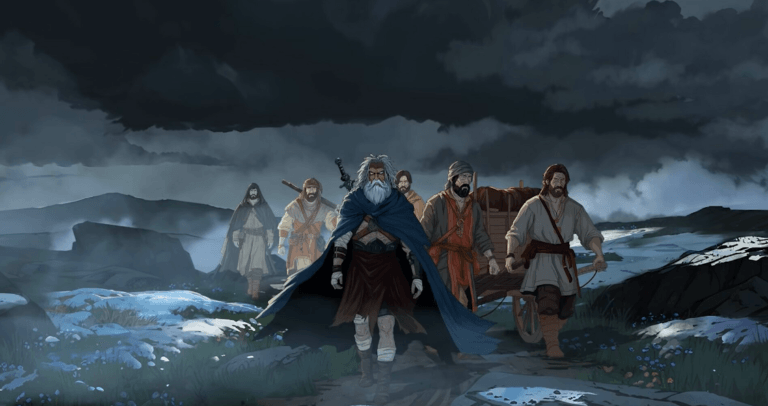
Environmental storytelling is the technique of using the actual game space (architecture, props, lighting, visual effects (VFX), audio, and spatial layout) to communicate the story, theme, and character traits without relying on cutscenes or excessive text.
In major titles such as Dark Souls, Fallout, Bioshock, and The Last of Us, players interpret elements like blood streaks, destroyed furnishings, graffiti, and ambient soundscapes as clues, reconstructing a narrative from fragments rather than being overtly informed.
A compelling environmental narrative operates on multiple levels: it’s clear enough for a casual player to grasp the basic idea, yet layered enough for dedicated players to consistently uncover deeper meaning (visual storytelling and spatial storytelling).
Why Is Environmental Storytelling So Important in 2026?
In 2026, Environmental storytelling is vital for maximizing player engagement, production efficiency, and narrative discoverability.
As virtual worlds expand and become more systemic, designers depend on the environments to deliver background information (lore), quest hooks, and emotional beats in ways that are more scalable than creating custom cutscenes.
Industry evaluations point to increasing interest in narrative and environmental storytelling as a primary distinction, particularly when supported by high-caliber game environment art/environment design and intelligent optimization.
Furthermore, powerful environmental hints enhance accessibility by using visual language, spatial clues, and diegetic storytelling (such as in-world signage) to guide players who might skip or struggle with conventional text and voice-over (VO).
Case Studies: Examples of Environmental Storytelling
Now, let’s analyze two well-known examples of this approach that every gamer must be familiar with:
Bethesda Game Studios: Building Worlds Through Environmental Storytelling
The RPGs developed by Bethesda Game Studios are a classic illustration of large-scale environmental storytelling.
Titles like Skyrim and Fallout 4 utilize a modular approach to level design to construct massive worlds, then leverage meticulously placed props (such as a skeleton reaching for a health potion or a family meal frozen mid-disaster) to suggest detailed micro-stories within almost every interior.
The strategic placement of loot, lighting contrast, and sightlines is employed to hint at danger, reward, or history long before any dialogue begins, transforming exploration into a continuous drip-feed of narrative.
This method is exceptionally potent in open-world and sandbox games, where players are free to disregard the main questline for hours on end.
Halo: Combat Evolved
Halo: Combat Evolved demonstrates how even a relatively linear shooter can make heavy use of environmental storytelling.
The sprawling vistas of the ringworld establish its vast scale and inherent mystery; shifting atmospheric conditions and the time of day reflect the rising stakes of the campaign, while covenant ruins and flood-damaged corridors visually trace the conflict’s progression.
Recent previews of the planned Halo: Campaign Evolved update emphasize that the team is upgrading environmental storytelling in notoriously difficult levels like “The Library” through improved wayfinding, pacing, and narrative cues embedded directly into the geometry and lighting, rather than relying solely on additional VO.
This underscores a crucial lesson: enhancing your environmental storytelling can update a classic experience without altering its core plot.
How Does Environmental Storytelling Actually Work Moment to Moment?
At any given moment, environmental storytelling involves carefully arranging composition, contrast, and implied cause-and-effect to direct the player’s eye and stimulate their imagination.
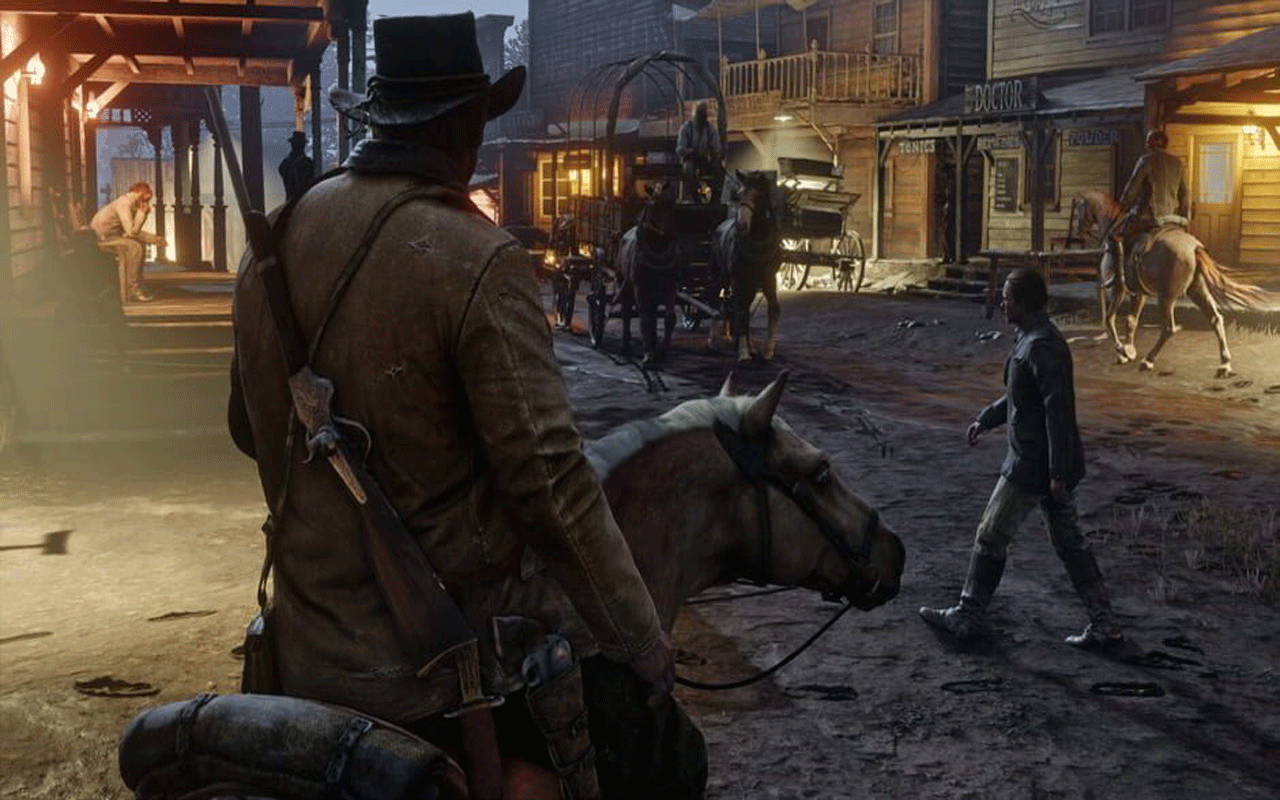
The layout and camera framing determine what you notice first; groups of props and decals signal “what transpired here”; lighting, VFX, and audio establish the prevailing emotion and sense of urgency; and interactive components (doors, terminals, puzzles) translate observation into gameplay.
Successful teams approach this as a collaboration among environment artists, level designers, narrative designers, and sound designers, all operating from the same core story beats and intended player journey. As you hone your skills, view each room or scenic view as a single sentence within a larger visual paragraph.
Is Environmental Storytelling Here to Stay?
All indicators suggest that Environmental storytelling will not only persist but will become even more foundational.
Trends in 2026 demonstrate a heightened focus on experiences driven by narrative, “archaeology-like” exploration games (like Outer Wilds or Return of the Obra Dinn), and worlds rich in information where players must piece together stories from objects, records, and architecture rather than through extensive exposition.
Simultaneously, AI-assisted and procedural storytelling tools are emerging that can generate variations of props, graffiti, or scene dressing in response to player decisions, increasing replayability without sacrificing coherence.
As production costs rise, studios that master systematic, reusable methods for Environmental storytelling will deliver more immersive worlds with fewer one-off assets.
Pixune Studios: Find Your Unique Environmental Storytelling!
If your internal team lacks dedicated environment storytellers, partnering with an outsourced studio that thrives at the intersection of game art, animation, environment design, and narrative logic can significantly amplify your efforts.
A partner like Pixune Studios can help convert your high-level story requirements into tangible visual motifs, seamless scene-to-scene continuity, and ready-for-marketing key shots that all convey a unified narrative language.
This allows your in-house team to concentrate on core gameplay systems, user experience (UX), and content iteration while still shipping a cohesive, story-rich world.
As you plan your next significant milestone, consider where an external expert in environment art outsourcing could enable your environments to tell more and your cutscenes to say less.
Final Words
In 2026, successful environmental storytelling requires treating your game world as an active narrator: environments must be easily readable at a glance, offer deeper layers upon closer inspection, and be tightly synchronized with gameplay beats.
It draws upon disciplines ranging from game environment art/environment design and lighting to level design, narrative design, and sound, all unified by clear narrative objectives.
As you proceed, start small! Focus on one room, one street, or one vista and consciously design what that space “says” before placing any single prop, then refine based on how actual players interpret it.