
Anime is not a single look. It is a vast visual language, and the many types of anime art styles range from soft, storybook gentleness to gritty, cinematic realism. A chibi mascot, a hyper-detailed seinen thriller, and a cel-shaded video game can all wear the “anime” label while looking almost nothing alike. For artists, studios, and anyone planning a creative project, understanding these styles is the first step toward choosing a direction that fits your story and your audience.
In this guide, we break down the most popular anime art styles, explain what defines each one, and show where they show up in animation, manga, and games. Whether you are a character designer, a studio art director, or simply curious about the differences between anime drawing styles, this complete overview will give you a clear, structured map of the aesthetics that shape the medium today.
What Defines an Anime Art Style?
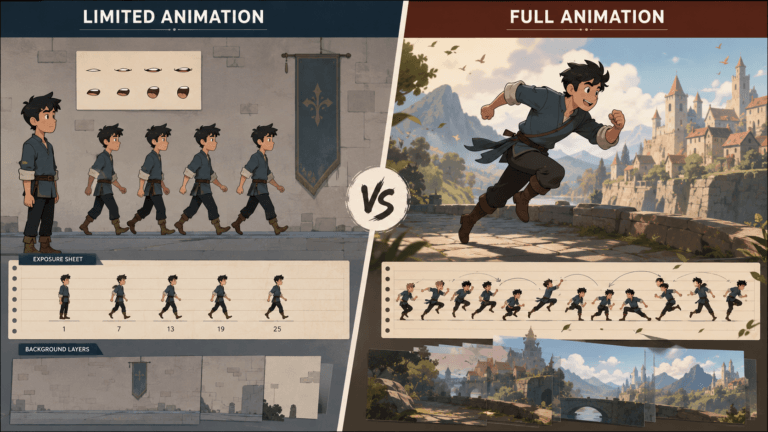
Before diving into individual categories, it helps to understand what actually makes a style read as “anime.” As the scholarly analysis of anime from Yale University Press notes, one of the medium’s defining traits is its economy: anime historically uses fewer drawn frames per minute than American animation, and pairs that efficiency with characters whose large eyes are designed to express a wide emotional range. That combination of stylized restraint and emotional intensity is the foundation almost every anime aesthetic builds on.
Character Design Elements
The most recognizable signature of anime is its approach to character design. Faces tend to feature large, expressive eyes with detailed highlights, small noses and mouths, and clean, simplified linework. Hair is often treated as a major design element, using bold shapes and color to communicate personality at a glance.
These choices are deliberate. Strong silhouettes, exaggerated proportions, and consistent style cues make characters instantly readable and memorable principles that carry across many different anime character art styles. If you want to go deeper on building a recognizable visual identity, our breakdown of character art styles covers the wider landscape, and our guide on creating unique character art styles walks through how artists develop a distinctive look from reference, anatomy, and texture.
Color, Shading, and Linework
Color and shading do a lot of the heavy lifting in anime. Many styles rely on flat or “cel” shading solid blocks of light and shadow rather than smooth, photographic gradients. This keeps the image clean, reproducible, and emotionally legible. Linework is usually crisp and confident, with line weight used to emphasize key shapes.
Because traditional anime leaned on limited animation, artists put extra care into composition, color harmony, and strong key poses to carry scenes that reuse frames. Our look at the essential animation styles explains how anime channels that efficiency into emotional storytelling, while our overview of 2D animation styles details the production techniques behind the look.
Influence of Genre and Audience
A huge part of why there are so many types of anime aesthetics comes down to audience. Anime is commonly organized into demographic categories shonen, shojo, seinen, josei, and kodomomuke that shape both tone and art direction. As Winged Canvas explains in its piece on anime’s popularity, these categories are audience targets rather than strict art rules, but they reliably influence how characters are drawn, how dark the palette runs, and how much realism creeps in. A heartwarming kids’ series and a brooding adult drama will diverge sharply even though both are “anime.”
Traditional Anime Art Style
The traditional anime art style is the hand-drawn, cel-based look that defined the medium for decades and still shapes how people picture anime today.
Classic 1980s and 1990s Anime
The 1980s and 1990s are often considered the golden era of hand-painted cel animation. As the LTX anime glossary notes, the hand-drawn cel work of this period is visually distinct from the digital production that took over after 2000. Films and series from this era carried a tactile, painterly quality: physical cels layered over hand-painted backgrounds, grain, and a warmth that many fans still chase today.
This is also the period when the medium proved it could handle serious, cinematic storytelling. Gritty, detail-packed work showed audiences that anime could feel more like film than cartoon, with heavy, weighted movement and richly cluttered environments.
Characteristics and Famous Examples
Key traits of the traditional style include painterly backgrounds, slightly muted or filmic color, expressive but economical animation, and a strong emphasis on atmosphere. Studio Ghibli is the most celebrated example of this tradition Hayao Miyazaki’s films pair detailed, naturalistic backgrounds with charming, softly rendered characters. As Pixune’s character art guide points out, Ghibli artists immerse themselves in Japanese art, theater, and folklore before designing, which is part of why their worlds feel so cohesive and storybook-like.
Modern Anime Art Style
The modern anime art style keeps the visual DNA of classic anime while embracing digital tools, hybrid 2D/3D techniques, and bolder color.
Digital Production Techniques
After 2000, the pipeline shifted decisively toward digital. Compositing, digital ink-and-paint, vector tools, and 3D-assisted camera moves replaced physical cels. This unlocked smoother gradients, more elaborate lighting effects, glowing particle work, and dynamic “camera” movement that would have been painfully slow to draw by hand. Contemporary productions frequently blend 2D characters with subtle 3D environments and effects, a hybrid approach that lets studios scale up spectacle without losing the hand-drawn feel.
Popular Contemporary Series
Modern anime is defined partly by directors with a strong personal signature. Makoto Shinkai is a standout his films are known for luminous skies, lens-flare-heavy lighting, and photoreal backgrounds married to clean character art. Contemporary action hits push detailed effects animation and saturated color to dramatic extremes. For a broad survey of how today’s aesthetics are categorized, Don Corgi’s rundown of anime art styles is a readable, example-driven reference that maps the current landscape.
Realistic Anime Style
The realistic anime style trades exaggeration for grounded proportions, mature lighting, and a more lifelike sense of weight without fully abandoning the medium’s stylization.
Detailed Anatomy and Proportions
Where most anime simplifies, the realistic style leans into believable anatomy, natural body proportions, subtler facial features, and more accurate lighting. This places it closer to the “realistic” end of the spectrum described in our comparison of stylized vs realistic art, where realism prioritizes physical accuracy while stylization emphasizes artistic interpretation. Realistic anime sits in an interesting middle ground: recognizably anime in linework and mood, but restrained in its exaggeration.
Examples in Films and Series
Realistic styling usually accompanies darker, more mature storytelling. As Hinori’s breakdown of anime art styles notes, series like Cowboy Bebop and Psycho-Pass use more lifelike proportions and moodier visuals to match their tone. The DrawingProfy guide to anime art styles similarly highlights realism alongside other major aesthetics, often citing seinen-leaning works where weight, shadow, and texture do the emotional work.
Chibi Anime Style
Chibi is one of the most beloved and instantly recognizable types of anime art styles tiny, super-deformed characters built almost entirely from cuteness.
Exaggerated Proportions
Chibi takes proportion to a playful extreme. Heads are enormous relative to bodies often half the total height or more while limbs shrink and features simplify. The result is an adorable, “super-deformed” version of a character that maximizes charm and comedy. Because the style strips detail down to essentials, it is wonderfully flexible: almost any character can be redrawn in chibi form.
Uses in Games and Merchandise
Chibi’s compact, high-charm design makes it a favorite for merchandise, mascots, mobile games, and comedy spin-offs. Collectible figures, sticker packs, gacha-style mobile titles, and promotional art lean on chibi precisely because it reads clearly at small sizes and signals approachable fun. It is one of the clearest examples of an anime aesthetic engineered for commercial appeal as much as for storytelling.
Moe Anime Style
The moe style is built to evoke affection and endearment, emphasizing softness, warmth, and youthful charm.
Cute Character Design Features
Moe character design favors rounded shapes, large sparkling eyes, soft cheeks, and gentle, pastel-leaning palettes. The goal is emotional designs are crafted to feel lovable and protective rather than imposing. As Don Corgi’s anime style guide describes, moe sits in the family of cute-focused aesthetics alongside kawaii and chibi, each emphasizing endearment through simplification and warmth.
Slice-of-Life and School Anime
Moe is the natural visual fit for slice-of-life, comedy, and school-set series, where the appeal lives in everyday moments and character chemistry rather than spectacle. These shows rely on expressive, lovable casts to carry low-stakes, comforting stories exactly the kind of emotional register the moe style was built to deliver.
Kawaii Anime Style
Closely related to moe, the kawaii style is all about bright, simplified, openly “cute” design that extends far beyond anime into Japanese pop culture at large.
Colorful and Simplified Designs
Kawaii leans on vivid colors, rounded forms, and deliberately childlike simplicity. As Hinori notes in its anime style analysis, kawaii is a relatively recent aesthetic family, using bright palettes and simple, charming character designs New Game! is a frequently cited example of the look in motion. The emphasis is on immediate, friendly visual appeal.
Appeal and Applications
Because kawaii is so universally legible and likeable, it travels well beyond the screen. It anchors mascot design, branding, stationery, fashion, app interfaces, and product lines worldwide. For studios and brands, kawaii is a dependable way to signal warmth and accessibility, which is why it remains one of the most commercially popular anime art styles.
Shonen Anime Style
Shonen is the high-energy, action-forward aesthetic most Western audiences first associate with anime.
Dynamic Characters and Action
The shonen style is built for movement. Expect dynamic poses, dramatic camera angles, bold line weights, expressive effects animation, and characters designed to look heroic and determined. Color tends to be saturated and high-contrast, and compositions emphasize energy and momentum. It is a style engineered to make action read clearly and feel exciting.
Popular Shonen Franchises
Shonen anime targets younger audiences often teen boys with action-packed, coming-of-age adventures. As the LTX anime guide notes, landmark franchises like Naruto and Dragon Ball exemplify the category’s blend of escalating battles and personal growth. The artistic influence of creators like Akira Toriyama on this style is hard to overstate; the dynamic, instantly recognizable shonen look has shaped decades of action anime.
Seinen Anime Style
Seinen is anime’s grown-up register designed for adult audiences and matched by more sophisticated, often darker visuals.
Mature Themes and Visuals
Seinen tackles psychological depth, moral ambiguity, violence, and social commentary, and its art direction reflects that. Palettes tend to be moodier and more muted, lighting more dramatic, and detail more intricate. The style frequently borrows from realism to ground its heavier subject matter, giving scenes weight and tension that lighter styles avoid.
Darker Character Designs
Seinen character designs lean toward more naturalistic proportions, sharper detailing, and a wider emotional and moral range. Faces can be more angular and lived-in, and the overall look favors atmosphere over cuteness. This is the aesthetic of choice when a story needs to feel serious, cinematic, and adult.
Anime-Inspired 3D Art Styles
Not all anime aesthetics are hand-drawn. A growing family of anime-inspired 3D art styles recreates the 2D look using modern engines and rendering tricks central to anime art styles in games.
Cel Shading Techniques
Cel shading is the key technique here. It renders 3D models with flat, banded lighting and bold outlines so they read as hand-drawn rather than photoreal. As our game art styles guide explains, this cel shaded anime art style merges the charm of 2D anime with the flexibility of real-time 3D, producing striking, readable characters that are far less resource-intensive than hyper-realistic rendering. Games like The Legend of Zelda: The Wind Waker helped pioneer the look.
Anime Games and Cinematics
Pulling off convincing anime visuals in 3D is as much about lighting and color as geometry. In an 80 Level breakdown of building anime scenes in Unreal Engine 5, environment artist Yan Ru emphasizes that organizing color, balancing warm and cool tones, and carefully managing saturation plus restraint with outlines are what make a 3D scene feel tidy, harmonious, and genuinely anime. The result powers everything from gacha mobile games to cel-shaded console titles and animated cinematics.
How to Choose the Right Anime Art Style
With so many types of anime art styles available, the right choice depends on your medium, audience, budget, and the emotional tone you want to hit.
For Games
For games, weigh production cost and performance alongside aesthetics. Cel-shaded and stylized looks are flexible, age gracefully, and run efficiently ideal for indie teams and stylized worlds. If you are deciding between approaches, our guide on stylized vs realistic art and our breakdown of game art styles can help you match the style to your gameplay, platform, and resources.
For Animation
For animation, let the story lead. Traditional and modern hand-drawn styles excel at emotional warmth and expressive performance; hybrid 2D/3D pipelines deliver dynamic spectacle at scale. Our overview of animation styles and the wider field of cartoon styles can help you find the production approach that fits your project’s size and goals.
For Character Design Projects
For standalone character design mascots, brand characters, illustration, or merchandise start from purpose. Chibi and kawaii maximize charm and commercial appeal; shonen and seinen communicate energy or maturity; realistic styling signals seriousness. Whatever direction you pick, consistency is everything, which is exactly what our guide to creating unique character art styles is built to help with.
Anime Style vs Manga Style: A Quick Note
People often ask about anime style vs manga style, and the distinction is worth clarifying. Manga (Japanese comics) is primarily defined by line and value on the printed page black-and-white linework, screentones, and panel storytelling. Anime adapts that visual language into color and motion. The two share DNA and frequently inform each other, but anime layers in palette, lighting, and animation that manga leaves to the reader’s imagination.
Conclusion
The many types of anime art styles from the painterly warmth of traditional cel work and Studio Ghibli, to chibi’s exaggerated cuteness, moe and kawaii’s softness, shonen’s explosive action, seinen’s mature edge, and the cel-shaded 3D looks now common in games prove that “anime” describes a medium, not a single style. There is no single “best” aesthetic; the right one is whichever serves your story, audience, and production realities.
If you are planning a game, animation, or character design project and want help selecting and executing the right anime aesthetic, exploring our deeper guides on character art styles and game art styles is a strong next step.


![1405,02,10 SnpLE[Cover HD] 1](https://pixune.com/wp-content/uploads/2026/08/14050210-SnpLECover-HD-1-768x431.jpg)