Some medical concepts are difficult to explain because we cannot simply point a camera at them. A doctor can describe how a heart valve works. A scientist can explain how a drug interacts with a receptor. A surgeon can talk through a procedure. But in each case, the audience still has to imagine what is happening. Medical animation solves that problem by making invisible or complicated processes visible.
It can show what happens inside the body, how a medical device works, how a surgical procedure is performed, or how a treatment affects cells and tissues. A good medical animation does not simply make medical information more attractive. It gives the viewer a visual way to understand something that may otherwise be difficult to picture.
Today, medical animation is used by hospitals, pharmaceutical companies, biotech companies, universities, medical device manufacturers, and healthcare organizations. Depending on the subject, it can be a simple 2D explainer or a highly detailed 3D production.
What Is Medical Animation?
Medical animation is a specialized form of animation used to explain medical, anatomical, biological, and healthcare-related subjects. The subject might be something relatively familiar, such as the anatomy of the human heart. It could also be something that cannot be directly observed, such as the way a drug molecule interacts with a receptor.
Animation gives the creator control over the viewer’s perspective. A scene can move inside the body, zoom into a cell, reveal an organ through a cutaway, or slow down a procedure so that every important step is easy to follow. The goal is not necessarily photorealism.
A patient may benefit from a simplified animation that clearly explains a procedure. A pharmaceutical company may need a much more detailed molecular visualization. The right level of detail depends on what needs to be communicated.
Medical animation sits at the intersection of science, visual communication, storytelling, and 3D production. It therefore requires more than animation skills alone. The team needs to understand the subject and know how to simplify it without changing its meaning.
Why Is Medical Animation Important?
Medicine contains many processes that are difficult to observe directly. Some happen inside the body. Others occur at a microscopic scale. A surgical procedure may involve several steps that are difficult to visualize from a single camera angle. A textbook can explain these processes with diagrams and written descriptions. Animation adds another dimension: time and movement.
Read More: Key Advantages of 3D Visualization
Instead of showing a static heart, an animation can show the heart contracting. Instead of describing blood flow, it can show the blood moving through vessels. Instead of explaining how an implant is positioned, it can demonstrate the procedure step by step.
This makes medical animation particularly useful when the viewer needs to understand not only what something is, but how it works. It can also make complex information easier to approach for people who are not medical professionals. A patient does not necessarily need to understand every anatomical term to understand what a procedure is intended to do.
Types of Medical Animation
Medical animation covers a wide range of subjects. The animation style and production approach usually depend on the information being explained.
1. Anatomy and Physiology Animation
Anatomy animation focuses on the structure of the human body. Physiology animation focuses on how those structures function. A video might explain the heart, brain, lungs, nervous system, muscles, bones, or digestive system. The advantage of animation becomes especially clear when structure and function need to be explained together.
A diagram can label the chambers of the heart. Animation can show how those chambers contract and how blood moves through them. This makes anatomy and physiology animation useful for medical education, patient communication, healthcare websites, and training.
2. Surgical Procedure Animation
Surgical procedures can be difficult to explain using photographs or live footage alone. An animation can show the procedure from any angle and reveal structures that would normally be hidden. The camera can move inside the body, highlight a specific tissue, or pause at a critical stage.
This makes surgical animation useful for both patient education and professional training. The level of detail should match the audience. A patient may need a clear overview of what will happen. A medical professional may need a much more precise representation of anatomy and surgical technique.
For complex productions, a well-planned 3D animation pipeline helps organize modeling, rigging, animation, rendering, and review before production becomes expensive.
3. Mechanism of Action Animation
Mechanism of Action or MoA animation explains how a drug or treatment works inside the body. This is particularly important for pharmaceutical and biotechnology companies because many drug mechanisms happen at a microscopic level.
An MoA animation might show a drug reaching a target cell, binding to a receptor, affecting a biological pathway, or producing a particular cellular response. The viewer is not watching the actual process. The animation is a visual representation of scientific knowledge. That distinction matters. A strong MoA animation should make the science easier to understand without visually suggesting claims that the underlying evidence does not support.
4. Medical Device Animation
Medical devices can be complicated even when the device itself looks simple. An implant, surgical instrument, diagnostic system, or robotic device may contain mechanisms that are impossible to see while the product is operating. Medical device animation can make those mechanisms visible.
A video can show an internal component moving, separate the parts of a device in an exploded view, demonstrate how an implant is positioned, or show how a device interacts with the body. This type of 3D animation is closely related to technical animation, where the goal is to explain complex systems through controlled visual demonstrations. Medical device companies can use these animations for product launches, sales presentations, training, conferences, websites, and investor communications.
5. Patient Education Animation
Medical information can be overwhelming when someone is dealing with a diagnosis or preparing for treatment. Patient education animation provides a visual explanation that patients can watch at their own pace.
A video might explain what a condition is, why a treatment is recommended, what happens during a procedure, or what recovery may involve. The language and visuals should be straightforward. Patient education is not the place to demonstrate technical knowledge for its own sake. The objective is to help someone understand what is happening and what they should remember.
What Is Medical Animation Used For?
Medical animation is used wherever complex healthcare information needs to be communicated clearly.
1. Pharmaceutical and Biotech Marketing
Pharmaceutical and biotechnology companies often need to explain complex science to different audiences. A sales representative may need to explain a treatment to a healthcare professional. A biotech startup may need to communicate its technology to investors. A company may also need educational content for a conference or website.
Animation can adapt the same underlying science for different audiences. A molecular process can be visualized in detail for a scientific audience or simplified for people who have little knowledge of biology.
2. Medical Education
Medical students have to learn an enormous amount of information about anatomy, physiology, pathology, pharmacology, and clinical procedures. Animation can help connect these subjects.
A student can see how an organ is structured and then watch it function. A procedure can be shown repeatedly without requiring access to a real patient or operating room. This makes animation useful for lectures, e-learning platforms, training libraries, and educational websites.
3. Clinical Training
Training often depends on seeing a process performed correctly. Medical animation can demonstrate procedures in a consistent way. It can slow down an important movement, isolate a particular anatomical structure, or repeat the same sequence as many times as necessary.
It can also show situations that are difficult to recreate safely in a real environment. The purpose is not to replace hands-on training. Instead, animation gives learners another way to study a procedure before or alongside practical instruction.
4. Healthcare and Hospital Communication
Hospitals can use animation to explain procedures, conditions, treatments, and medical devices. A patient may receive a verbal explanation from a doctor but still have questions afterward. A visual explanation can reinforce that conversation. Animation can also help healthcare organizations communicate consistently across websites, patient portals, waiting rooms, and educational materials.
5. Medical Research Communication
Researchers often need to communicate complex findings to people outside their immediate field. Animation can help bridge that gap. Instead of presenting a complicated biological pathway as a dense diagram, researchers can show how the process develops over time. This can be useful in conferences, presentations, publications, educational materials, and scientific outreach.
Medical Animation Examples
The best medical animation ideas usually begin with something that is difficult to see or explain.
How a Drug Reaches Its Target
An animation could follow a drug from administration through the body until it reaches its target. The video might then zoom into a cell and show the interaction at a molecular level. This type of sequence can connect several scales of information without forcing the audience to imagine the transitions.
How a Heart Works
A heart animation can begin with the overall anatomy and gradually move into the chambers and valves. The viewer can see the heart contract and watch blood move through the cardiovascular system. This is much more informative than showing a static heart model when the objective is to explain how the organ functions.
How a Medical Implant Works
An implant animation can show the anatomy first and then introduce the device. The viewer can see where the implant is placed, how it interacts with surrounding structures, and what changes after implantation. A cutaway view can reveal details that would not be visible in a conventional product video.
Explaining a Surgical Procedure
An animation can guide the viewer through a procedure from beginning to end. The camera can move between external and internal views. Labels can identify important structures while narration explains what is happening. For patients, the sequence can reduce uncertainty. For medical professionals, it can provide a more detailed visual reference.
How Is Medical Animation Created?
Medical animation starts with understanding the subject. Before an artist begins modelling an organ or animating a procedure, the production team needs to know exactly what the video is supposed to communicate. That usually begins with research and consultation with subject matter experts.
1. Research and Script Development
The team collects the relevant medical information and determines the central message. A script is then developed around that message. A good script does not try to explain everything about a subject. It identifies what the viewer actually needs to know. A patient-facing video may use plain language. A pharmaceutical MoA animation may require specialized terminology. A medical device animation may need to balance engineering information with clinical context.
2. Storyboarding and Visual Planning
The script is translated into a visual sequence through storyboarding. This is where the team decides what the viewer sees and when they see it. The storyboard establishes the camera direction, important transitions, labels, close-ups, and relationship between narration and visuals. For complex medical subjects, this stage is particularly important because too much information can quickly make an animation difficult to follow. An animatic can then be used to test the timing before detailed production begins.
3. Modeling and Asset Creation
Once the visual plan is approved, artists create the necessary assets. Depending on the project, these might include organs, bones, tissues, cells, molecules, surgical instruments, medical devices, or complete anatomical environments. Some projects require highly detailed models. Others deliberately use simplified forms to make the information easier to understand. The model should serve the explanation rather than distract from it.
4. Rigging and Animation
Rigging gives models the controls needed to move. A character may need a complete skeletal rig. An organ may need a specialized setup that allows it to contract or deform. A medical device may need mechanical controls that reproduce its actual movement. The animation stage then establishes movement, timing, and camera behavior.
5. Rendering and Compositing
Once the animation is complete, the scenes are rendered and assembled. Lighting and materials help establish the visual hierarchy. Labels and graphics can be added during compositing. Narration, music, and sound effects are incorporated during post-production. Depending on the project, studios may use 3D rendering tools such as Maya, Blender, Cinema 4D, ZBrush, Unreal Engine, and specialized simulation software.
6. Medical Review
Medical review is one of the most important parts of the process. A visually impressive animation can still be misleading if the anatomy is incorrect or a biological process is represented inaccurately. Subject matter experts can review the script, storyboard, models, animation, terminology, and final edit. This is particularly important for pharmaceutical and healthcare content where visual claims can have serious implications.
What Makes a Good Medical Animation?
A good medical animation is not necessarily the one with the most detail. It is the one that makes the intended concept easier to understand.
Accuracy
The science needs to be correct. Simplification is acceptable when it improves clarity, but it should not change the meaning of the process being explained.
Clarity
The viewer should know what they are looking at. Camera movement, labels, color, scale, and pacing should work together rather than compete for attention.
Appropriate Detail
Showing more does not always mean explaining more. A molecular animation can contain thousands of visual details that are scientifically interesting but irrelevant to the main message. Removing those distractions can make the final video stronger.
Good Storytelling
Medical animation still needs a narrative structure. The viewer should understand where the explanation begins, what changes, and why that change matters. This is where principles used in storytelling and animation become valuable even in highly technical projects.
2D vs. 3D Medical Animation
Both 2D and 3D animation have a place in medical communication.
When to Use 2D Animation
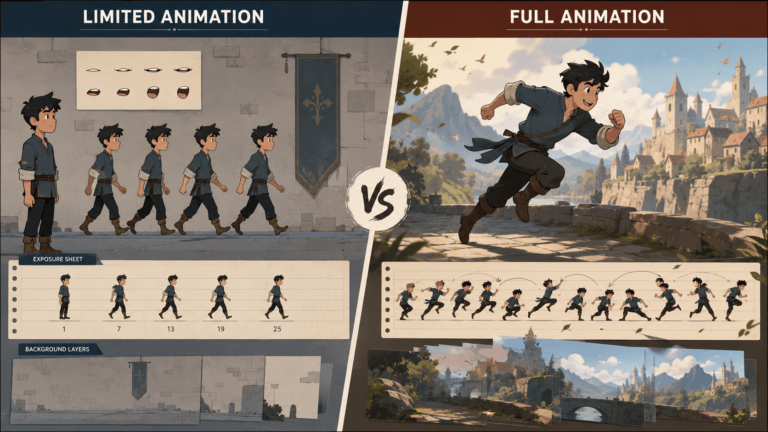
2D animation works well for concepts that can be explained through diagrams, icons, charts, and simplified illustrations. It can be a practical choice when the subject does not require detailed spatial visualization. 2D can also make an educational video feel approachable, especially when the target audience is not medically trained.
When to Use 3D Animation
3D becomes popular and particularly useful when spatial relationships are important. If the audience needs to understand the shape of an organ, see inside the body, follow a surgical procedure, or understand how a medical device moves, 3D provides much greater freedom. High-quality 3D animation services can also create realistic materials and lighting when the project requires a more detailed visual treatment.
Combining 2D and 3D
A medical video does not have to choose one style. A production can use 3D models for anatomy and 2D graphics for labels, diagrams, data, and explanatory overlays. This often creates a more efficient visual language because each animation technique is used where it is most effective.
Benefits of Medical Animation
The biggest benefit is better communication. Medical animation can make information easier to understand because viewers can see a process instead of having to construct the entire process in their imagination. It also gives creators control over information that cannot be captured with a camera.
A medical animation can move through microscopic environments, reveal hidden structures, slow down biological processes, or demonstrate a procedure from an impossible viewpoint. There is also a practical benefit for education and training. Once produced, the same animation can be shown repeatedly and consistently across different settings. For healthcare organizations and medical companies, that makes animation a reusable communication asset rather than a one-time presentation.
Medical Animation vs. Scientific Animation
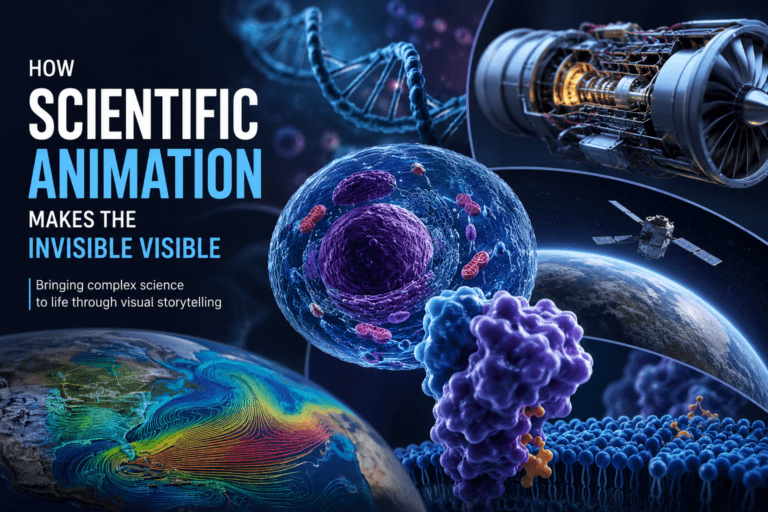
Medical animation is a specialized area within the broader world of scientific animation. The difference is mainly the subject and intended use.
Scientific animation can cover chemistry, physics, biology, engineering, astronomy, environmental science, and other scientific subjects. Medical animation focuses specifically on healthcare, medicine, anatomy, biological processes, treatments, procedures, and medical technology. There is considerable overlap.
For example, an animation showing how a pharmaceutical compound interacts with a receptor is both scientific and medical. The scientific side explains the molecular process while the medical context explains its relevance to a treatment. You can learn more about the broader field in our guide to scientific animation.
How Much Does Medical Animation Cost?
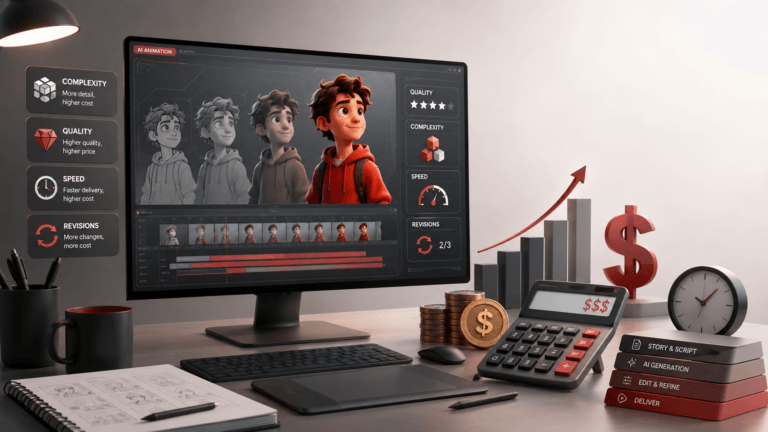
Medical animation can range from a relatively simple 2D explainer to a highly detailed 3D production involving custom anatomy, simulations, complex camera work, and extensive expert review. The cost depends on the scope rather than simply the length of the final video. A short animation can still require significant work if it involves complicated anatomy or molecular processes.
Factors that influence the budget include the visual style, duration, number of custom assets, scientific complexity, level of anatomical detail, simulation requirements, voiceover, sound design, and number of revision rounds.
The best way to estimate a project is therefore to define what the audience needs to understand first. Once the message and visual requirements are clear, the production team can determine the appropriate level of detail.
Who Uses Medical Animation?
Medical animation is used across several industries and institutions. Pharmaceutical companies use it to explain drug mechanisms and treatment concepts. Biotechnology companies use it to communicate complex biological technologies. Medical device companies use it to demonstrate how products work.
Hospitals use animation for patient education and communication. Universities and medical schools use it for teaching. Research organizations use it to present complex scientific concepts. The audiences can be very different, which is why the same scientific subject may require completely different visual treatments.
The Future of Medical Animation
Medical animation is becoming more sophisticated as 3D software, real-time rendering, simulation, and AI-assisted production continue to develop. Real-time technologies can make complex scenes easier to explore and revise. Simulation tools can produce increasingly convincing representations of physical and biological processes. AI can assist with parts of the creative and production workflow.
But technology does not replace the need for scientific judgment. The more detailed a medical animation becomes, the more important it is to know what the viewer actually needs to see. The future of medical animation will likely be less about making every image more realistic and more about finding better ways to communicate difficult medical information.
Conclusion
Medical animation makes complex healthcare information easier to see and understand. It can take viewers inside the human body, explain how a treatment works, demonstrate a surgical procedure, or show the mechanics of a medical device in a way that traditional video often cannot.
The most effective medical animations balance scientific accuracy with clear visual storytelling. They do not try to show every possible detail. Instead, they focus on the information the audience needs and present it in a way that is easy to follow.
As 3D technology, real-time rendering, simulation, and AI-assisted tools continue to develop, medical animation will become an even more flexible tool for education, research, healthcare communication, and medical marketing.
Whether the goal is to educate a patient, train a medical professional, or explain a complex treatment, the right animation can turn difficult medical information into something people can actually understand.