
Rigging is one of the most important stages of the animation pipeline, yet it often receives less attention than modeling or animation itself. A beautifully designed character cannot move properly without a well-constructed rig. Whether the project is a feature film, video game, commercial, or animated series, the quality of the rig directly affects the animator’s ability to create believable performances.
Modern rigging has evolved far beyond simple bone structures. Today’s rigs include advanced control systems, procedural automation, facial setups, simulation controls, and specialized deformation techniques designed to improve efficiency and realism. Different projects require different approaches, which is why understanding rigging techniques is essential for artists, animators, and game developers.
In this guide, we’ll explore the most common rigging techniques used in modern animation and explain how each one contributes to the final performance.
What Is Rigging in Animation?
Rigging is the process of creating a digital skeleton and control system that allows a character, creature, vehicle, or object to move. The rig acts as the bridge between the static model and the animator, providing controls that manipulate the model in predictable and efficient ways.
A rig typically consists of bones, joints, controllers, constraints, deformers, and automation systems. Together, these elements create a framework that animators can use to pose and animate characters without modifying the underlying model.
Why Rigging Techniques Matter
The quality of a rig has a direct impact on animation quality and production efficiency. A poorly designed rig can limit movement, create deformation issues, and slow down production. A well-designed rig allows animators to focus on performance rather than technical problems.
Advanced rigging techniques also improve consistency across large productions. When multiple animators work on the same project, standardized rigging services help maintain quality while speeding up the animation process.
1. Bone-Based Rigging
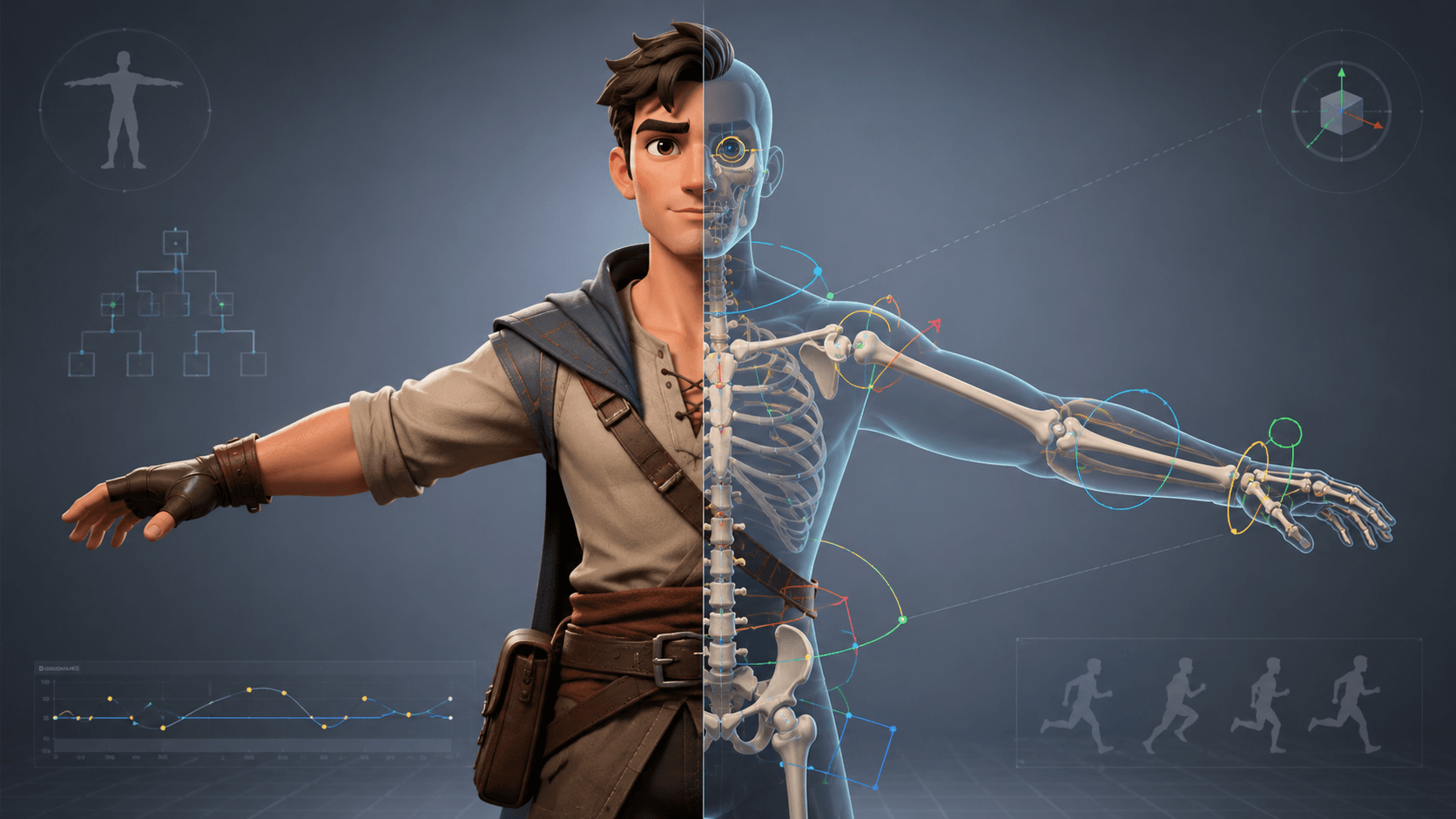
Bone-based rigging is the foundation of most character rigs. The rigging process involves creating a hierarchy of interconnected bones that mimic the structure of a real skeleton.
Each bone influences a specific part of the model, allowing movement to flow naturally throughout the character. Bone-based rigs are widely used in films, television, animation services, and game art development because they provide a balance between flexibility and performance.
Advantages of Bone-Based Rigging
Bone rigs are relatively lightweight, easy to manage, and compatible with most animation software and game engines. They also provide a strong foundation for more advanced rigging systems.
Common Applications
Bone-based rigs are commonly used for humanoid characters, animals, creatures, props, and mechanical objects.
2. Forward Kinematics (FK)
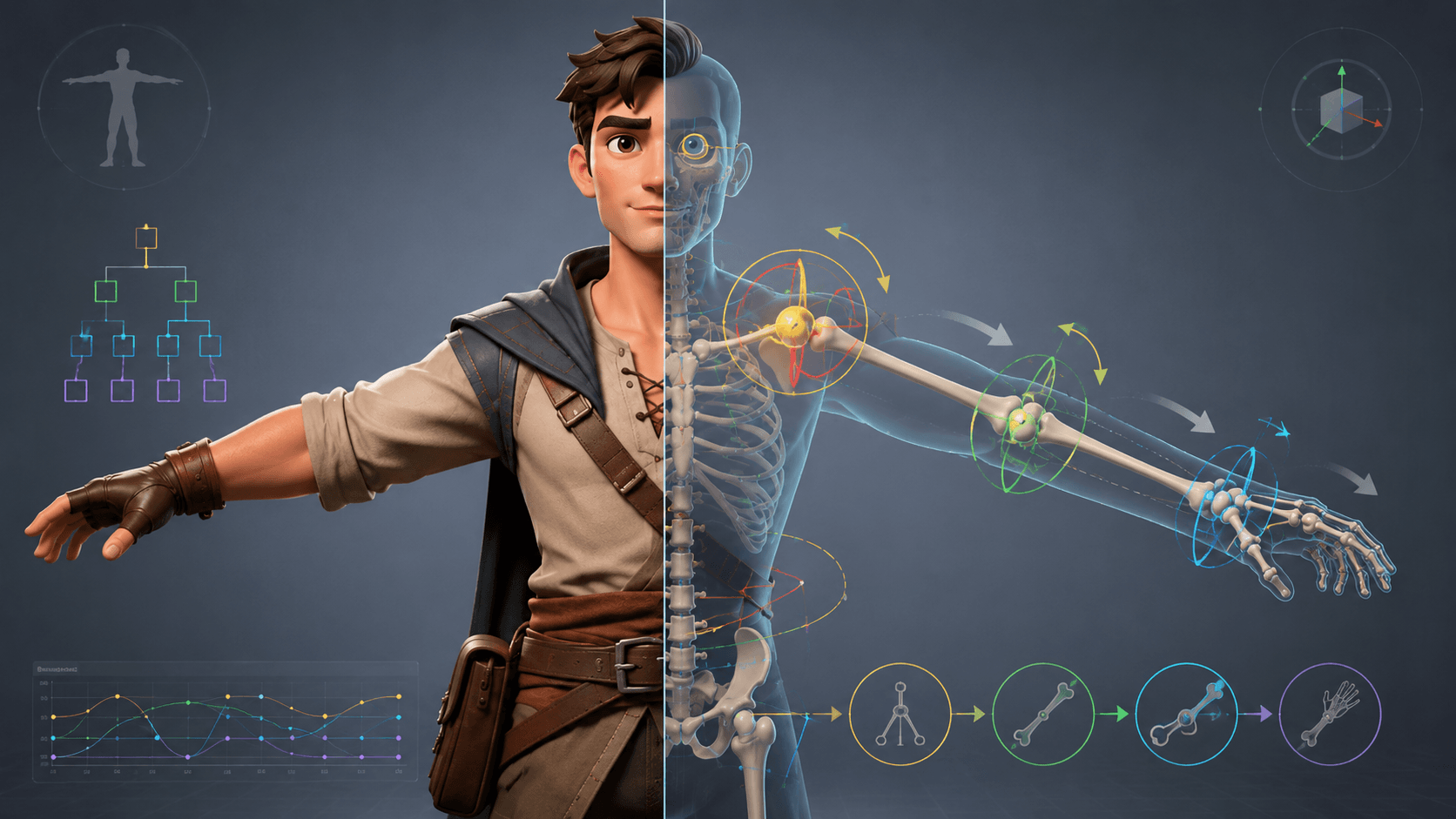
Forward Kinematics, often abbreviated as FK, is one of the oldest and most widely used rigging techniques. In an FK setup, movement begins at the parent joint and flows through the hierarchy to child joints.
For example, rotating the shoulder affects the entire arm, while rotating the elbow affects the forearm and hand.
When FK Works Best
FK is particularly useful for smooth, flowing movements such as arm swings, tail motion, spine animation, and character acting. It gives animators precise control over arcs and poses.
Advantages of FK
FK rigs are simple, predictable, and easy to evaluate. They often produce more natural-looking rotational movement than other systems.
3. Inverse Kinematics (IK)
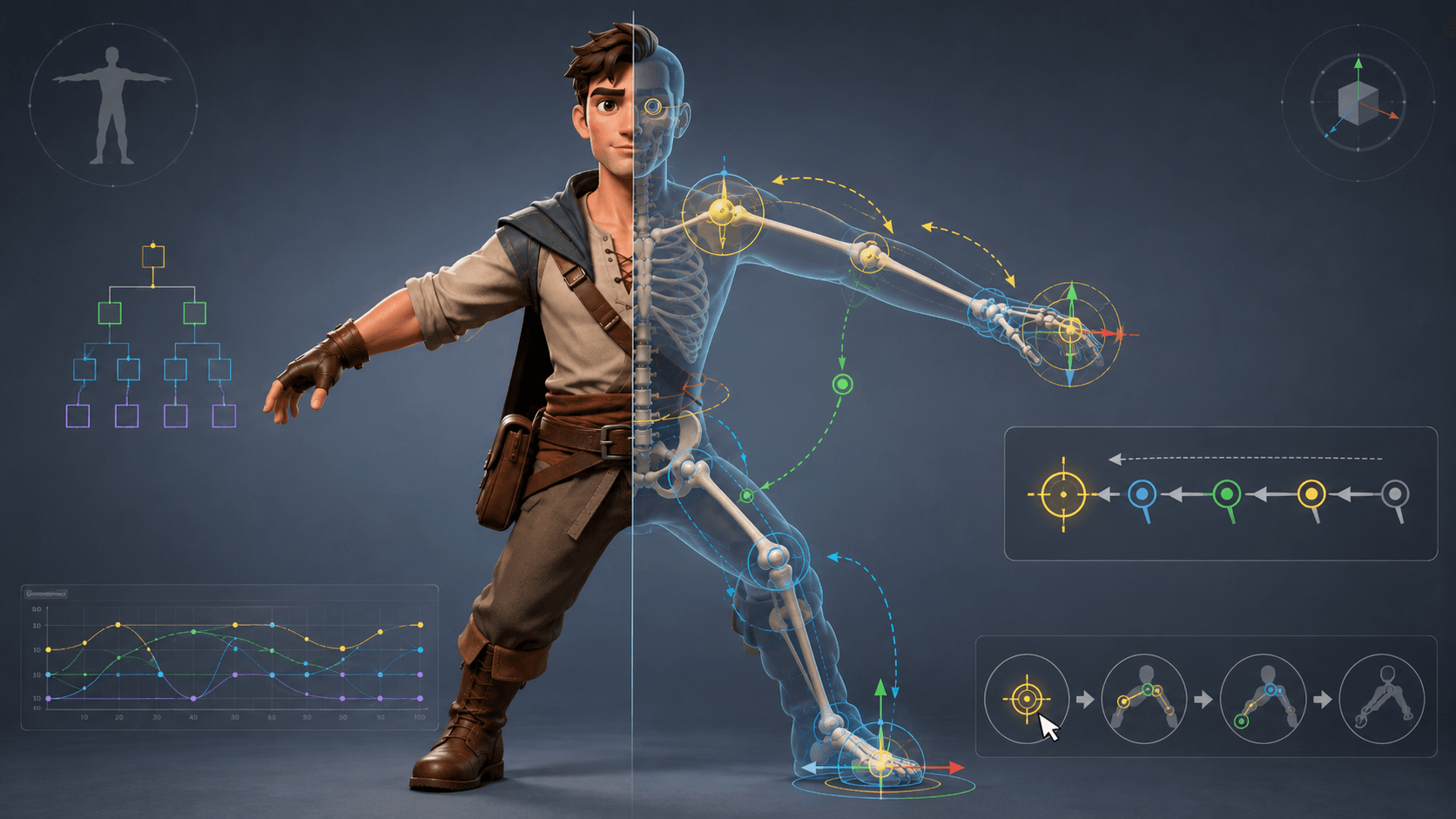
Inverse Kinematics works in the opposite direction. Instead of rotating individual joints manually, the animator moves an end control and the system automatically calculates the intermediate joint positions.
For example, moving a hand controller automatically positions the elbow and shoulder.
When IK Works Best
IK is commonly used when characters interact with the environment, such as placing hands on tables, keeping feet planted on the ground, or holding objects.
Advantages of IK
IK significantly speeds up animation and makes it easier to maintain physical contact between characters and their environment.
4. IK/FK Switching
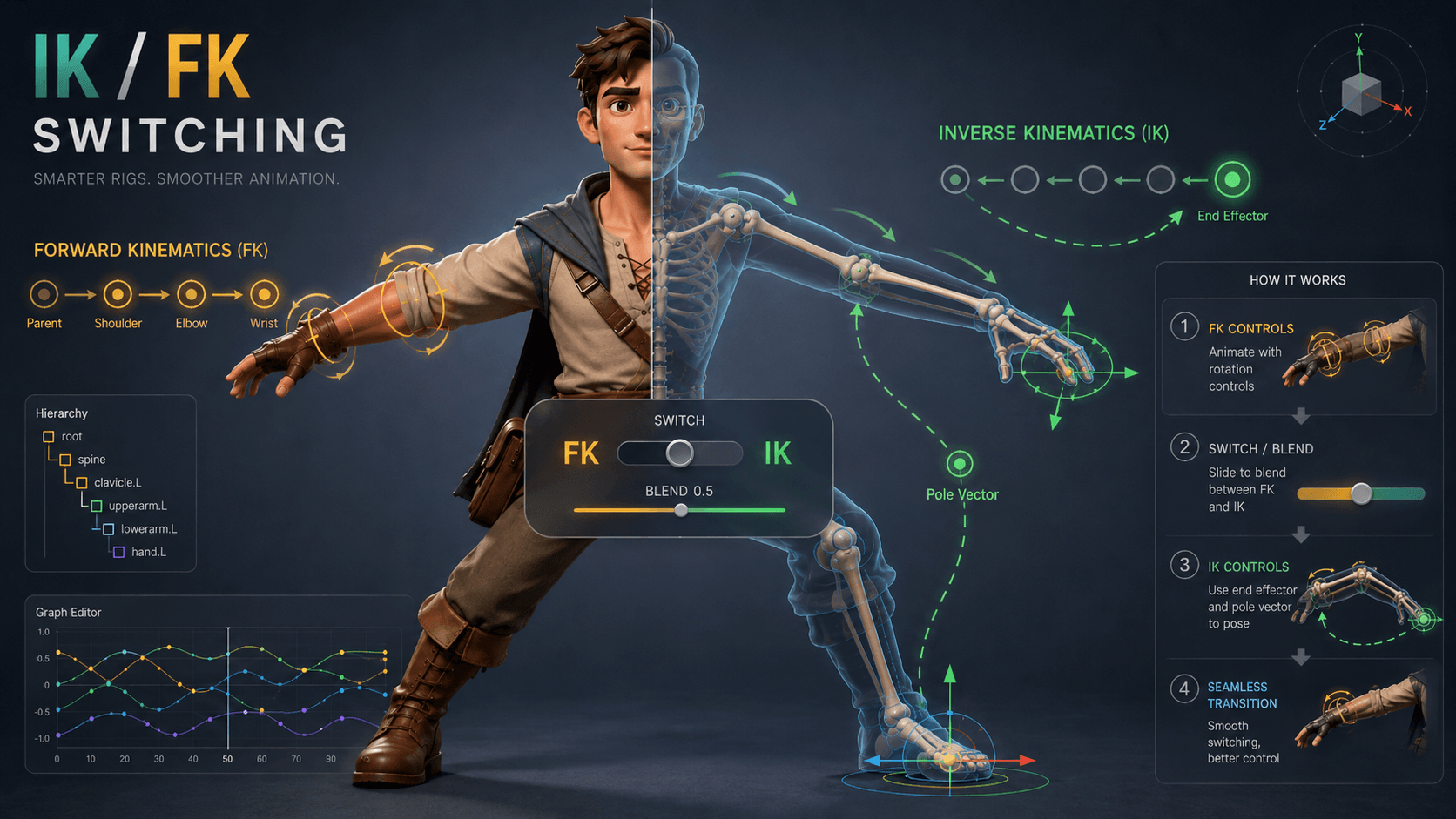
Most professional rigs combine both IK and FK systems. Because each method has unique advantages, modern rigs often allow 3D animators to switch seamlessly between them.
This flexibility enables animators to use FK for expressive movement and IK for grounded interactions without rebuilding the animation.
5. Spline IK Rigging
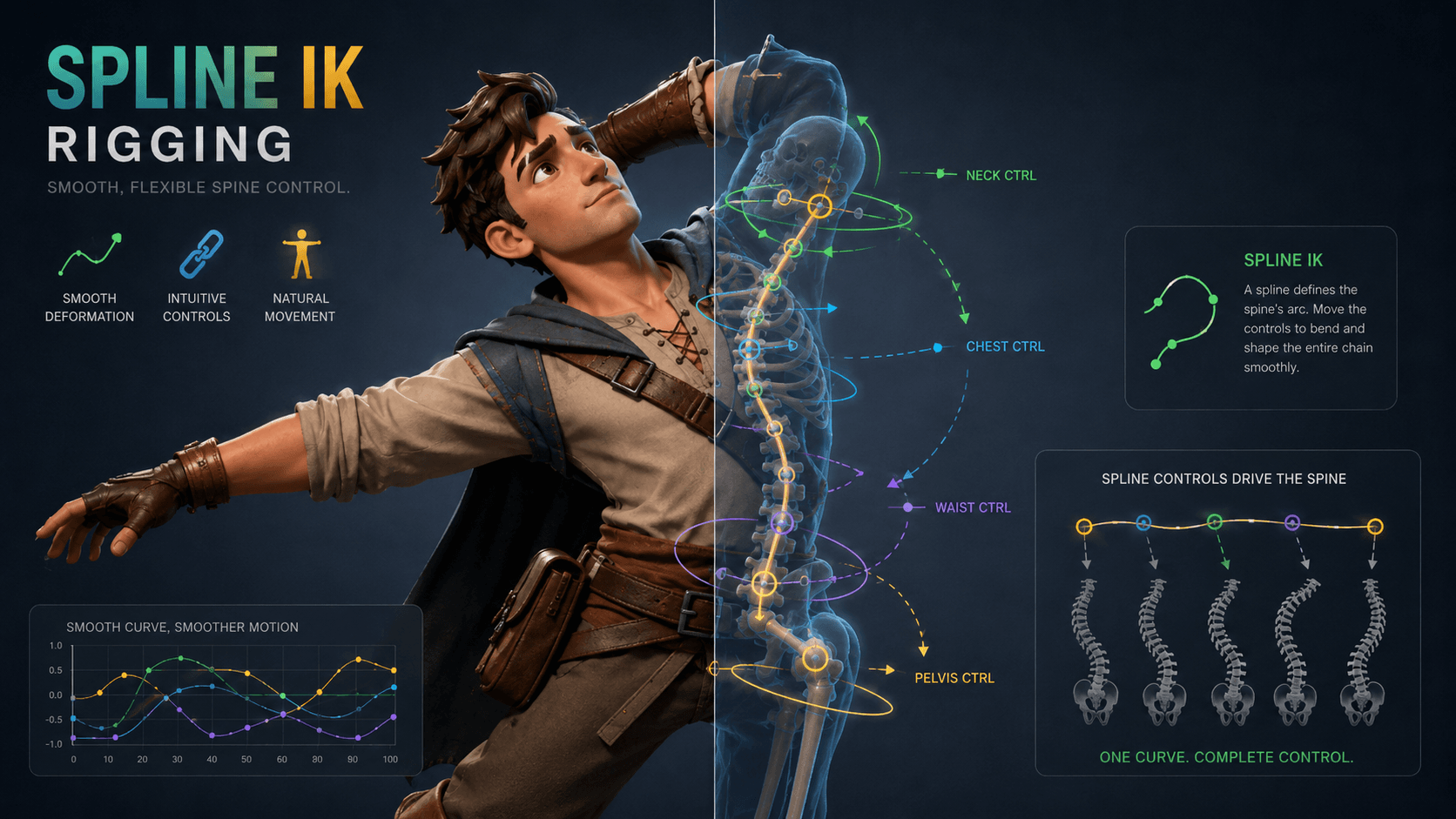
Spline IK uses a curve to drive a chain of joints, creating smooth and flexible motion across long structures. This technique is commonly used for spines, tails, tentacles, ropes, snakes, and other flexible body parts.
Benefits of Spline IK
Spline-based systems create fluid movement while reducing the amount of manual animation required.
6. Facial Rigging Techniques
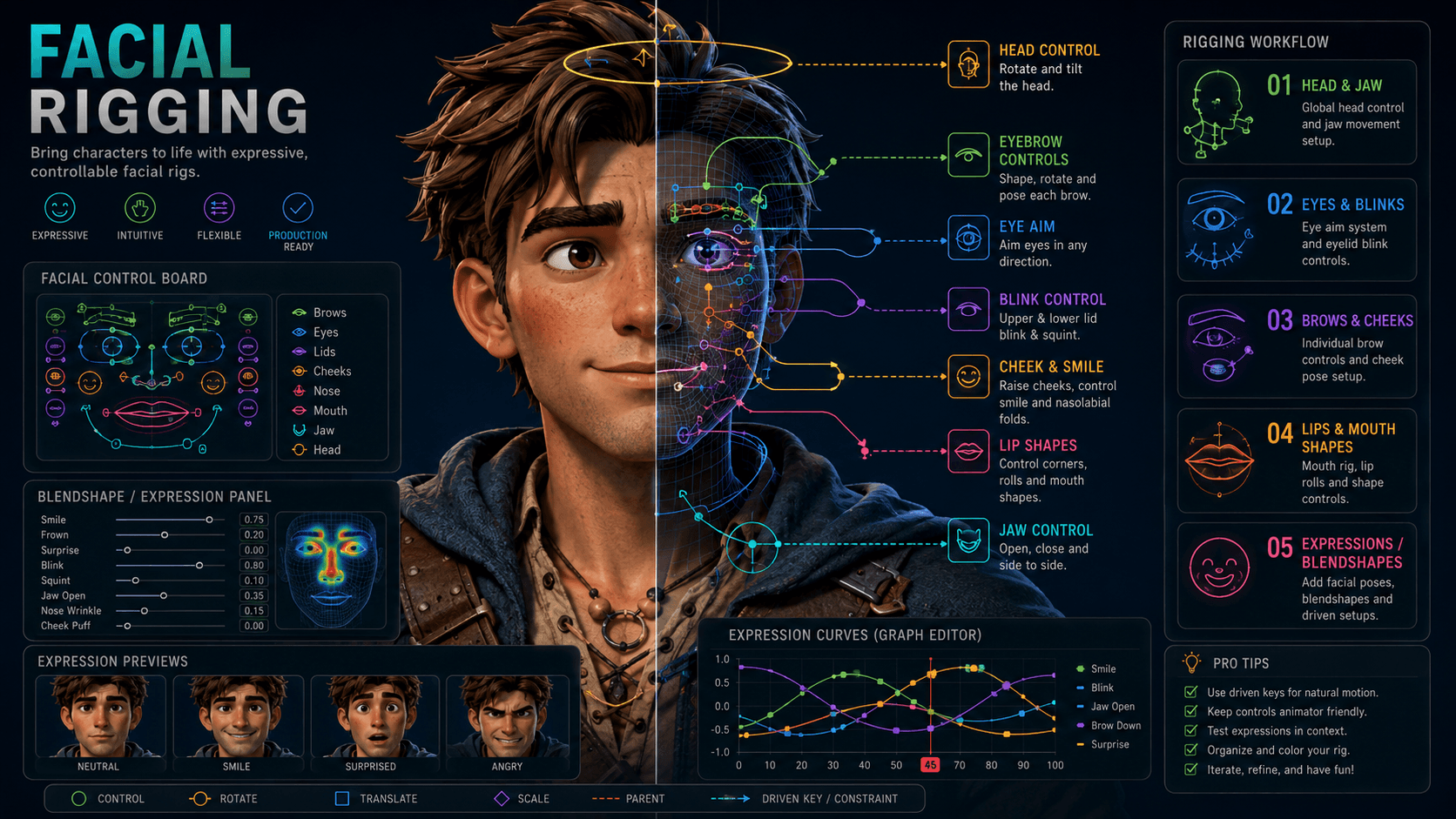
Facial animation presents unique challenges because it requires subtle expressions and complex deformations. Modern facial rigs typically use a combination of several techniques. You can read our tips on facial animation.
Blend Shape Rigging
Blend shapes store predefined facial expressions and allow animators to blend between them. This method is widely used in feature films and cinematic productions because it provides high levels of facial detail.
Joint-Based Facial Rigging
Instead of relying entirely on blend shapes, some rigs use joints to control facial movement. This approach is common in game development because it is often more performance-friendly.
Hybrid Facial Rigs
Many modern productions combine blend shapes and joint systems to achieve both realism and efficiency.
7. Constraint-Based Rigging
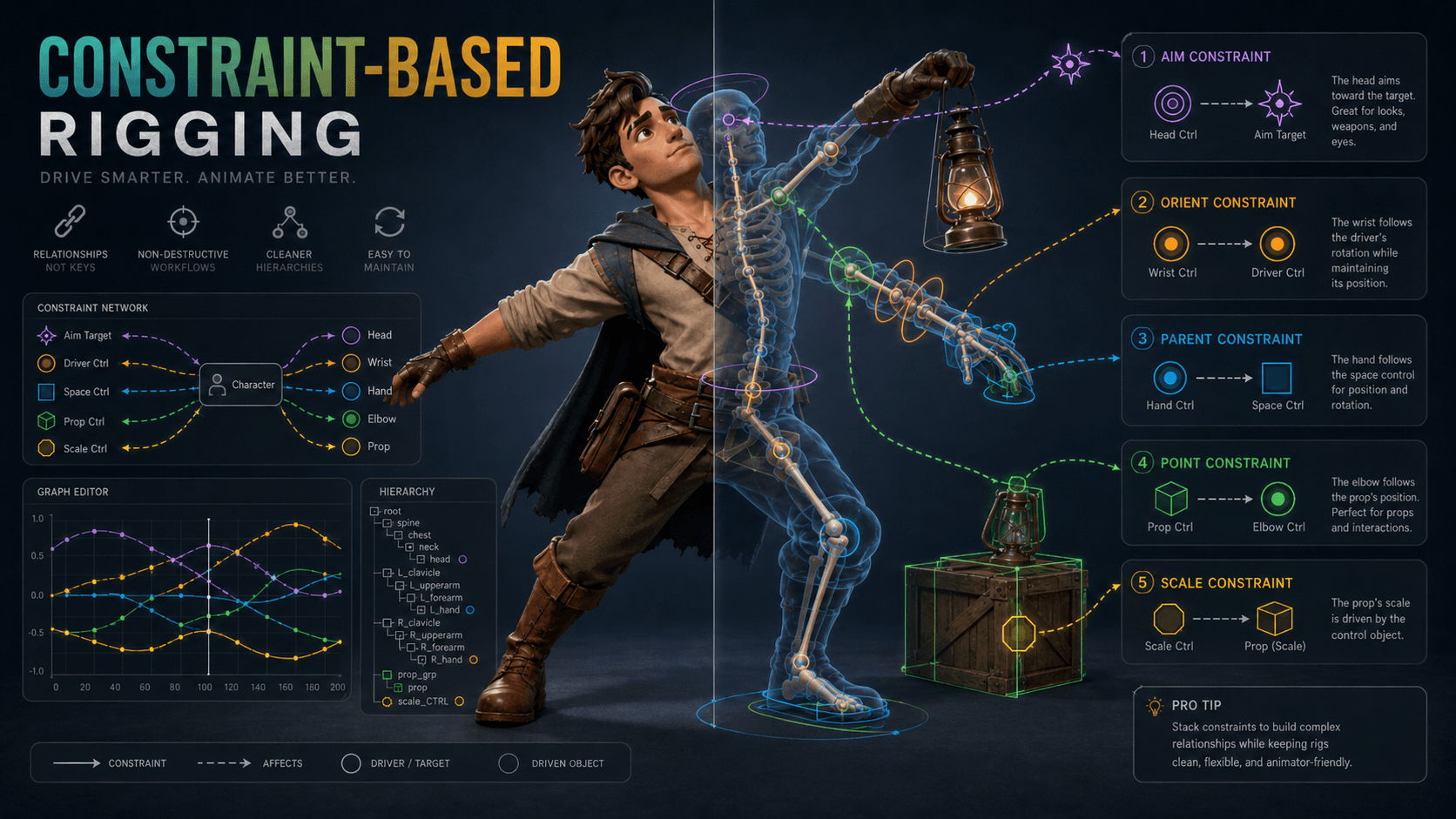
Constraints automate relationships between objects and controls within a rig. For example, a weapon may automatically follow a character’s hand, or a character’s eyes may always track a specific target. Constraints reduce repetitive work and improve consistency throughout production.
8. Deformation Techniques
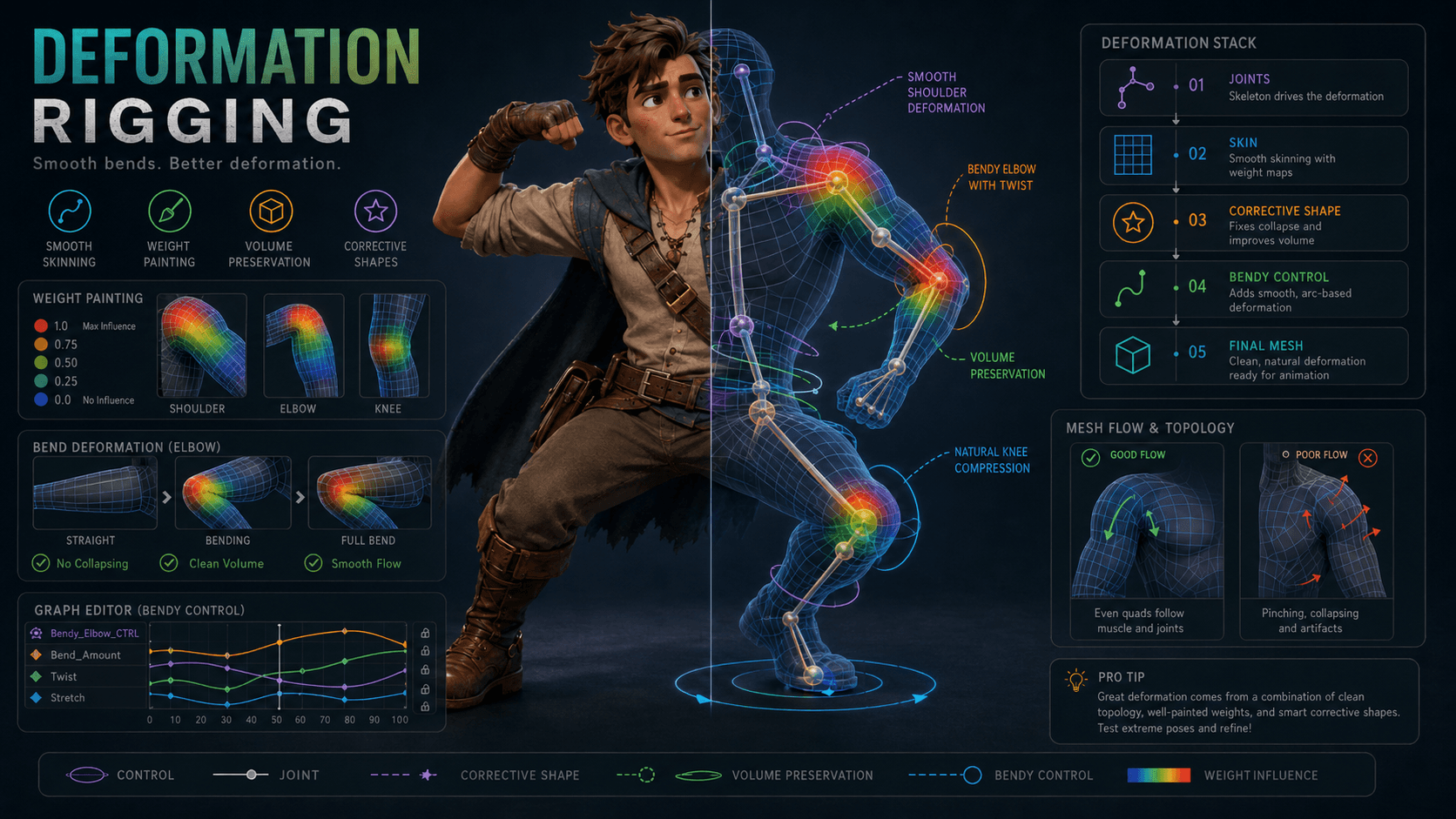
A rig’s primary purpose is to move a model while maintaining believable shapes.
Skinning
Skinning connects the model’s geometry to the skeleton and determines how each vertex responds to movement.
Weight Painting
Weight painting allows rigging artists to refine how much influence each bone has over different areas of the model.
Corrective Shapes
Corrective shapes automatically fix deformation issues that occur during extreme poses.
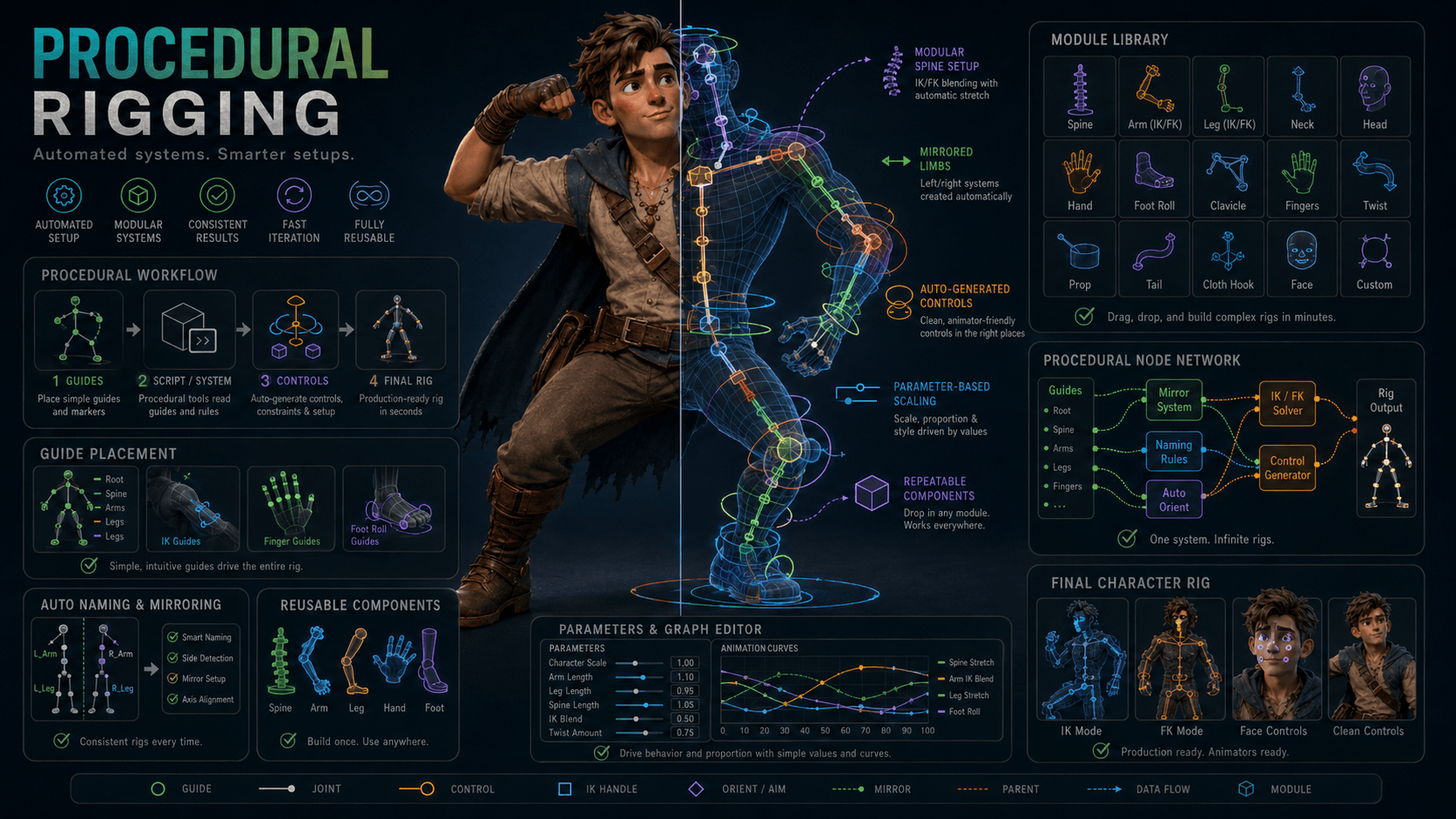
9. Procedural Rigging
Procedural rigging uses scripts and automation to generate rigs more efficiently. Large studios often use procedural systems to build consistent rigs across hundreds of characters. This approach improves scalability and reduces repetitive technical work.
Game Rigging Techniques
Game rigs must balance animation quality with real-time performance requirements.
1. Modular Rigging
Modular rigs allow reusable rig components to be shared across multiple characters.
2. Skeleton Retargeting
Retargeting enables animations created for one character to be applied to another compatible rig.
3. Optimization for Real-Time Engines
Game rigs often contain fewer joints and simplified systems to maintain performance in engines like Unity and Unreal Engine.
Common Rigging Mistakes
Many rigging problems originate from poor planning. Overly complex rigs, poor joint placement, inadequate deformation testing, and inconsistent naming conventions can create significant production challenges later in the pipeline.
Successful rigging focuses on the animator’s experience. A technically impressive rig is only valuable if it helps animators work faster and achieve better performances.
Conclusion
Rigging techniques form the foundation of modern animation. From basic bone hierarchies and FK systems to advanced facial rigs and procedural workflows, each technique serves a specific purpose within the production pipeline.
Understanding these methods helps artists create more efficient rigs, supports better animation, and ultimately contributes to more believable characters and performances. As animation technology continues to evolve, rigging techniques will remain one of the most important tools for bringing digital characters to life.