
When you watch a movie in 5D, your seat moves with the action on screen, fans blow air in your face, water sprays during ocean scenes, and scents are released to match the setting.
You sometimes hold controllers that let you make choices that change the story. All of your senses are engaged at once, and the timing is just right to fool your brain into thinking you’re really there.
The technology brings together 3D images, motion platforms, environmental effects, and interactive features into one seamless experience.
That’s why 5D rides at theme parks have wait times of 60 to 180 minutes, and the industry grows by 15 to 25 percent every year, even though the rides are expensive.
What Exactly is 5D Animation?
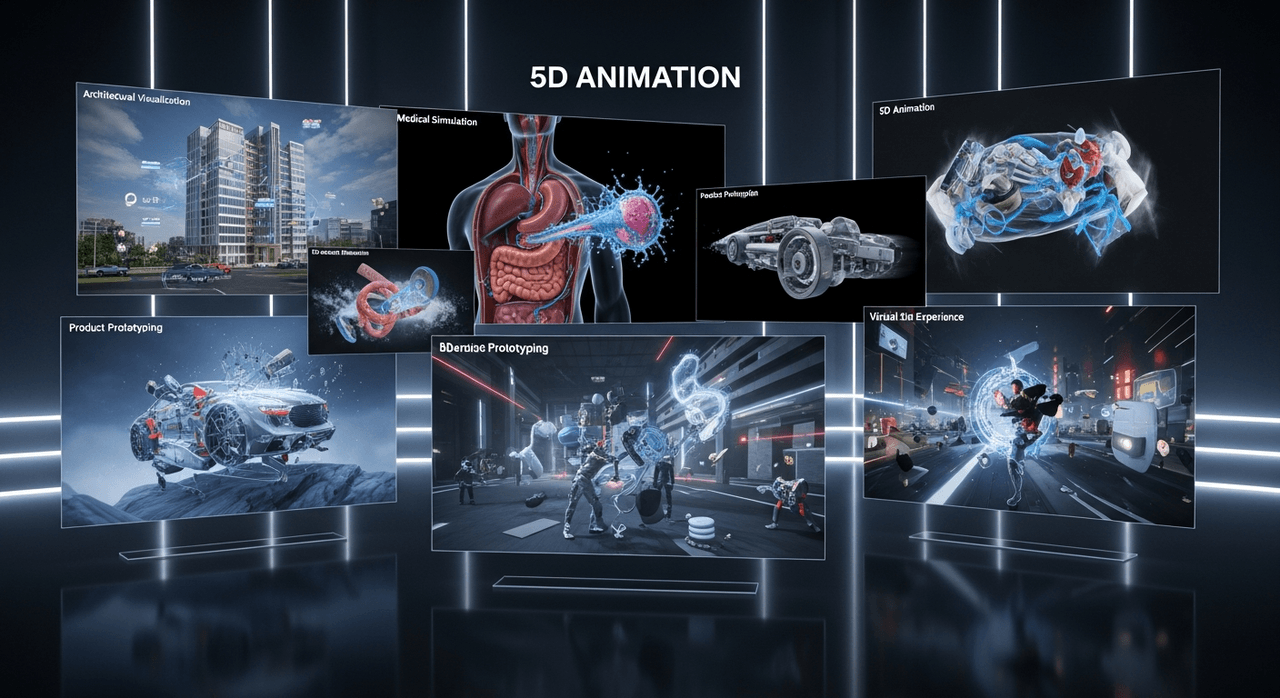
5D animation is just 3D animation that you can touch, smell, and even play with. The difference between 5D animation and regular 3D movies is that 5D animation takes the whole experience into the room with you.
In fact, in 5D animation, something is going on the screen that you can smell, your seat moves, and sometimes you can even decide what happens next.
Technically, the world we live in is 3D, like height, width, and depth. Time, or action and story, is the fourth factor that animation adds and the “5th dimension” includes things like touch, smell, movement, and getting along with other people.
What Makes Something “5D”?
There are three main things that need to work together for animation to be truly 5D. If you miss one of these, you’re really just looking at 4D or better 3D.
| Element | 3D Animation | 4D Experience | 5D Animation |
| Depth visuals | ✓ | ✓ | ✓ |
| Motion seats | ✗ | ✓ | ✓ |
| Environmental effects | ✗ | ✓ | ✓ |
| Smell/temperature | ✗ | Sometimes | ✓ |
| Audience control | ✗ | ✗ | ✓ |
| Typical duration | 90+ minutes | 10-20 minutes | 5-15 minutes |
First, you need really good 3D graphics that are very good and make things look real. For that 3D pop-out effect, stereoscopic projection is used. This is just a fancy word for saying that each eye sees a slightly different picture. If you don’t have a solid 3D as your base, nothing else matters.
Second, the multisensory effects need to match what’s on the screen. You must feel the mist of water when a character walks through the rain, or your seat shakes when there’s an explosion. Plus, you should smell vanilla when someone is baking cookies. These effects are perfectly in sync with the visuals, usually within milliseconds.
Third, and this is what makes 5D different from 4D, you need to be able to interact. People in the audience aren’t just sitting there. They might use controllers to shoot targets, make choices that change the story, or have sensors follow their movements. For example, in a 5D zombie game, you’re not just watching zombies attack; you’re also shooting them, and your seat shakes when they get close.
5D Animation Vs. 5D Cinema
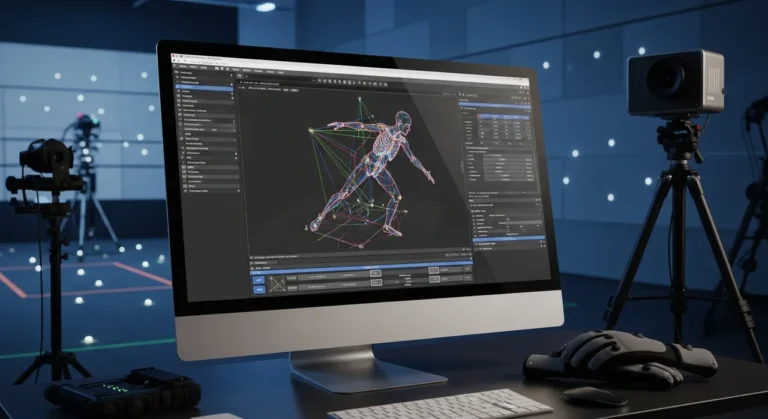
Making the content itself is what 5D animation is all about. Studios use programs like Unity or Unreal Engine to make 3D worlds that you can interact with. They come up with the plot, make the characters, program how things react to user input, and decide when each sensory effect will happen.
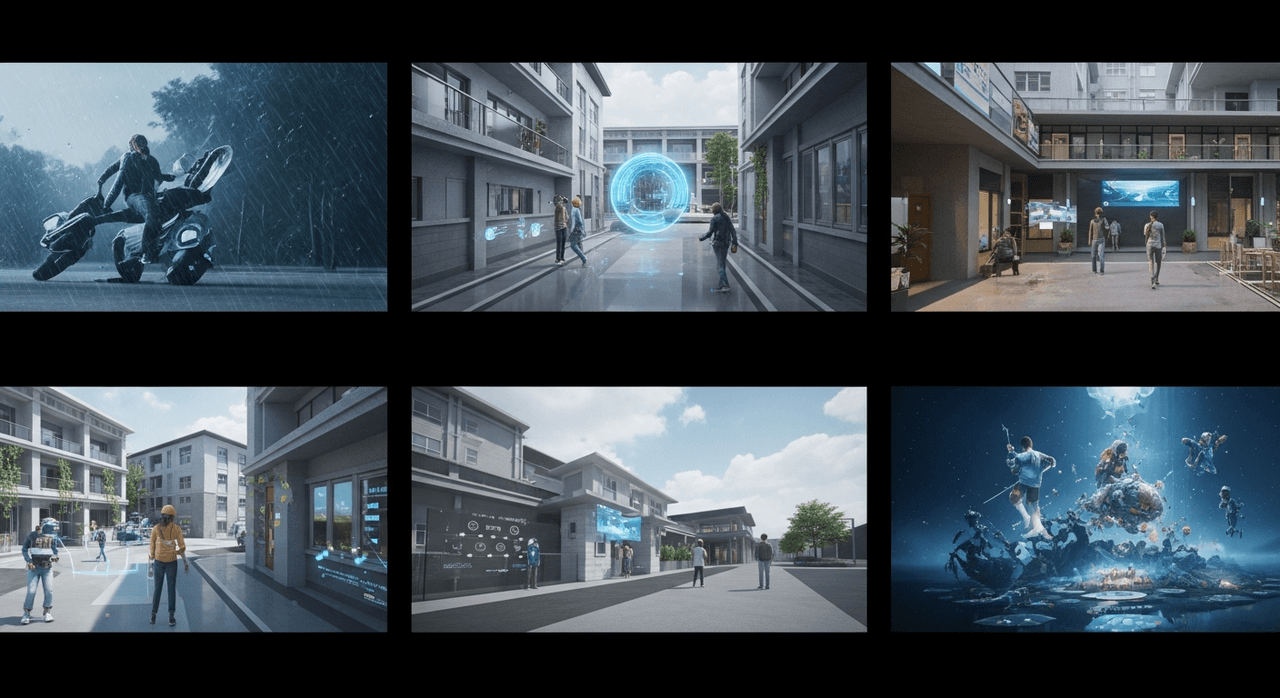
5D cinema is about the exhibition technology. The theater, the special seats, the water sprayers, the scent machines, and all the other equipment make the experience for the audience.
| Aspect | 5D Animation | 5D Cinema |
| Main focus | Making the interactive experience | Delivering the experience to audiences |
| Tools used | Unity, Unreal Engine, Maya, Blender | Motion seats, water sprayers, scent machines, and projectors |
| Who does it | Animation studios, game developers, and content creators | Theater owners, entertainment venues, and theme parks |
What Are Real 5D Animation Examples?
Theme parks put a lot of money into 5D early on because they needed something unique to make the high admission prices worth it. What happened, though? Some of the best and most polished 5D experiences in the world came to the scene.
Disney and Universal are still the best, but regional parks have quickly caught up with their own versions that still give great experiences.
| Attraction | Location | Year | What Makes It Special | Wait Times |
| Star Tours | Disney parks worldwide | 2011 | Randomized scenes, 6DOF motion, never the same twice | 30-60 min |
| Avatar Flight of Passage | Disney’s Animal Kingdom | 2017 | You’re riding a flying creature, wind + scent + mist | 60-180 min |
| Spider-Man | Universal Orlando | 1999 | Mix of real sets and 3D, heat + water effects | 30-45 min |
| Harry Potter Forbidden Journey | Universal parks | 2010 | Robotic arm seats, flies through Hogwarts castle | 45-90 min |
| Soarin’ | Disney parks | 2001 | Giant curved screen, hang glider feeling, scents | 30-60 min |
| Transformers | Universal parks | 2013 | High-speed chase, 3D projection + motion | 20-40 min |
| Justice League | Six Flags parks | 2015+ | Interactive shooter, you control the score | 20-30 min |
What Does 5D Motion Mean?
5D motion is what makes your mind believe what your eyes see. That’s all there is to it.
The way your seat moves in time with the screen is what makes it work. Like when your seat tilts and moves to the left at the same time that the spaceship turns left.
There are two levels of tech:
- Basic systems (3DOF) can move in three ways, including forward and back, left and right, and up and down. Its price is $2,000 to $5,000 per seat.
- Premium systems (6DOF) add tilting and rotating to those movements, and you need to pay $8,000 to $15,000 per seat.
That little bit of extra movement makes a big difference. Real cars don’t just slide; they also pitch, roll, and yaw. So your brain gets the message from your inner ear that “yes, we’re really moving.”
These platforms run on three main types of systems:
| System Type | Key Feature | Best For | Cost Range |
| Hydraulic | Super strong | Theme parks | $50,000-200,000 |
| Electric | Quieter, reliable | Most 5D cinemas | $20,000-80,000 |
| Pneumatic | Compressed air | Arcades | $10,000-40,000 |
The turning point is timing since it has to be just right; we’re talking about 20 to 50 milliseconds of sync. Your brain will catch it if there’s any more lag.
How Do VR, AR, and MR Fit Into 5D?
These technologies add levels of detail to images that normal screens can’t show. Each one links to 5D in a unique way, opening up new options.
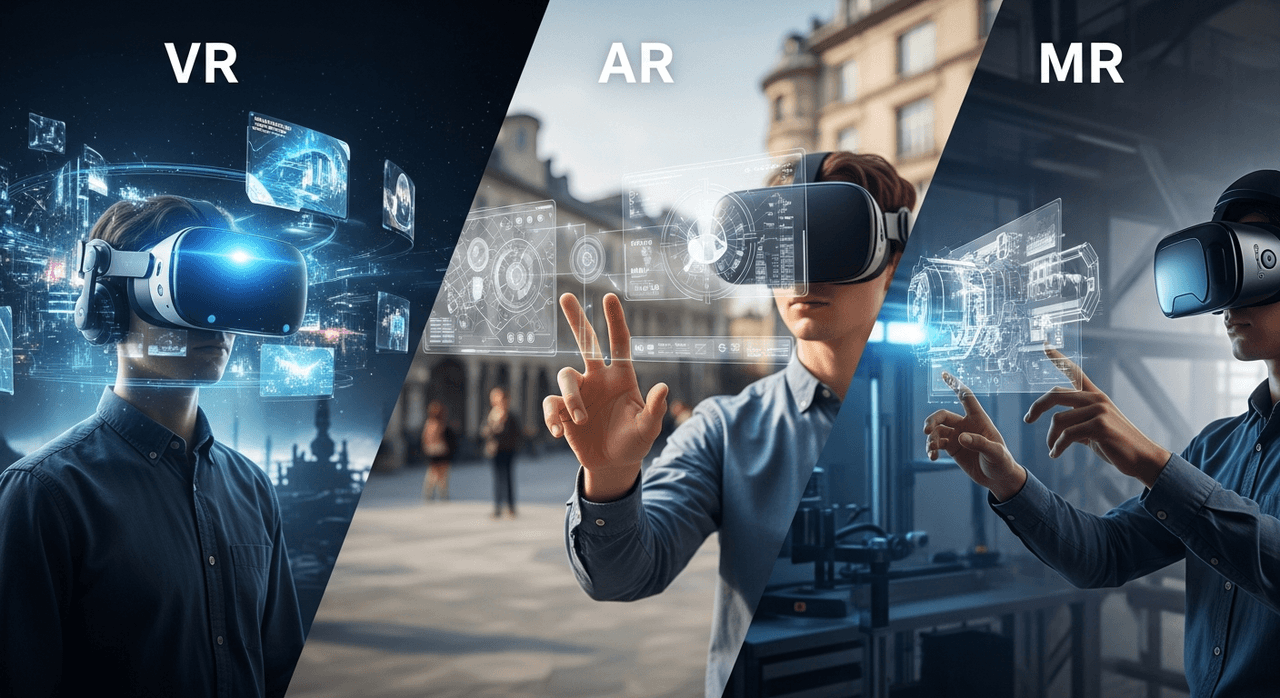
Virtual Reality (VR)
Virtual reality, or VR, shuts out everything in the real world. Through a mask, you can only see digital worlds.
When you mix VR with motion seats and physical feedback, you get 5D magic. Visually, physically, and tactilely, everything is in place.
Well-known 5D headsets include:
- Meta Quest 3: $500
- PlayStation VR2: $550
- Varjo XR-4 (premium venues): $3,990
The big benefit here is that you can look up, down, or behind you without any trouble.
Zero Latency and other location-based events take it a step further. While in virtual worlds, you can actually walk around warehouses.
Costs to set up everything: $100,000 to $500,000.
Read More: Creating Art for VR Games
Augmented Reality (AR)
The technology behind augmented reality (AR) adds digital things to the real world. With AR glasses or your phone, you can see both real and imagined things at the same time.
This is the link to 5D. Imagine being able to see a dinosaur on your phone screen. Now add fans that blow air when it walks by, physical feedback when it roars, and footfalls that make the floor shake.
Costs right now are:
- AR glasses (Microsoft HoloLens 2): $3,500
- Mobile AR: works on any smartphone
Read More: Creating Art for AR Games
Mixed Reality (MR)
Mixed Reality (MR): MR is more than only AR. The right physics are used here for virtual things to communicate with real ones.
A fake ball hits your real table and bounces off of it, or even digital characters sit on your couch and talk to it.
Microsoft HoloLens dominates medical training here. Students perform virtual surgeries on real training dummies, and the system maps physical space precisely and positions virtual organs on the mannequin correctly.
Price: $3,000 to $7,000 for MR systems
Read More: AR and VR in Animation
3 Main Challenges Facing 5D Animation
5D animation is great, but it has some real problems to deal with.
1. Costs Are Too High
Money is the big issue since it costs between $150,000 and $300,000 to set up a basic 20-seat 5D cinema. And what if you want to go for premium installations? In this case, you absolutely need to try between $500,000 and $2,000,000.
It costs a lot to make things, too. Depending on the quality, making just 10 minutes of 5D content costs between $50,000 and $500,000. That’s almost as much as a movie costs for a short amount of time.
The costs keep adding up quickly, too:
- $20,000 to $50,000 a year for upkeep
- Licensing content costs between $5,000 and $25,000 per experience.
- Training for staff also includes $10,000 to $30,000
Keeping up with the times also costs money. Every year, VR headsets get better, and every 2 to 3 years, projection technology gets better. So, to stay current, you have to spend $50,000 to $200,000 or more on a regular basis, or else you look out of date.
2. The Creation Process Is More Than Other Animations
Creating 5D takes a lot more people than regular animation because you need people who can do 3D animation or 3D animation studios, make games, choreograph motion, work with sound, hardware, and design experiences. That’s 15 to 50 or more people, compared to 5 to 10 for traditional content of the same length.
The syncing is really bad, too. Every effect must trigger within 20-50 milliseconds of the visual, and if you miss that, the magic is gone.
It also takes 3 to 6 months of constant tweaking to program motion curves, time water sprays, and coordinate scents for just 10 minutes.
3. Hardware Limitations Will Kill You
About 10 to 30 percent of people get motion sickness since viewers get sick quickly if the motion doesn’t match the visuals exactly.
You might not think it, but equipment breaks down more often than you think.
- Motion seats last 5-7 years with heavy use
- Every 10,000 to 20,000 hours, you need to replace the bulbs in your projector.
- Haptic devices lose their quality after 3–5 years.
- You have to clean and refill the effects systems all the time.
What Are The Main 5D Animation Software?
The show is mostly run by two platforms. Unity is the engine behind about 60% of 5D stuff because it’s easier to learn and doesn’t require super expensive computers.
On the other hand, Unreal Engine takes care of most of the rest, and the graphics are so good that they look real.
The thing is, it takes 2–3 months to learn Unity well, but it takes 4–6 months to learn Unreal well. That difference is important if you want to hire people or learn it yourself.
| Engine | Learning Time | Cost | Market Share | Best For |
| Unity | 2-3 months | Free (small projects) | 60% | Reliable, runs anywhere |
| Unreal | 4-6 months | Free (5% after $1M) | 35% | Jaw-dropping visuals |
Unity is the most popular choice for 5D cinemas because it works and doesn’t need the best hardware. However, theme parks with big budgets choose Unreal because they want graphics that will make people gasp.
Read More: Unity vs. Unreal Engine
Tools For Making the 3D Models
Before you even touch Unity or Unreal, you need actual 3D stuff to put in them. That’s where modeling software comes in. Some professional 3D tools include:
| Tool | Cost | Why People Use It |
| Autodesk Maya | $1,875/year | Industry standard, does everything |
| Blender | Free | Almost as good as Maya, zero cost |
| Cinema 4D | $1,000+/year | Best for artistic, abstract content |
Read More: Maya vs. Blender
The Syncing Tools for 5D Animation
Tools like Show Control Pro and Medialon cost $2,000-10,000 and work like ultra-precise timeline editors. They can coordinate motion seats tilting at the exact millisecond something happens on screen.
Supporting tools you’ll absolutely need are:
- Motion path editors: Draw curves showing how seats should move
- Effect mapping software: Click timeline spots to trigger hardware
- VR/AR SDKs: Oculus, SteamVR, ARKit, all free
- Spatial audio tools: Make sound come from specific 3D locations
What is the 5D Animation App?
Most 5D apps are really just about experiencing stuff, not creating it. They run on VR headsets or phones and become “5D” when you add physical hardware to the mix. Some of the main VR platforms are:
| Platform | What It Is | Cost | Device Needed |
| Meta Quest Store | Thousands of VR experiences | Games $0-40 | Quest headset ($500) |
| SteamVR | PC VR with huge library | Games $0-60 | PC + VR headset |
| VIVEPORT | HTC’s app marketplace | Varied pricing | HTC Vive/compatible |
Beat Saber is just a VR rhythm game by itself. But pair it with a $300 motion chair that tilts when you swing and a haptic vest that buzzes on hits? Now you’re getting real 5D immersion.
Last Words
What is 5D animation, then? They are 3D graphics, physical movement, environmental effects like wind and water, and interactive elements that let you change the experience.
When you watch 3D animation, your seat moves, fans blow air, scents are released, and sometimes you have to make choices that change the outcome. All of this happens in sync with what you see on screen.