
From blockbuster movies and video games to advertisements and product visualizations, 3D animation has become one of the most widely used forms of digital content creation. Whether you’re watching Pixar films, exploring virtual worlds in video games, or viewing a product commercial online, chances are you’re interacting with 3D animation.
Over the past few decades, advances in computer technology have transformed 3D animation from a specialized technique into an essential tool used across entertainment, marketing, education, architecture, healthcare, and engineering.
But what exactly is 3D animation, and how does it work?
In this guide, we’ll explain what 3D animation is, how the production process works, the different types of 3D animation, and why it has become such an important part of modern visual storytelling.

Need 3D Animation Services?
Visit our 3D Animation Service page to see how we can help bring your ideas to life!
What Is 3D Animation?
3D animation is the process of creating moving images within a three-dimensional digital environment. Unlike 2D animation, which exists on a flat plane, 3D animation uses digital models that have height, width, and depth.
These models can be rotated, moved, lit, textured, and animated from any angle, making them highly versatile for storytelling and visualization.
At its core, 3D animation brings digital objects to life by creating the illusion of movement. Characters can walk, vehicles can drive, cameras can move through virtual environments, and objects can interact with one another just as they would in the real world.
Today, 3D animation is so popular and used in films, television, games, advertisements, architectural visualization, medical simulations, educational content, and many other industries.
The 3D Animation Production Process
There are many variables in the creation of a well-made 3D animation. In the following, we will briefly review the 3D animation pipeline and its key stages.
Every project begins with an idea, script, or creative brief.
This stage establishes the story, goals, audience, and visual direction. Concept artists define the overall concept, determine the style of animation, and identify the key messages the project should communicate. Careful planning during this phase helps ensure a smoother production process and reduces costly revisions later.
Storyboard artists create visual representations of key scenes to plan the animation before production begins.
These illustrated panels act as a visual blueprint for the project, helping teams organize camera angles, scene transitions, character actions, and pacing. Storyboards allow directors and clients to review the flow of the animation before significant production work begins.
3D modelers build all required assets, including characters, environments, props, and vehicles, in the 3D modeling process.
Using specialized 3D modeling techniques and 3D modeling software, artists create detailed digital models that form the foundation of the animation. The level of detail can vary depending on the project’s style, ranging from highly realistic designs to stylized cartoon characters.
Textures and materials are applied to give models their final appearance.
Texture artists add colors, patterns, surface details, and material properties that determine how objects look under different lighting conditions in the texturing process. This step helps create realism and visual appeal by making surfaces appear like metal, wood, fabric, skin, glass, or other materials.
In the rigging process, characters and movable objects receive rigs that allow them to be animated.
A rig functions like a digital skeleton, providing controls that animators use to move limbs, facial features, and other parts of a model. Proper rigging is essential for creating natural and believable movement by rigging artists.
6. Animation
3D animators create movement using keyframes, motion capture, or procedural techniques.
During this stage, characters perform actions, objects interact, and scenes come to life. Animators focus on 12 principles of animation, including timing, weight, emotion, and performance, to create engaging and realistic motion that supports the story.
3D lighting artists set up digital lighting to establish the mood and visual quality of each scene.
Lighting influences how viewers perceive characters and environments by creating depth, atmosphere, and focus. Different lighting setups can dramatically change the emotional tone of a scene, from bright and cheerful to dark and dramatic.
VFX artists add effects such as fire, smoke, explosions, water, cloth, and particles where needed.
Visual effects enhance realism and add dynamic elements that would be difficult to animate manually. Advanced simulations can accurately recreate natural phenomena and complex interactions within the scene.
The finished scenes are processed into final image sequences by the rendering artist.
Rendering software calculates lighting, shadows, reflections, textures, and visual effects to generate the final frames. Depending on the complexity of the project and rendering technique, rendering can take anywhere from a few minutes to several hours per frame.
All rendered elements are combined, color-corrected, edited, and prepared for delivery.
During compositing, the compositor blends multiple layers and effects into a seamless final image. The editing stage refines pacing, adds sound, music, and visual enhancements, ensuring the finished animation is polished and ready for its intended audience.
Types of 3D Animation
Each type of 3D animation serves a unique purpose and requires different techniques, tools, and creative approaches to effectively communicate information and engage audiences.
Character Animation
Character animation focuses on bringing digital characters to life through movement, acting, and facial expressions. This type of animation is commonly used in films, games, and commercials.
Product Animation
Product animation showcases products through dynamic visual presentations. Companies often use 3D product animation services to demonstrate features, functionality, and design details.
Architectural Animation
Architectural animations allow viewers to explore buildings and environments before construction begins. These animations are widely used in real estate, architecture, and urban planning.
Medical Animation
Medical animations help explain biological processes, surgeries, treatments, and complex scientific concepts.
Mechanical Animation
Mechanical animation visualizes how machines, tools, engines, and industrial equipment function.
Visual Effects Animation
Visual effects pipeline combines 3D elements with live-action footage to create scenes that would be difficult or impossible to film in reality.
3D Animation vs 2D Animation
Although both techniques create movement, they differ significantly in workflow and appearance.
| Feature | 3D Animation | 2D Animation |
|---|---|---|
| Dimensions | Three-dimensional | Two-dimensional |
| Camera Movement | Flexible and dynamic | More limited |
| Asset Reuse | High | Moderate |
| Production Method | Modeling and rigging | Drawing and illustration |
| Realism | Often more realistic | Often more stylized |
| Lighting | Realistic lighting systems | Simplified lighting |
Benefits of 3D Animation
Realistic Visuals
3D animation can create highly realistic characters, environments, and effects that closely resemble reality.
Reusable Assets
Once created, 3D assets can often be reused across multiple scenes, projects, and marketing materials.
Flexible Camera Angles
Digital cameras can move freely through virtual environments, enabling cinematic shots that would be difficult to achieve in real life.
Better Product Visualization
Businesses can showcase products before manufacturing begins by using 3D product modeling and rendering services.
Stronger Audience Engagement
Dynamic visuals and immersive experiences often help audiences connect more deeply with content.
Challenges of 3D Animation
Longer Production Time
High-quality 3D animation can require weeks or months of work.
High Skill Requirements
Artists must master modeling, rigging, texturing, lighting, rendering, and animation.
Hardware Demands
Complex projects often require powerful computers and rendering systems.
Rendering Costs
Large productions may spend significant resources on rendering and processing.
Best Software for 3D Animation
Several powerful 3D animation software solutions are available for creating professional 3D animations, each offering unique features and workflows suited to different industries and skill levels.
Blender
Blender is a free, open-source solution used by artists, studios, and hobbyists worldwide.
Autodesk Maya
Maya is one of the most widely used professional animation tools in the film and game industries.
Read More: Maya vs Blender
Cinema 4D
Cinema 4D is popular among motion graphics artists and commercial studios.
Houdini
Houdini excels at procedural workflows and advanced visual effects simulations.
3ds Max
3ds Max remains widely used as an architectural visualization tool for product designs and game development.
Read More: Maya vs. 3ds Max
Industries That Use 3D Animation
3D animation is no longer limited to kids, movies, and video games. Its ability to visualize complex ideas, create realistic simulations, and engage audiences has made it valuable across a wide range of industries. Organizations use 3D animation to communicate information more effectively, improve training, showcase products, create immersive experiences, and many other uses of 3D animation.
Entertainment
The entertainment industry is one of the largest users of 3D animation services. Animated films, television shows, streaming content, and visual effects-heavy productions rely on 3D animation to create characters, environments, and action sequences. Studios use advanced animation techniques to tell compelling stories, build believable worlds, and produce visual effects that would be difficult or impossible to achieve through traditional filming alone.
Game Development
Video game art studios use 3D animation to bring characters, creatures, vehicles, and environments to life. Character movements, combat sequences, cutscenes, and interactive gameplay all depend on animation. Modern games often combine keyframe animation, motion capture, and procedural animation techniques to create realistic and responsive player experiences.
Marketing and Advertising
Brands use 3D animation to create eye-catching advertisements, product demonstrations, and promotional videos. Because products can be displayed from any angle and animated in ways that highlight their features, 3D animation is especially useful for showcasing technology, consumer goods, automobiles, and industrial design. It also allows companies to market products before physical prototypes are available.
Architecture
Architectural firms use 3D animation to present building designs, interior spaces, and urban developments before construction begins. 3D architectural walkthrough services and flythroughs help clients, investors, and stakeholders visualize projects more clearly than static drawings or blueprints. These presentations can improve decision-making and reduce misunderstandings during the design process.
Engineering
Engineers use industrial 3D animation services to demonstrate how machines, systems, and manufacturing processes work. Complex mechanical operations can be visualized step by step, making it easier to explain designs, train employees, and communicate technical information to clients or investors. Technical animation services are commonly used in aerospace, automotive, industrial manufacturing, and energy sectors.
Read More: Benefits of 3D Modeling in Engineering
Healthcare
Medical professionals use 3D animation for education, training, research, and patient communication. Animations can illustrate surgical procedures, explain medical conditions, demonstrate how treatments work, and visualize biological processes that are difficult to observe directly. These visual tools help improve understanding for both healthcare providers and patients.
Education and E-Learning
Educational institutions and online learning platforms use educational 3D animation to explain complex subjects in a more engaging and accessible way. Topics such as science, engineering, history, and mathematics can be visualized through animated simulations and interactive content, helping learners better understand difficult concepts.
Product Design and Manufacturing
Manufacturers and product designers use 3D animation to test concepts, present prototypes, and demonstrate product functionality. Animated presentations can reveal internal components, assembly processes, and operational features that may not be visible in traditional photographs or videos.
Real Estate
Real estate developers use 3D animations and virtual tours to market residential and commercial properties. Potential buyers can explore buildings, neighborhoods, and interior spaces before construction is completed, making it easier to evaluate projects and make purchasing decisions.
Augmented Reality (AR)
AR applications use 3D animation to place digital objects and interactive experiences into real-world environments. Industries such as retail, education, and manufacturing use AR to enhance training, product visualization, and customer engagement.
Virtual Reality (VR)
VR experiences rely on 3D animation to create immersive virtual worlds that users can explore and interact with. VR is widely used in gaming, training simulations, education, healthcare, and virtual tourism to deliver realistic and engaging experiences.
Read More: AR and VR in Animation
How Long Does 3D Animation Take?
The 3D animation production timeline depends on the project’s complexity.
- A simple 30-second animation may take a few weeks to complete.
- A one-minute commercial often requires one to three months.
- A five-minute animated short may take several months.
- Feature films can take multiple years and involve hundreds of artists working simultaneously.
Factors such as style, complexity, number of assets, visual effects, and revision rounds all influence the final schedule.
How Much Does 3D Animation Cost?
The cost of 3D animation varies widely depending on quality and scope.
- Simple projects may cost several thousand dollars.
- Professional marketing videos often range from $10,000 to $50,000 per minute.
- High-end cinematic animations and feature films can cost hundreds of thousands or even millions of dollars.
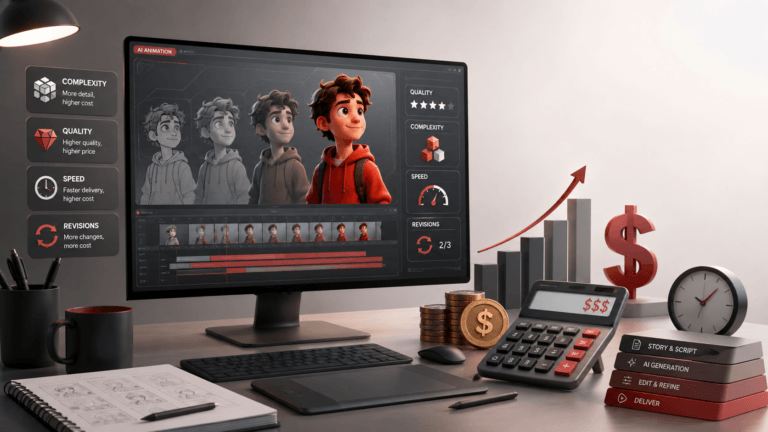
The largest factors affecting cost include asset complexity, animation quality, production time, team size, and rendering requirements.
Conclusion
3D animation has become one of the most powerful tools for storytelling, visualization, and communication in the digital world. By combining modeling, rigging, animation, lighting, and rendering, artists can create realistic characters, immersive worlds, and engaging visual experiences that capture audiences’ attention.
From blockbuster films and video games to product demonstrations and architectural walkthroughs, 3D animation continues to shape how we create and consume digital content. As technology advances, its applications will only continue to expand, making 3D animation an increasingly valuable skill and industry for the future.


![1405,02,10 SnpLE[Cover HD] 1](https://pixune.com/wp-content/uploads/2026/08/14050210-SnpLECover-HD-1-768x431.jpg)