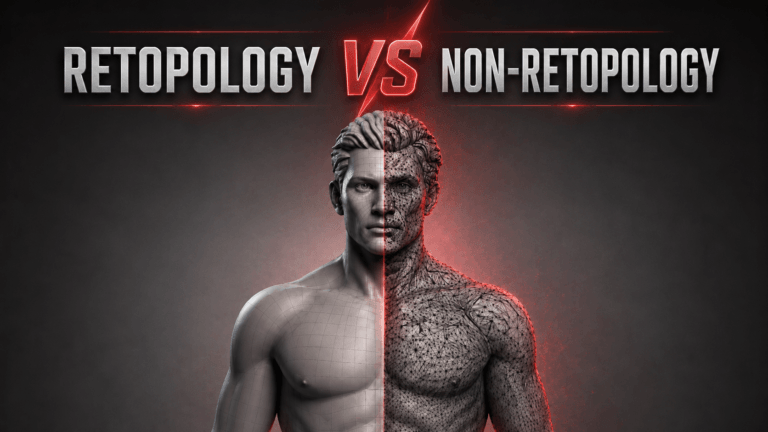

PBR vs NPR might not be the actual debate in The world of 3D animation and digital art which is nothing short of magical. Behind every breathtaking cinematic environment and intensely expressive character lies a fundamental choice that every studio must make before a single pixel is finalized.
However, this choice is not merely a technical one. The decision between Physically Based Rendering (PBR) and Non-Photorealistic Rendering (NPR) is, at its core, a narrative decision. It dictates the emotional weight, the historical grounding, and the psychological impact of the story being told.
Today, we are moving away from the technicalities of the 3D game art pipeline to explore the pure artistry behind these two massive development philosophies. We will explore where these styles came from, why they evoke such different feelings, and how top-tier studios like Pixune Studios use them to direct the viewer’s eye and heart. Operating out of Poland and the USA with a team of specialized artists , Pixune has built a track record of producing over 350 minutes of animation for more than 40 clients. Through their lens, we will see how digital worlds are brought to life.
The Philosophy of the Render: Art Origins
Before understanding how to use an art style, we must understand where it comes from. The digital art landscape is a continuation of traditional art history, translated into mathematics and pixels.
Every time an art director sits down to conceptualize a project, they are deciding whether to emulate the strict rules of photography or the boundless expression of a painter’s canvas. Finding a unique artistic style in games or cinematic animations means understanding how the audience should instinctively feel when the first frame appears on screen.
The Genesis of PBR: The Pursuit of Reality
Physically Based Rendering (PBR) was born from the science of optical physics and the pursuit of photographic truth. In the early days of CGI, 3D models looked like plastic. Light didn’t behave correctly; shadows were flat, and surfaces lacked the microscopic imperfections that make the real world look real.
To solve this, scientists and artists looked to reality. They developed heavy mathematical models, like the Cook-Torrance BRDF, which mimics the micro-surface geometry of real-world materials. They implemented the Conservation of Energy, enforcing the physical law that an object cannot reflect more light than it receives. PBR is the digital continuation of realism in classical painting and the invention of the camera. It is a strict simulation of how light interacts with surfaces.
The Genesis of NPR: The Rebellion of Expression
If PBR is photography, Non-Photorealistic Rendering (NPR) is impressionism, traditional 2D animation, and comic book illustration.
NPR was born as a rebellion against reality. As rendering technology improved, developers noticed a psychological phenomenon: The Uncanny Valley. As digital humans became almost perfectly real, but not quite, they began to look unsettling and eerie. NPR deliberately discards photorealistic constraints in favor of deliberate exaggeration and shape language. By moving away from reality, artists realized they could create expressive styles that pack more personality and flair than a simple simulation of the real world. A strong PBR vs NPR strategy can help a project feel more intentional, memorable, and production-ready.
Directing with PBR: The Narrative of Tangibility
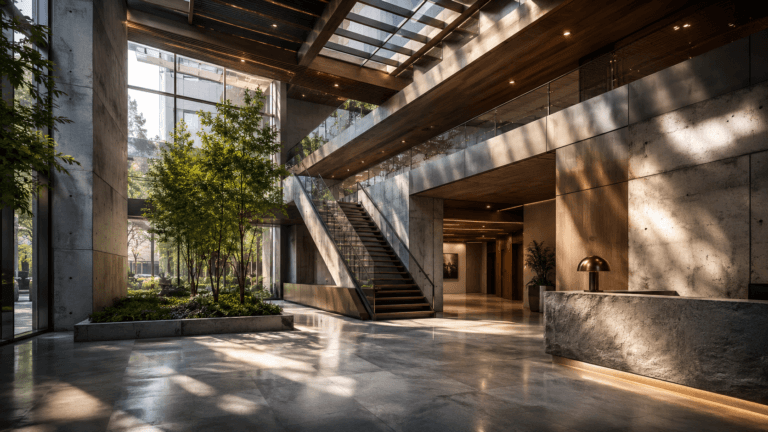
When a director chooses PBR, they are choosing the narrative of consequence, stakes, and tangibility. PBR grounds the viewer in a tactile experience.
Serious, gritty stories, like tactical military shooters, historical epics, or survival horror, benefit immensely from the immersion of realism. When the audience can almost feel the rough grit of a stone wall, the damp moisture on a dungeon floor, or the heavy, woven fabric of a hero’s cloak, the world feels dangerous and real.
The Storytelling of Surfaces
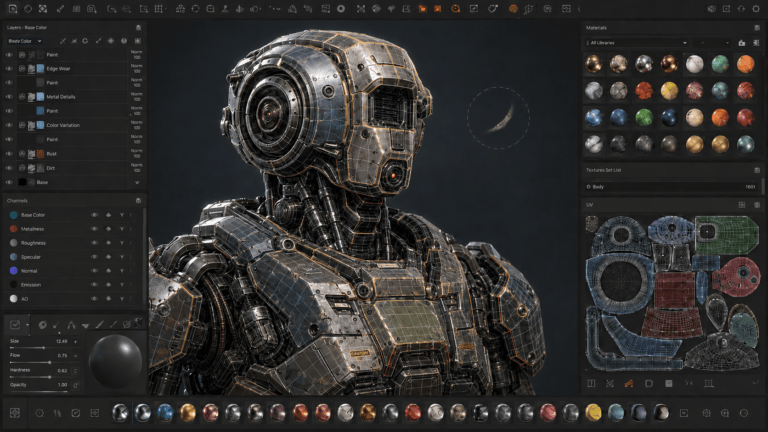
In a PBR workflow, the artist’s job is to tell the engine what the object is physically made of using specialized PBR texture maps. But on a deeper level, they are telling the history of the object itself.
If you ask who is a texture artist, the answer is that they are environmental storytellers. The texturing process is not just about making a sword look like metal. It is about adding logical, realistic wear and tear. A texture artist adds rust where moisture would naturally collect over years of neglect, scratches the paint off the edges that have rubbed against armor in a hundred battles, and grinds dirt into the crevices.
This level of cinematic 3D Texturing forces the audience to subconsciously ask questions: Who held this sword last? How long has it been buried here? Top-tier 3D texturing services thrive on this microscopic storytelling, ensuring that materials like metal, wood, and fabric behave consistently under any lighting condition, keeping the viewer utterly immersed.
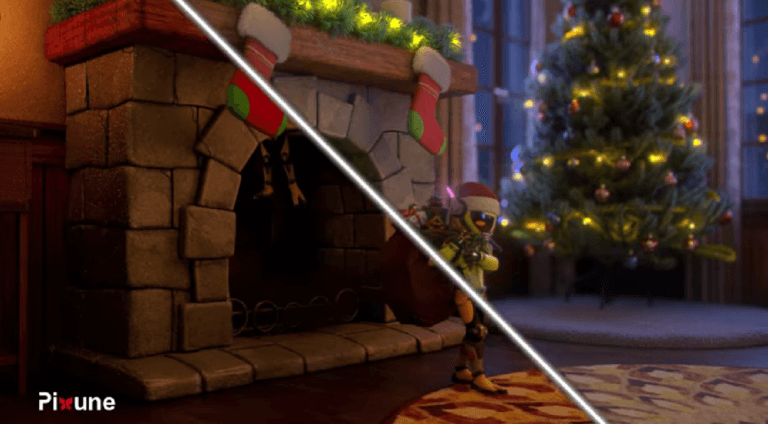
The main difference between PBR and NPR is the purpose of the render. PBR focuses on physical believability, realistic materials, and accurate light behavior. NPR focuses on artistic expression, stylized shapes, emotional color, and visual exaggeration.
PBR helps the audience believe that a world could exist. NPR helps the audience feel the world’s mood, personality, and story.
In the debate of PBR vs NPR, the right choice depends on the story, not only the technology. For game art studios, this choice often becomes an art direction decision before it becomes a shader decision. The choice between PBR vs NPR affects how the viewer reads materials, characters, lighting, and emotional tone.
Directing with NPR: The Narrative of Emotion
If PBR tells the story of the world’s impact on the characters, NPR tells the story of the character’s internal world. The unofficial motto of NPR is to “break PBR so it looks good, not right”.
Fantastical, imaginative, or lighthearted narratives thrive on stylization. If you want to understand what is non-photorealistic rendering (NPR), look at any piece of media that prioritizes emotional impact over physical accuracy.
The Psychology of Stylization
Directors choose NPR to manipulate the audience’s emotions directly. They achieve this through two primary artistic vehicles:
- Color as Emotion: Stylized animations use color harmonies to symbolize themes rather than matching reality. A director might use warm pastel gradients to represent hope, or striking, unnatural neons against dark shadows to convey tension. In NPR, the sky doesn’t have to be blue; it can be a violent crimson if the character is feeling rage.
- Shape Language and Exaggeration: Instead of adhering to realistic human anatomy, NPR exaggerates features. Different character art styles rely on this to make characters instantly recognizable. An oversized weapon or a chibi head communicates a character’s strength or humor in a fraction of a second.
The Enduring Legacy of Hand-Painted Art
One of the most profound narrative tools in the NPR arsenal is the rejection of calculated lighting entirely. Many studios embrace hand-painted textures in games, where the artist acts as a traditional painter. Using a digital tablet, the artist applies the lighting techniques, paints the shadows, and the material details directly onto the 3D model’s color map.
If a shield needs a shiny metal rim, the artist literally paints the bright white shine right onto the texture. The game engine does zero lighting calculations; the lighting is permanently baked into the painting itself. This creates a vibrant, friendly, and deeply nostalgic atmosphere, reminiscent of classic fantasy illustrations.
The Mixed-Media Renaissance: Breaking the Rules
For decades, the line between art styles in indie games vs AAA games was heavily defined by rendering choices. AAA games pursued photorealism, while indie studios relied on stylized charm due to resource constraints.
However, the modern era has birthed a narrative revolution: The Mixed-Media Aesthetic.
Sparked by cinematic masterpieces like Spider-Man: Into the Spider-Verse, studios are attempting to make digital spaces feel like living comic books. This approach deliberately deconstructs the underlying “language” of textures. Directors are combining the origins of 2D comic illustration with 3D spatial awareness.
To achieve this narrative style, technical artists employ brilliant, rule-breaking tricks:
- Inverted Hull Outlines: To get the flat, comic-book look, artists duplicate a character, flip the geometry inside out, and apply solid black, unlit materials to create dynamic, hand-drawn-looking outlines in a 3D space.
- Manipulating Time: Directors will deliberately drop the animation frame rate, animating “on twos” or “on threes” (a concept deeply rooted in traditional animation principles), to mimic the stuttered, impactful feel of flipping through a physical comic book.
- Layered Realities: The backgrounds are often layered 2D paintings placed in a 3D space, creating a surreal, theatrical stage for the characters to act within.
This mixed-media approach is actively used by forward-thinking studios, including Pixune, to create unique 2D/3D combo styles that stand out in a saturated market and tell stories that feel entirely fresh.
Choosing the Lens: A Strategic Decision
So, how does a director choose the right visual language for their project? It is a strategic decision based on the specific story they want to tell.
| Narrative Goal | The PBR Approach | The NPR Approach |
| Tone & Atmosphere | Serious, historical, gritty, horrifying, or simulation-heavy. | Fantastical, whimsical, abstract, highly emotional, or nostalgic. |
| World Connection | The audience feels the physical weight, dirt, and consequences of the world. | The audience feels the psychological and emotional state of the characters. |
| Visual Longevity | Tied to hardware. Strives for the current peak of graphical fidelity. | Practically immortal. Relies on artistic direction rather than technological novelty. |
The most exciting development in modern visual storytelling is that developers are no longer forced to choose just one path. The industry is rapidly moving toward hybrid rendering techniques, merging the expressive beauty of NPR with the physical depth of PBR. Characters can be modeled with simple, appealing shapes, yet wear armor that reflects a physically accurate, moody sunset.
Conclusion: Partnering for the Vision
The landscape of 3D art sits at the fascinating intersection of high-level mathematics, historical art movements, and raw human emotion. Physically Based Rendering continues to push the boundaries of reality, creating tangible worlds that evoke physical consequence. Meanwhile, Non-Photorealistic Rendering leverages custom shading and traditional painting techniques to create timeless, emotionally resonant art pieces that defy physical laws.
The future is not about choosing between realism and stylization, but rather redefining how they coexist to serve the story.
Navigating this environment requires immense skill. It requires artists who understand the grueling, microscopic storytelling of PBR workflows in Autodesk Maya, just as deeply as they understand the real-time, emotional node wizardry of Blender. Partnering with specialized, full-service studios like Pixune ensures that these wild, creative narrative ideas are successfully translated into flawless, performant assets. This is why PBR vs NPR should be discussed early in pre-production, before modeling, texturing, and lighting begin.
The tools are ready; the pipelines are established. The only limit left is the imagination.