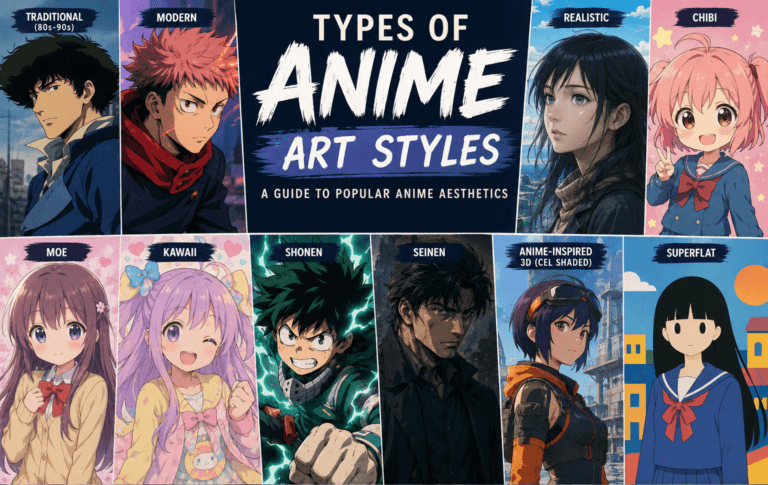

2D animation has shaped visual storytelling for decades through expressive characters and clear motion. From classic hand-drawn films to modern digital techniques, the medium remains in high demand across entertainment, advertising, education, and digital design.
This guide covers the key tools, pipeline workflows, career pathways, and production budgets that define modern 2D animation.
Need 2D Animation Services?
Visit our 2D Animation Service page to see how we can help bring your ideas to life!
What Is 2D Animation?
At its core, 2D animation is the art of creating the illusion of movement in a flat, two-dimensional space, focusing strictly on width and height. This includes characters, background layouts, special effects, and props.
The scientific and artistic foundation of the medium is simple: our brains automatically stitch sequential, slightly differing static images together into a single, fluid flow of motion when they are played back at a precise speed.
The Economics of Frame Rates: "On 1s" vs. "On 2s"
In professional production, one second of screen time is traditionally divided into 24 frames. How 2D animators handle these frames determines both the visual aesthetic and the budget of a project:
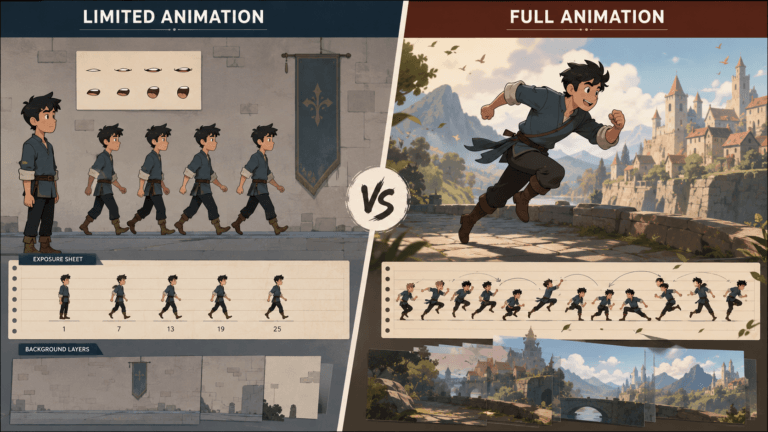
- Animating “on 1s” (24fps): The artist creates 24 unique, consecutive drawings for every single second of screen time. This yields ultra-smooth, premium motion commonly reserved for fast-paced action sequences, high-budget feature films, or complex cinematic transitions.
- Animating “on 2s” (12fps): The artist draws one unique frame and holds it for two frame cycles. This standard results in 12 unique drawings per second. This is the historical and modern industry standard because it slashes production time and physical labor by roughly 50% without sacrificing readability. Crucially, animating “on 2s” gives 2D animation its distinctly charming, organic, and beloved visual rhythm.
2D vs. 3D Animation: How Are They Different?
While 2D and 3D animators share the same goal, bringing stories and characters to life, they work on fundamentally separate physical, technical, and mathematical planes.
| Feature / Dimension | 2D Animation | 3D Animation |
|---|---|---|
| Visual Style & Space | Flat, stylized, highly expressive aesthetic utilizing strictly horizontal and vertical coordinates (width and height). | Depth-driven, realistic, or stylized world-building utilizing three dimensions (width, height, and depth). |
| Production Pipeline | Focused heavily on frame-by-frame draftsmanship, digital vector manipulation, or skeletal character rigging designed directly by artists. | Focused on modeling, digital sculpting, texture mapping, volumetric lighting, camera rigs, and high-performance rendering. |
| Assets & Reusability | Traditionally requires drawing each frame or angle. Rigged puppets allow asset reuse, but drastic angle changes often require redrawing. | Models are built once in digital 3D space, rigged with skeletal controls, and can be easily animated from any angle without redrawing. |
| Infrastructure Requirements | Accessible, runs smoothly on standard consumer computers, and uses lightweight, intuitive software. | Demands highly specialized technical training and powerful, expensive workstations to handle intensive rendering engines. |
| Strength & Best Use Cases | Stylized narratives, abstract concepts, micro-interactions, responsive web layouts, and fast, direct emotional storytelling. | High-end cinematic feature films, complex video game environments, physical simulations, and ultra-detailed object rotations. |
Read More: 2D vs. 3D Animation Cost
Has 2D Animation Reached Its End?
Despite the rise of 3D computer graphics and AI animation services, 2D animation remains highly relevant. The medium is adapting through new digital pipelines.
2D animation has expanded into several key digital sectors:
- Hybrid Animation: Combining hand-drawn characters with 3D environments has created popular, stylized productions like Spider-Man: Into the Spider-Verse, Arcane, and Castlevania.
- Digital and Web Infrastructure: Almost all modern digital media uses motion. 2D animations like app onboarding screens and web headers are standard in digital product design.
- Indie Media Explosion: Accessible digital software and crowdfunding have empowered independent animators to publish cinematic-grade series directly to streaming platforms and social media, bypassing traditional studio gatekeepers.
2D Animation in Its Prime: The Golden Age
From the late 1930s to the early 1960s, the medium experienced an era of rapid growth and creative development and structural definition known as the “Golden Age of Animation”.
During this epoch, Walt Disney Studios emerged as the pioneering force, crafting legendary features like Pinocchio, Fantasia, and Sleeping Beauty. These films introduced cinematic depth with the multi-plane camera and established standard studio workflows.
Crucially, Disney animators formulated the 12 Principles of Animation (including Squash and Stretch, Anticipation, and Exaggeration) which remain the standard principles used by animators today.
Simultaneously, competing powerhouses like Warner Bros., MGM, Fleischer, and UPA introduced alternative approaches, ranging from hyper-expressive slapstick comedy to rotoscoping and highly stylized limited animation. This era produced iconic characters and visual styles that shaped modern media.
2D Animation in Today's World & The 2026 Shift
Today, 2D animation is a flexible, multi-platform medium. Streaming platforms like Netflix, Crunchyroll, and Disney+ regularly commission 2D animated series to meet global demand.
The 2026 Shift: Focus on Clear Storytelling
In 2026 2D animation trends, audiences are seeing a shift away from over-rendered, busy visual effects. Many viewers are experiencing effects fatigue.
To counter this, leading studios are championing a “Calm Shift”. The most successful animations of 2026 are highly intentional, precise, and streamlined. They feature calm, focused, and structured storytelling that guides the viewer’s eye step-by-step. This clean aesthetic is especially dominant in educational media, brand storytelling, and corporate communication, where structural clarity is valued far above visual spectacle.
Generative AI: Integration as an Assistant
Artificial intelligence is now a functional tool in professional studios. Rather than replacing animators, studios use AI to automate repetitive, time-consuming tasks:
1. In-Betweening & Automated Coloring: AI helps generate repetitive transition frames and apply base digital ink/paint, freeing up master artists to focus on creative keys.
2. Rapid Prototyping: Animators utilize AI to rapidly test motion ideas, layout variations, and timing concepts before committing valuable manual labor.
Under this modern paradigm, AI operates strictly as a “smart intern”. It handles the bulk of repetitive rendering and tracking, but the artistic soul, conceptual direction, keyframe styling, and critical narrative decisions remain firmly under the control of human animators.
Why 2D Animation Still Matters (Strategic Advantages)
Businesses, developers, and creators prioritize 2D animation due to several distinct strategic advantages:
- Expressive Visual Appeal: Hand-drawn 2D animation creates a direct connection with viewers that is often harder to achieve with standard 3D models.
- Nostalgia and Engagement: Because 2D is closely associated with classic television and global anime art style, it naturally triggers nostalgia, which builds viewer engagement and brand trust.
- Cost and Timeline Efficiency: For most digital projects like commercials and software explainer videos, 2D pipelines require fewer technical resources, making production fast and cost-effective.
- Creative Flexibility: Since 2D relies on illustration, it has fewer physical constraints. Metamorphosis (shifting one object into another) and symbolic visual metaphors are highly effective for explaining abstract concepts.
- Visual Clarity: 2D animation is an excellent educational tool. By removing unnecessary details, it focuses the viewer’s attention on key concepts, making it ideal for healthcare training, IT software demos, and corporate compliance.
How 2D Animation Is Made: The Studio Pipeline
This type of animation highly relies on techniques like frame-by-frame design, keyframes, and tweening to simulate motion; so it’s no wonder that they are a vital part of storytelling in film, television, gaming, advertising, and beyond.
The 2D animation pipeline is a structured workflow. To control budgets and ensure quality, studios organize production into pre-production, production, and post-production.
Phase 1: Pre-Production (The Blueprint)
This phase establishes the script and visual style before animation starts.
- Concept Development: Writers and creative directors brainstorm core themes, character motivations, and style guides to outline the narrative foundation.
- Scriptwriting: Dialogues, scene actions, and camera cues are finalized with a tight understanding of the target audience.
- Character & Environment Design: Artists draft turnarounds, character model sheets, color palettes, and background layouts to establish the world’s physical rules.
- Storyboarding & The Bar/Exposure Sheet: Artists sketch the script panel-by-panel. To coordinate the visuals with audio, studios use an exposure sheet (or bar sheet). This is a specialized, music-pentagram-style grid smaller than an A4 sheet that maps out the exact frame-by-frame breakdown of action, dialogue phonemes, and musical cues.
- Voice Recording: The character voices must be professionally recorded prior to animating so that mouth movements can be synchronized frame-by-frame during production.
- The Animatic: The static storyboard panels are edited together with the recorded dialogue, temporary sound effects, and draft music. This raw video establishes the exact pacing and timing of the project before entering heavy production.
Phase 2: Production (Breathing Life)
In this stage, the team draws and rigs the visual elements.
- Keyframing: Main/Key Animators draw the core poses that define the start and end of any action (such as a character leaping or swinging a sword). These keyframes establish the weight, timing, and primary emotional performance.
- In-Betweening (Tweening): Once the keyframes are approved, Inbetweeners (or Tweening Artists) manually draw the transitional frames to ensure fluid, convincing movement. In modern digital workflows, software interpolation can automate simple linear tweens, but complex character acting, lip-syncs, and organic close-ups are still hand-drawn for maximum artistic control.
- The Pencil Test: Before coloring, all rough pencil sketches are compiled into a black-and-white video loop called a pencil test. Directors review this test to ensure anatomy, volume, lip-sync, and weight feel correct.
- Digital Rigging & Puppet Animation: For television series, ads, and web layouts, studios often build a digital skeleton (or rig) inside vector software. This allows animators to manipulate character limbs and facial features like puppets, speeding up production by bypassing frame-by-frame drawing.
- Background Painting: Environmental background artists paint the static sets where the action takes place. While modern backgrounds are painted digitally, traditional studios historically utilized gouache, acrylic, watercolor, and oil paints.
- Effects Animation & Lip-Sync: Specialized FX animators draw organic elements (fire, smoke, explosions, or magical energy). Simultaneously, character animators map mouth shapes directly to the recorded audio track.
- Quality Control (QC): Lead animators inspect every scene to verify that the artwork maintains strict consistency with the character model sheets and that timing flows without glitches.
Phase 3: Post-Production (The Polish)
In the final phase, editors and audio engineers polish the animated sequences.
- Editing: Editors arrange the animated sequences, trimming frames to tighten comedic timing, emotional beats, and overall narrative pacing.
- Visual Effects (VFX) & Compositing: Digital compositors layer character animations over painted backgrounds. They apply lighting, shadows, atmospheric dust, lens flares, and glowing particle effects to blend the elements into a single, cohesive visual.
- Sound Design & Foley: Foley artists record physical actions (such as footsteps, rustling clothes, and knocking doors) to create rich, tactile sound layers.
- Audio Mixing & Composing: Composers write original background music that reflects the emotional state of the scene. Sound engineers then assemble dialogue, music, and sound effects on a mixing board, adjusting audio levels, equalization, stereo perspective, and specialized acoustic treatments (like echo or radio filters) into a final mix.
- Color Correction: Hues, contrast, and lighting brightness are adjusted globally across scenes to maintain a consistent atmosphere (e.g., smoothly transitioning a sequence from warm daylight to cool night).
- Rendering & Exporting: The finished animation is rendered into the target technical formats (such as Lottie/JSON and interactive SVGs for web developers, or MP4, MOV, and WebM for broadcast and social media).
History of 2D Animation: A Brief History
The timeline of 2D animation showcases a beautiful evolution from mechanical novelties to digital vector networks.
- The Late 1800s & Early 1900s: Inventors and artists like Émile Reynaud and J. Stuart Blackton discovered that playing sequential images at a specific speed fooled the human eye into perceiving motion. In 1914, Winsor McCay released Gertie the Dinosaur, a monumental milestone that proved hand-drawn animation could imbue a character with lifelike personality and physical weight.
- The Golden Era (1930s-1950s): In 1937, Walt Disney released Snow White and the Seven Dwarfs, proving that 2D animation could carry a full-length, emotionally complex theatrical narrative. This era established traditional hand-drawn cel animation, where ink and paint were physically applied to transparent celluloid sheets, as the industry standard.
- The Global Television Boom (1960s): In Japan, Osamu Tezuka pioneered the modern anime industry, releasing Astro Boy in the 1960s. Tezuka masterfully paired deep, cultural, and cinematic storytelling with highly economical “limited animation” techniques.
- The Digital Revolution (1990s-Present): The late 1990s introduced digital vector animation software like Adobe Flash (now Animate), which democratized the medium. Suddenly, independent animators and small, agile studios could produce highly stylized, scalable animations that competed directly with traditional Hollywood giants.
Different Types of 2D Animation: An Overview
Modern 2D animation is highly versatile, manifesting in several distinct 2D animation styles to serve different creative and commercial needs:
- Cel (Classic Hand-Drawn) Animation: The historical foundation of the medium. Artists sketch every frame on paper, trace them onto clear celluloid sheets, and paint them by hand. This labor-intensive technique yields an incredibly warm, organic, and prestigious look celebrated in Disney classics and Studio Ghibli masterpieces.
- Digital Cut-Out Animation: Rather than redrawing characters from scratch, cut-out animators split digital drawings into independent, movable segments. These pieces are translated and rotated frame-by-frame, creating a playful, flat, and highly stylized aesthetic (made famous by South Park).
- Rigged Skeletal Animation: An advanced evolution of cut-out animation. Animators construct an internal skeleton (a rig) inside software like Toon Boom Harmony. This allows limbs, hair, and facial features to bend and stretch smoothly, providing the high speed and efficiency required for modern cartoon television.
- Motion Graphics: This style animates abstract shapes, text, branding assets, and icon systems rather than character-driven stories. It is widely used in corporate presentations, commercials, explainer videos, and social media marketing to convey information clearly and dynamically.
- Whiteboard Animation: A highly effective educational format that simulates black line-art being drawn live on a stark white background. This style utilizes clean, minimalist graphics to strip away cognitive distractions, making it a powerful choice for corporate tutorials and complex informational videos.
- Vector & Web Animation: Built on scalable mathematical equations rather than fixed pixel grids, vector animations remain crisp and clear at any size, making them the standard for mobile applications, responsive website headers, and modern web UI/UX.
Web UI/UX, Micro-Interactions, and SVG/Lottie Animation
While 2D animation historically lived on television and movie screens, it has exploded as a functional, interactive tool inside web and mobile applications. Today’s digital product managers utilize vector micro-interactions to bridge the gap between static code and active human psychology.
Using lightweight, code-based vector formats like Lottie (JSON) and SVG animations, developers can run highly responsive animations directly inside web layouts without causing website slowdowns.
These micro-interactions serve vital functional purposes:
- Real-Time Interactive Feedback: Animated toggle switches, morphing icons, progress bars, and button hover effects provide clear, instant confirmation that an action has been successfully triggered.
- User Friction & Bounce Reduction: High-performance preloader loops (such as animated loading spinners) reassure users that a process is active, significantly reducing drop-off rates during payment checkouts or database loads.
- Intuitive Onboarding Walkthroughs: Animated characters and interactive animation guides walk new users through application features step-by-step, dramatically increasing user adoption compared to boring, static text manuals.
Career Opportunities & Salary Data (Global Benchmark)
The 2D animation industry is vast, offering diverse career tracks across film, television, video games, tech startups, and design agencies.
Diverse Professional Roles
- 2D Animator: Animates characters and assets using frame-by-frame drawing or digital rigs.
- Storyboard Artist: Translates the written script into visual panels, mapping out the cinematic framing and camera direction.
- Character Designer: Focuses entirely on drafting character blueprints, expression sheets, and anatomical turnarounds.
- Illustrator & Background Painter: Designs and paints the rich environmental sets where the animation takes place.
- Motion/Web Designer: Specializes in UI/UX vector interactions, animated ads, Lottie files, and website headers.
Real-World Global Salary Benchmarks
Salaries in the industry fluctuate based on seniority, location, and the specific market. Below is a transparent, region-specific salary comparison table based on official industry averages:
| Region | Entry-Level Salary | Mid-Level Salary | Senior / Director Salary |
|---|---|---|---|
| United States | $43,000 – $50,000 USD | $60,000 – $75,000 USD | $80,000 – $100,000+ USD |
| Canada | $35,000 – $58,000 CAD | $53,000 – $77,000 CAD | $80,000+ CAD |
| Australia / NZ | $44,000 – $50,000 AUD | $50,000 – $95,000 AUD | $95,000+ AUD |
| United Kingdom | £18,000 – £25,000 GBP | £25,000 – £47,500 GBP | £40,000 – £50,000+ GBP |
Iconic Masterpieces of 2D Animation
Several key projects demonstrate the technical and artistic range of 2D animation:
Spirited Away (Studio Ghibli, 2001)
Directed by Hayao Miyazaki, this hand-drawn masterpiece is widely considered a supreme artistic pinnacle. By blending highly detailed, painted watercolor environments with a surreal, folklore-driven narrative, Ghibli proved that 2D animation possesses a profound, direct emotional soul that CGI cannot capture.
The Lion King (Walt Disney, 1994):
The ultimate crown jewel of Disney’s Renaissance. This epic showcases a seamless integration of traditional hand-drawn character draftsmanship with early digital compositing and CGI-assisted stampedes.
Cuphead (Studio MDHR, 2017):
A beloved modern indie video game that was painstakingly hand-drawn. The artists utilized authentic 1930s rubber-hose animation techniques, drawing every frame on paper and hand-inking cels to create a playable, interactive cartoon.
The Professional Software Toolkit
Modern 2D animators utilize different 2D animation software based on their pipeline needs and artistic style:
- Toon Boom Harmony: The global industry standard for broadcast television series and feature films. It is a highly robust frame-by-frame animation software featuring advanced vector drawing tools, professional cut-out rigging skeletal structures, and a node-based workspace that provides visual clarity when compositing lighting and visual effects.
- Adobe Animate: A highly versatile, vector-based software popular for web ads, social media content, and interactive web layouts. It is highly accessible and excels at compiling clean, lightweight vector assets.
- Clip Studio Paint: The premier choice for pure character illustrators and comic artists looking to create traditional, hand-drawn, frame-by-frame animation with premium textured brushes.
- TVPaint Animation: Specializes in emulating the feel of physical drawing on paper. It operates strictly on a raster engine, making it a powerhouse for artists looking to create organic, painterly, and traditionally textured frame-by-frame motion.
- Adobe After Effects: A node-free timeline software designed for motion designers and digital compositors. It excels at animating text typography, vector paths, logo transitions, and layering animated elements over complex backgrounds with professional camera moves.
Ten Studio-Tested Tips for Mastering 2D Animation
To accelerate your transition from a beginner to a high-level studio professional, adopt these ten core operational habits:
- Internalize the 12 Principles: Never guess how an object should move. Rely on Squash and Stretch, Weight, Ease-In and Ease-Out, and Anticipation to make movements believable.
- Master Walk Cycles & Bouncing Balls: Practice simple exercises to perfect the core mechanics of gravity, weight, hip rotations, and organic secondary motion.
- Analyze Live-Action Video Reference: Film yourself executing actions or study real-world video. Track where a movement initiates in the muscles, how momentum shifts, and how a pose decelerates to replicate it in your keys.
- Harness Timing & Spacing: Adjusting the number of drawings between keyframes is how you convey weight and mass. Fewer frames suggest high velocity and light objects; more frames suggest heavy, lumbering weight.
- Seek Active Peer Critiques: Share your draft loops, animatics, or pencil tests with other animators. Fresh eyes will instantly catch physical glitches or anatomical errors that you became blind to during long drawing hours.
- Select the Right Tool: Match your software to the project. Use Toon Boom Harmony for high-end character rigging, TVPaint for a painterly hand-drawn look, and After Effects for slick motion graphics.
- Draw Every Single Day: Your draftsmanship is your foundation. Dedicate time to gesture drawing, perspective rules, and human/animal anatomy to make your visual draft sheets expressive and stable.
- Plan with Storyboards: Never start animating blindly. Sketching quick storyboard panels ensures that pacing, staging, and composition are coherent before committing valuable production hours.
- Embrace Patience and Discipline: Animation is incredibly labor-intensive. Fluid motion takes time, and high craftsmanship requires consistency, structure, and intense patience.
- Build a Dynamic Content Strategy: When designing animations for clients, understand where the video will live. Ensure that the pacing and visuals are structured precisely for the target platform (e.g., vertical snappy edits for mobile vs. horizontal cinematic formats for web).
Real-World Production Costs and Timelines
For marketing directors, game developers, and creative clients, budgeting an animation project is a critical business metric:
| Project Scale / Type | 2D Animation Budget Range (USD) | 2D Animation Production Timeline | Characteristics & Team Size |
|---|---|---|---|
| Short Brand / Explainer Video (1–3 minutes) | $5,000 – $25,000 | 3 – 8 weeks | Simple vector animations, whiteboard explainer graphics, or motion graphics. Typically handled by a small, agile team of 2–5 specialists. |
| Broadcast TV Episode (20–25 minutes) | $100,000 – $500,000 | 3 – 6 months | Highly detailed character-driven stories utilizing advanced cut-out rigging workflows, lip-syncs, and specialized effects. |
| Feature-Length Film / Anime | $1,000,000 – $50,000,000+ | 1 – 3 years | Cinema-grade, hand-drawn, frame-by-frame masterpieces requiring a massive international crew of key animators, background painters, sound directors, and compositors. |
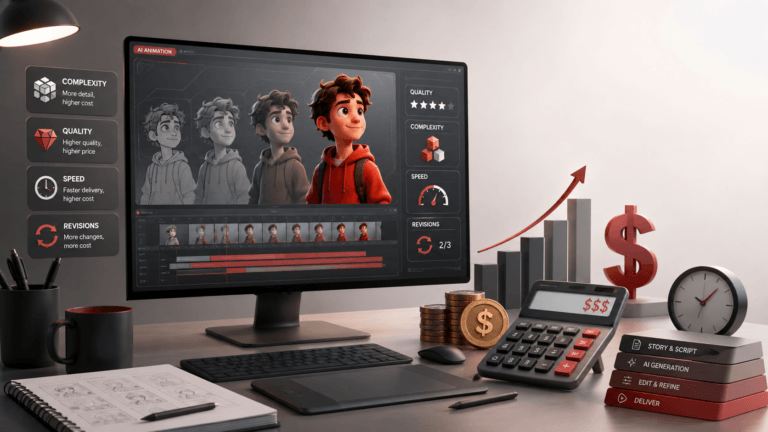
Note: The actual cost and timeline of any project are heavily influenced by the style choice (hand-drawn cel vs. digital rigging), character complexity, environmental changes, and specialized sound design.
Pixune Studios: Your Strategic Animation Partner
Pixune Studios delivers professional 2D animation, game assets, and commercial videos. We combine traditional design principles with modern digital pipelines to create clear, engaging content tailored to your brand.
We operate across the entire, studio-grade pipeline:
- Pre-Production: We align on your brand message, developing beautiful concept art, robust script drafts, and storyboards designed specifically to maximize your ROI.
- Production: We utilize industry-leading software (including Toon Boom Harmony and Clip Studio Paint) to execute highly fluid, expressive character animations and stylized vector assets.
- Post-Production: We handle visual effects, precise color grading, and custom sound engineering to ensure your deliverable looks spectacular on any digital screen.
Whether you are developing an indie game, a software demo, or a brand commercial, Pixune provides professional production to help you reach your goals.
Ready to elevate your visual communication? Visit our 2D Animation Services page to see our portfolio and schedule a strategy call. Let’s start a project together!
Conclusion
Reminiscent of the golden age of Animation, 2D animation is a nostalgic art form that appeals to almost everyone. 2D animation is still used in many creative projects, whether a 2D game that reminds us of the early 90’s when 3D graphics were not yet mainstream or a 2D animated TV series or 2D animated feature films.
There are various reasons one might opt for 2D animation instead of 3D. Producing high volumes of animation for an animated TV series like Rick and Morty and South Park with 3D is very time-consuming and expensive. Furthermore, the stunning aesthetics of 2D frame-by-frame animations are difficult to recreate via 3D graphics. 2D animation is also a more cost-efficient option for low-budget businesses in need of an animated motion graphics or an explainer video
Overall, In contrast to the belief that 2D animation is dying due to advances in 3D animation, it is still a flourishing animation style with plenty of dedicated technologies to facilitate its creation.


![1405,02,10 SnpLE[Cover HD] 1](https://pixune.com/wp-content/uploads/2026/08/14050210-SnpLECover-HD-1-768x431.jpg)