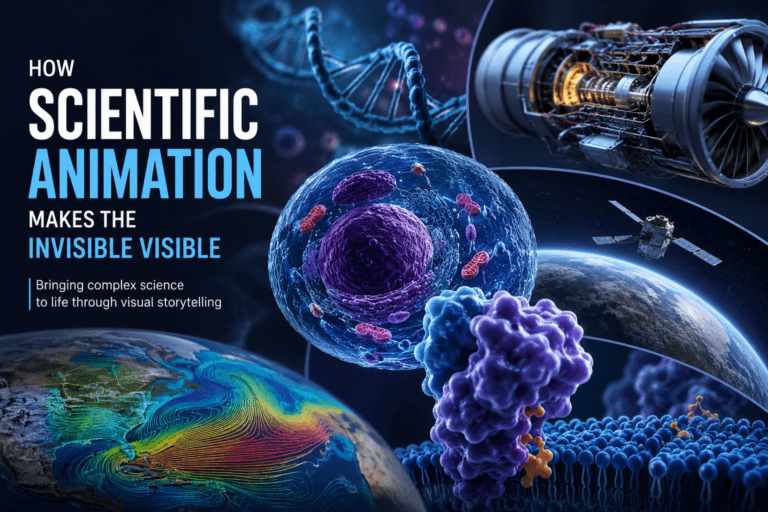

3D animation has become a cornerstone of modern digital content, powering everything from blockbuster films to video games and product visualizations. At the heart of this process lies 3D animation software, which allows artists to create characters, environments, and motion in a fully three dimensional space.
With so many tools available, choosing the right 3D animation software can significantly impact your workflow, quality, and production time. Whether you are a beginner or a professional, understanding your options is essential.
In this guide, we explore what 3D animation software is, the most popular tools, and how to choose the best one for your needs.
What Is 3D Animation Software?
3D animation software is used to create and animate objects in a three dimensional environment. These programs allow artists in 3D animation studios to:
- Model 3D objects and characters
- Apply textures and materials
- Create lighting setups
- Animate movement and interactions
- Render final images or videos
Unlike 2D animation, 3D animation works with depth, perspective, and realistic lighting, making it ideal for immersive visual experiences.
Why 3D Animation Software Matters
The right software can improve both the creative and technical aspects of a project.
Enhances Visual Quality
Modern tools allow for highly realistic rendering, detailed textures, and dynamic lighting.
Improves Workflow Efficiency
Advanced features such as rigging techniques and automation tools speed up production.
Supports Different Industries
3D animation software is used in:
- Film and television
- Video games
- Architecture
- Advertising
- Product Animation
Best 3D Animation Software
There are many 3D animation tools available, each with its own strengths and use cases.
Autodesk Maya
Autodesk Maya is one of the most widely used 3D animation software in the industry. It is commonly used in film, television, and game development.
Key features:
- Advanced character rigging
- Professional animation tools
- Simulation and effects
- Industry standard pipeline integration
Best for:
- Professional 3D animators
- Large studios
- Complex animation projects
Blender
Blender is a powerful open source 3D creation tool that has gained massive popularity in recent years.
Key features:
- Free and open source
- Modeling, animation, and 3D rendering tools
- Real time rendering engine
- Large community support
Best for:
- Beginners and professionals
- Indie developers
- Freelancers
Read More: Maya vs Blender
Cinema 4D
Cinema 4D is known for its ease of use and strong motion graphics capabilities.
Key features:
- User friendly interface
- Powerful animation tools
- Integration with motion graphics workflows
- Fast rendering options
Best for:
- Motion designers
- Advertising projects
- Beginners transitioning to 3D
3ds Max
3ds Max is widely used for game development, architecture, and 3D product visualization.
Key features:
- Strong 3D modeling tool
- Professional architectural visualization software
- Realistic rendering capabilities
- Extensive plugin support
- Efficient workflow for large scenes
Best for:
- Game developers
- Architectural visualization
- 3D environment artists
Read More: Maya vs 3ds Max
Houdini
Houdini is a powerful tool focused on procedural generation and visual effects.
Key features:
- Node based workflow
- Advanced simulations
- Procedural animation
- Highly customizable systems
Best for:
- Visual effects artists
- Simulation heavy projects
- Technical artists
Read More: Houdini vs Maya
Unreal Engine
Unreal Engine is a 3D engine for a real-time 3D creation platform used for both games and animation.
Key features:
- Real-time rendering
- Cinematic tools
- High-quality visuals
- Integration with game development
Best for:
- Real-time animation
- Game cinematic production
- Virtual production
Key Features to Look for in 3D Animation Software
When choosing 3D animation software, consider the following features.
Modeling Tools
The ability to create detailed characters and environments is essential.
Rigging and Animation
Strong rigging systems allow for smooth character movement and control.
Rendering Capabilities
High-quality rendering engines produce realistic final images.
Simulation and Effects
Features such as physics, particles, and fluid simulation enhance realism.
User Interface and Workflow
An intuitive interface can make learning and production much easier.
How to Choose the Right 3D Animation Software
The best software depends on your experience level, project goals, and 3D animation types.
For Beginners
Blender is a great starting point due to its accessibility and free license.
For Professional Studios
Autodesk Maya and Houdini are commonly used in large-scale productions.
For Motion Graphics
Cinema 4D is ideal for creating animated graphics and visual content.
For Game Development
3ds Max and Unreal Engine are widely used in game pipelines.
3D Animation Software in Modern Production
Modern 3D animation production pipelines often combine multiple tools.
For example:
- Modeling in Blender or 3ds Max
- Animation in Maya
- Effects in Houdini
- Rendering in Unreal Engine
This flexible approach allows teams to use the strengths of each tool.
Conclusion
3D animation software plays a vital role in creating modern digital content. From realistic films to interactive games, these tools enable artists to bring ideas to life in three dimensions.
By understanding the strengths of different software options, you can choose the right tool for your project and improve both your workflow and final results.




![1405,02,10 SnpLE[Cover HD] 1](https://pixune.com/wp-content/uploads/2026/08/14050210-SnpLECover-HD-1-768x431.jpg)