
If you’ve ever worked on an animation project, you’ve probably heard the terms animatic and animation used interchangeably. While they may appear similar at first glance, they serve very different purposes in the production pipeline.
An animatic is an early planning tool used to test timing, pacing, camera angles, and storytelling before production begins. Animation, on the other hand, is the final polished product that audiences see.
Understanding the difference between an animatic and animation can help creators, clients, and production teams communicate more effectively and avoid costly mistakes during production. In this guide, we’ll explain what animatics are, how they differ from animation, and why most professional productions rely on animatics before creating the final animation.
Need Animation Services?
Visit our Animation Service page to see how we can help bring your ideas to life!
What is an Animatic?
An animatic is a sequence of storyboard images edited together with timing, camera movements, dialogue, sound effects, or temporary music to simulate how the final animation will play.
Think of an animatic as a rough version of a movie or animation. It allows creators to see how scenes flow together before investing time and money into full production.
Animatic Definition
An animatic is a visual planning tool that combines storyboard panels with timing and audio to preview the pacing and structure of an animation, film, commercial, or game cinematic.
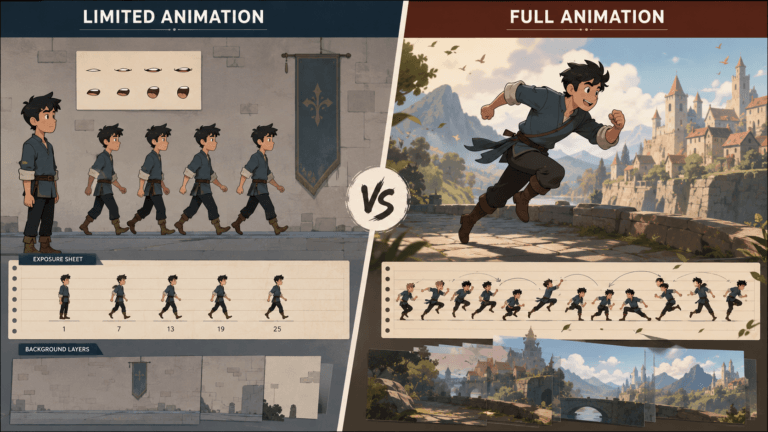
Unlike finished animation, animatics typically use static drawings with limited movement.
Why Animatics Are Created
Creating animation is expensive and time-consuming. Before animators begin producing final assets and motion, directors need a way to test whether the story works.
Animatics help answer important questions:
- Is the pacing too slow or too fast?
- Are the camera angles effective?
- Does the dialogue feel natural?
- Does the audience understand the story?
- Are there unnecessary scenes?
What Does an Animatic Include?
The goal is not visual quality but storytelling clarity. Although every studio has its own workflow, most animatics include:
- Storyboard artwork
- Basic camera movements
- Temporary dialogue
- Sound effects
- Music placeholders
- Scene transitions
- Rough timing
What is Animation?
Animation is the process of creating the illusion of movement through a sequence of images, drawings, models, or digital assets, based on the 12 principles of animation.
Unlike animatics, animation is the final stage of production and includes finished artwork, polished movement, sound design, effects, and rendering services.
Animation Definition
Animation is a production technique that creates motion by displaying a series of images in sequence.
Modern animation services can be created using many different techniques and technologies.
Types of Animation
Several forms of animation are used throughout the industry.
2D Animation
2D animation uses flat artwork and characters moving across a two-dimensional space.
3D Animation
3D animation uses digital models with height, width, and depth that can be animated and viewed from multiple angles.
Motion Graphics
Motion graphics focus on animated text, shapes, icons, and graphic elements.
Stop Motion
Stop motion creates movement by photographing physical objects one frame at a time.
What Does a Finished Animation Include?
Unlike animatics, every visual and audio element is production-ready. A completed animation typically contains:
- Final character designs
- Polished backgrounds
- Full animation
- Lighting and effects
- Sound design
- Voice acting
- Music
- Final rendering
Animatic vs Animation: What's the Difference?
The easiest way to understand the difference is to think of animatics as the blueprint and animation as the finished building.
| Feature | Animatic | Animation |
|---|---|---|
| Primary Purpose | Planning and testing the story before production | Delivering the final visual experience to the audience |
| Production Stage | Pre-production | Production and post-production |
| Visual Quality | Rough storyboard panels and sketches | Fully polished artwork and visuals |
| Character Design | Basic or placeholder designs | Final character designs and assets |
| Motion | Limited movement, simple transitions, or camera pans | Smooth, detailed, and fully animated motion |
| Timing | Used to test pacing and scene timing | Final timing and performance |
| Audio | Temporary dialogue, music, and sound effects | Professional voice acting, sound design, and music |
| Production Time | Hours to days | Weeks, months, or even years |
| Cost | Relatively inexpensive | Significant production investment |
| Revisions | Fast and easy to modify | Time-consuming and costly to revise |
| Software Requirements | Basic editing and storyboard tools | Professional animation software and pipelines |
| Team Size | Usually one artist or a small team | Large production team with specialized roles |
| Frame Count | Few frames or static images | Thousands of fully animated frames |
| Focus | Functionality, storytelling, and planning | Visual quality, performance, and audience experience |
| End User | Directors, producers, clients, and internal teams | Viewers and final audiences |
1. Planning Stage vs Final Production
Animatic: Animatics are made very early on in the animation production pipeline, during a stage we call “pre-production.” A lot of people use them as visual roadmaps to plan out the whole job before they start animating. It’s interesting that companies make animations for everything they make, from short ads to big movies. Also, many directors and artists use them to try out different camera views, timing, and storylines without spending a lot of money upfront.
Animation: On the other hand, animation is definitely the final result that people will see. It comes after all the planning and turns the accepted animatic into the beautiful moving pictures we love. Of course, this step takes the most time and money. Teams of skilled artists work together to turn those rough sketches into stories that run well and are ready for people to watch and enjoy.
2. Rough Sketches vs Finished Visuals
Animatic: The pictures used in animatics are really very basic and simple. Often, they’re just black-and-white drawings or even stick figures. They are more interested in seeing if the idea works than in making it look good. In fact, a lot of animatics only show shapes for the figures and lines for the backgrounds.
Animation: But, animations show images that are finished and have all of their wonderful colors, patterns, effects, and lighting. Characters have complex features, settings have full worlds, and moves look very natural and smooth. It’s amazing that the average animated movie can have over 129,600 different frames.
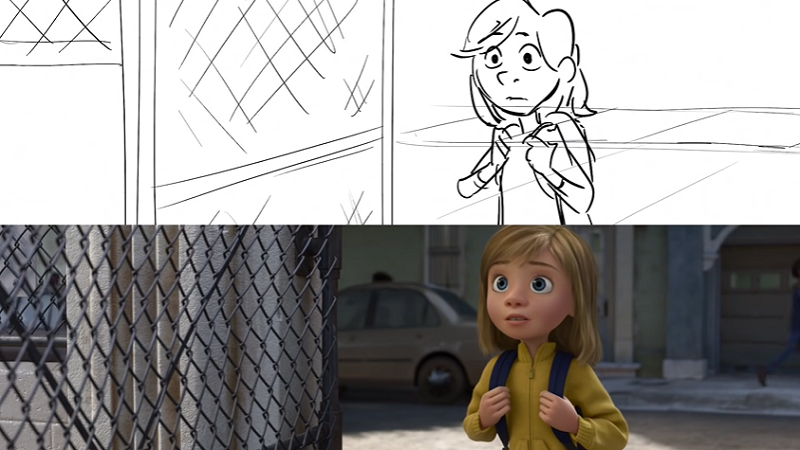
3. Short Creation Time vs Long Production Time
Animatic: Obviously, animatics take a lot less time. For easy projects, it only takes a few hours, but for more complicated ones, it can take a few days. It’s easy for one artist to make 20–30 rough frames in a day, which is enough for a 30-second animatic.
Animation: Animation takes a lot longer to finish right. It usually takes a team 2 to 3 weeks to make a good minute of 2D animation from scratch. Even more time is needed for high-quality 3D animation, especially because of the complex 3D animation pipeline. Big movies like Frozen and Toy Story take years to finish.
4. Low Cost vs Major Investment
Animatic: Speaking of finances, animatics are really affordable to produce. A professional animatic for a short 30-second ad might cost between $1,000 and $3,000. That’s really only 5 to 10 percent of the total budget for the animation. It’s even better for independent artists, who can make animatics with simple tools or, if necessary, pen and paper.
Animation: Meanwhile, animation costs a lot of money. It usually costs between $8,000 and $15,000 to make a good minute of 2D animation. But what about those beautiful, high-end 3D animations? A lot of them can run $30,000 to $50,000 per minute. The future of the 3D animation industry may involve smarter tools and streamlined workflows, but for now, the costs for these big-budget animation movies often go over $175 million!
5. Story Testing vs Final Storytelling
Animatic: The great thing about animatics is that they let you see if your story works before you spend a lot of time and money on full animation. They carefully check the time, flow, and framework of the story to make sure that all the scenes make sense to the audience. Teams working on movies use animatics to find problems early on, like scenes that are too long or changes that feel strange and shaky.
Animation: On the other hand, cartoons give viewers a full visual story to enjoy and get lost in. They have all the emotional power, artistic beauty, and plot depth that the authors had in mind. Animatics are more concerned with the practical question of “Does this actually work?” while cartoons are more concerned with the more abstract question of “Is this totally amazing?”
6. Basic Motion vs Refined Movement
Animatic: With animatics, you’re just looking at easy time and movement. They could use simple arrows or rough motion lines to show how the figures move from one key pose to the next. In a typical animatic, a figure jumping might only take 4-6 frames, but in the finished animation, that same second of action would take 24 frames.
Animation: The moves and emotions in animations are very exact and well-refined. All of a sudden, every little thing matters, from how a figure blinks to how their hair moves in the wind. Lead animators often spend days polishing just a few seconds of movement to make sure it looks great. For example, in Frozen 2, the animation team made more than 80 different snow effects and worked for 4 weeks to perfect Elsa’s walk cycle.
7. Temporary Audio vs Professional Sound Design
Animatic: logically, animatics only use rough, temporary tracks for sound. Voice actors usually record short “scratch tracks” without any fancy gear, or animators will sometimes just step in and do the sounds for a short time. Most of the time, music comes from simple, royalty-free sources or really simple tracks that are just there to do the job.
Animation: In contrast, animations have been fully finished, with expert sound production. Voice artists record in high-end workshops where directors watch and direct them. Plus, each project has its own unique music score, which is usually written by a skilled musician working with a full group. At the same time, sound artists make unique sound effects for each action and setting in the story.
8. Easy Revisions vs Expensive Changes
Animatic: Well, here’s the thing: animatics are very open to changes and improvements. It’s easy and quick for artists to change the time, move scenes around, or even cut out whole parts. A change that only takes 30 minutes in the animatic stage could save 30 hours of work on the animation in the end.
Animation: But when you use animations, it’s really hard and expensive to make changes. Editing even small parts of animation scenes takes a lot of time and effort. In some cases, changing how a figure moves could mean doing dozens of frames all over again by hand or making changes to complicated 3D models and going through the 3D modeling process to create whole scenes over again.
9. Simple Tools vs Advanced Production Software
Animatic: You only need simple tools and skills to make something good with animatics. A lot of skilled artists make animations with simple programs like Adobe Premiere, After Effects, or even PowerPoint, which may come as a surprise.
Animation: On the other hand, creating animations correctly needs advanced technical knowledge and tools. Artists who make animations train for years to get really good at what they do. They often work with expensive, hard-to-understand 3D animation tools like Maya or Blender and 2D animation software like Toon Boom Harmony or Moho. Also, a single artist might need between 6 and 12 months to learn the basics of these tough programs.
10. Function Over Appearance vs Visual Excellence
Animatic: In animatics, usefulness is more important than beauty. They care more about making the order of events clear than about how nice they look. The graphics only need to be good enough so that everyone on the team can follow along with each scene. Characters may look like simple stick figures or rough drawings, and backgrounds are often just lines or basic shapes.
Animation: Animation puts a lot of emphasis on how they look and how lifelike the details are. The end look is magical because of how much thought is put into each frame’s color, texture, design, and lighting in animation. Modern cartoon movies often have art directors, lighting designers, and visual development teams whose only job is to come up with truly unique visual styles.
11. Small Team vs Large Production Crew
Animatic: When we talk about teams, animatics seldom need a big one. Sometimes, just one or two people do all the work. Usually, one skilled storyboard artist makes all the drawings, plans the time, and adds the basic sound effects. Larger projects may have a small group of three to five people working on different parts of the animatic, with an animation script supervisor overseeing the whole thing.
Animation: But animated films? For that game to work, huge, specialized teams need to work together like a well-oiled machine. Lots of different types of people work on those big animated movies you love. For example, over 500 artists worked on How to Train Your Dragon 3!
An animation studio has a team including:
12. Limited Frames vs Smooth Motion
Animatic: With animatics, creators use way fewer frames per second to save precious time and effort. They might only show 2-6 frames per second or sometimes just use static images with simple transitions between them. Key poses show the most important moments, while everything in between just gets implied rather than actually shown.
Animation: Meanwhile, animations deliver that buttery smooth motion with tons of frames every second. High-end 3D animation often renders at 24-30 frames per second for maximum smoothness. Incredibly, a 90-minute animated film at 24fps contains a whopping 129,600 individual frames, each one carefully created to ensure those fluid, natural movements we love.
13. Static Images vs Fully Animated Action
Animatic: For animatics, creators often use static or minimally animated frames with simple transitions connecting them. Motion gets suggested through basic arrow indicators, motion lines, or simple slide movements between keyframes. One static image might actually represent several seconds of action, with notes indicating what movement will happen later in the final animation.
Animation: By contrast, animations contain fully rendered, fluid movement in literally every frame. Characters and objects move naturally through space with proper weight, timing, and convincing physics. Even the tiniest details get serious attention—breathing patterns, subtle eye movements, and micro-expressions all contribute to creating believable motion.
Conclusion
Animatics and animation are closely related, but they serve very different purposes. An animatic is a planning tool used to test storytelling, pacing, and timing before production begins. Animation is the final polished product that audiences see.
By helping teams identify problems early, animatics reduce production costs, improve communication, and create stronger final animations. Whether you’re producing a commercial, animated film, explainer video, or game cinematic, an animatic is often one of the most valuable steps in the entire production process.

![1405,02,10 SnpLE[Cover HD] 1](https://pixune.com/wp-content/uploads/2026/08/14050210-SnpLECover-HD-1-768x431.jpg)